
A Platform Approach to Downstream Purification of Multiple AAV Serotypes
PROVEN INTELLIGENCE ACCELERATING NEXT-GENERATION THERAPIES
A Platform Approach to Downstream Purification of Multiple AAV Serotypes
A Platform Approach to AAV Downstream Purification
CELL & GENE | RNA | BIOLOGICS
Proven Intelligence Accelerating Next-Generation Therapies.

Executive Summary
Developing a unique downstream purification process for each adeno-associated virus (AAV) serotype is a primary bottleneck in advancing viral vector programs. A platform approach, which utilizes standardized unit operations with predefined adjustment parameters, mitigates this challenge. This methodology reduces process development timelines, enhances reproducibility, and de-risks technology transfer, directly supporting the acceleration of candidates toward an 18-24 month IND timeline.
Frequently Asked Questions
What defines a “platform approach” for AAV purification?
A platform approach uses a standardized sequence of purification steps (e.g., affinity chromatography, ion exchange, tangential flow filtration) that is proven to be effective across multiple AAV serotypes. Instead of re-inventing the process for each new vector, specific parameters within each step are adjusted to optimize for the unique properties of a given capsid.
Which AAV serotypes are compatible with this platform?
The platform is designed for broad applicability and has been established for common, clinically validated serotypes including AAV1, AAV2, AAV5, AAV8, and AAV9. It also serves as a robust starting point for novel or engineered capsids, allowing for accelerated process development.
How does this approach impact product purity and yield?
By starting with a well-understood process, optimization focuses on fine-tuning for maximum purity and recovery. The platform is designed to effectively remove process-related impurities like host cell proteins and DNA, and to enrich for full, payload-containing capsids, consistently meeting specifications for IND-enabling toxicology studies.
What is the timeline for developing a purification process for a novel AAV vector?
Leveraging a platform approach significantly shortens the timeline compared to de novo process development. While dependent on the specific vector, timelines are compressed by eliminating the need to screen entirely new technologies or unit operations for each program.
The Challenge of Serotype Diversity in Purification
The unique isoelectric points and surface charge characteristics of different AAV capsids, from AAV2 to AAV9 and novel engineered variants, present a persistent manufacturing challenge. Historically, this diversity required the development of a bespoke downstream purification process for every new therapeutic candidate. This approach consumes considerable time and resources, introducing variability that can delay program timelines.
The objective is to move away from a one-vector, one-process paradigm. Biological systems provide a precedent for broad applicability; for instance, studies show that a single natural AAV infection can induce broad cross-neutralizing antibody responses across multiple serotypes (PMID: 27314914). This principle of broad biological recognition informs a manufacturing strategy aimed at developing purification platforms with similarly wide-ranging effectiveness.
A Platform Framework for Downstream Processing
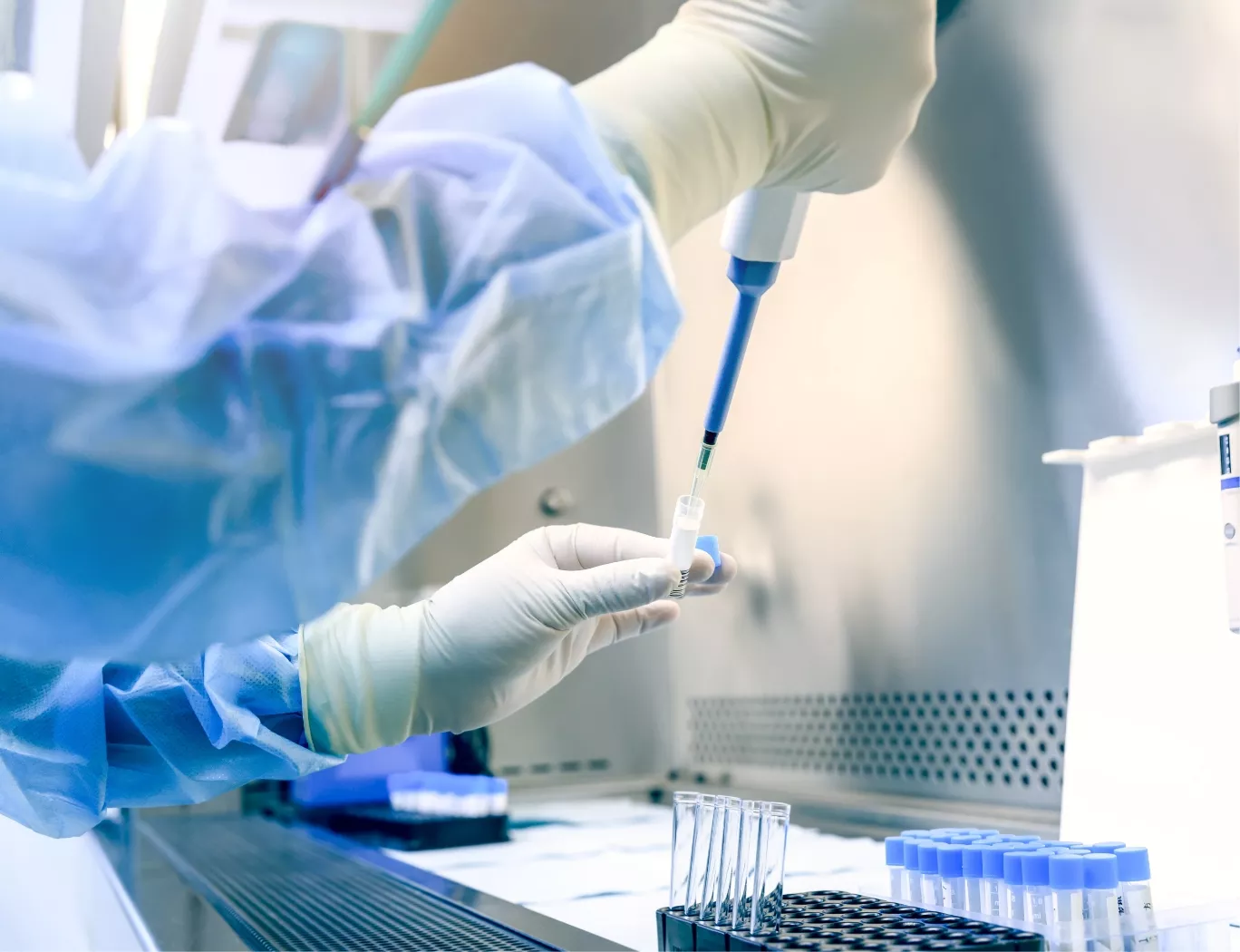
A platform purification process establishes a consistent sequence of core unit operations applicable to a wide range of AAV vectors. This framework provides a proven foundation, allowing development efforts to focus on optimizing key parameters for a specific serotype rather than re-evaluating the entire process design.
This methodology is built upon a deep understanding of how different capsids behave under various chromatographic and filtration conditions. The result is a predictable and scalable purification process that minimizes surprises during scale-up and simplifies technology transfer into GxP environments within our >100,000 sq ft facility.
Featured Video: Vector Readiness and Program Success
The following clip from our recent webinar discusses factors for initiating and scaling AAV vector programs.
[FBL-VID-11-Approved_enhanced_testimonial_clip_long.mp4]
For a deeper analysis of capsid engineering and preclinical profiling, view the full webinar here.
Core Components of the Purification Platform
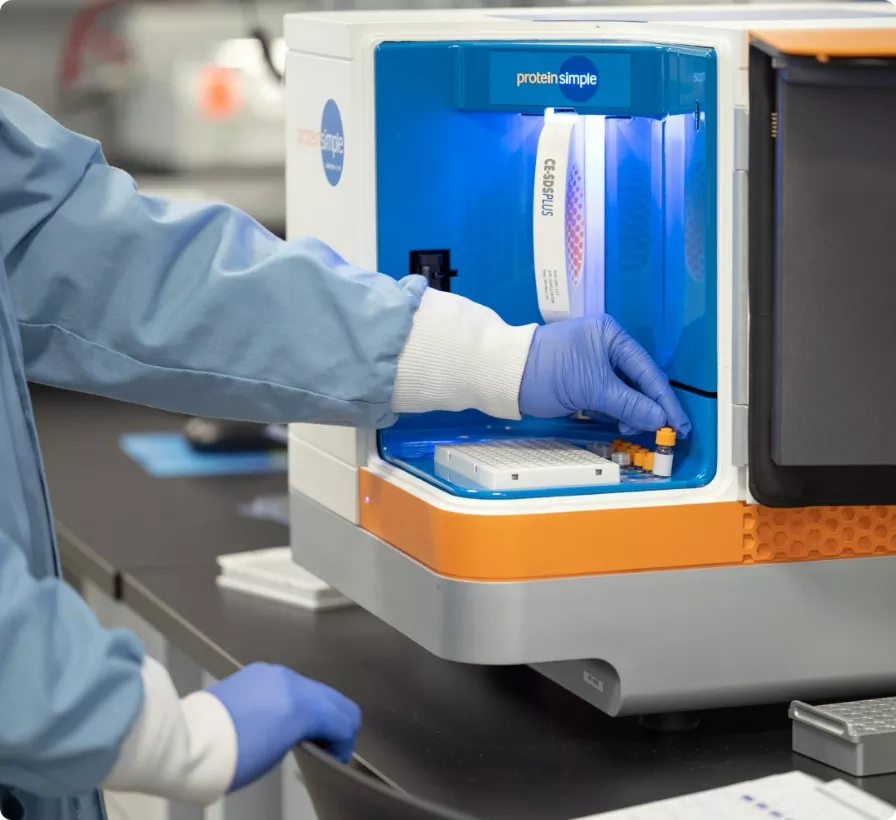
Our downstream platform is modular, enabling predictable performance and quality.
-
Initial Capture & Clarification: The process begins with efficient clarification of the cell lysate, followed by affinity chromatography for initial AAV capture. This step provides a high degree of purification in a single unit operation.
-
Intermediate Polishing: Ion-exchange chromatography (IEX) is employed to remove remaining process-related impurities, such as host cell proteins and residual plasmid DNA.
-
Empty/Full Capsid Separation: Anion-exchange chromatography (AEX) or other advanced techniques are used to separate full, active-vector particles from empty capsids, a key determinant of product potency.
-
Final Formulation: Tangential flow filtration (TFF) is used for the final concentration and buffer exchange of the purified AAV vector into its formulation buffer, producing the final drug substance.
Benefits for IND-Enabling Programs
Adopting a platform approach directly supports the goal of reaching clinical trials efficiently. While the Franklin Biolabs brand launched in 2024, our core scientific founders collectively achieved a 100% successful IND rate for clients since 2019. This track record is a direct result of robust and reproducible manufacturing processes.
By standardizing the purification workflow, we reduce the risk associated with process changes during scale-up and ensure the material used in pivotal nonclinical studies is representative of the future clinical product. This continuity is fundamental to a successful regulatory submission.
For more information on our overarching manufacturing capabilities, please see our parent hub page on Large-Scale AAV Manufacturing and Process Development.

Technical Visualization: AAV Downstream Purification Platform

This content is for informational purposes. For guidance specific to your therapeutic program, please contact our team for a consultation.