GLP-Compliant Toxicology for Cell Therapies: Addressing VCN, Tumorigenicity, and Biodistribution

PROVEN INTELLIGENCE ACCELERATING NEXT-GENERATION THERAPIES

GLP-Compliant Toxicology for Cell Therapies: Addressing VCN, Tumorigenicity, and Biodistribution

CELL & GENE | RNA | BIOLOGICS

A robust GxP-compliant toxicology program for cell therapies requires a specialized approach beyond conventional assessments. The core safety evaluation rests on three pillars: quantifying Vector Copy Number (VCN) to understand dose and integration risk, conducting long-term in vivo studies to assess tumorigenicity potential, and characterizing cellular biodistribution and persistence to identify non-target tissue effects. Integrating these complex endpoints into a single, IND-enabling program provides the comprehensive safety data required by regulatory bodies.

How is Vector Copy Number (VCN) quantified in GxP toxicology studies?
VCN is quantified using validated quantitative PCR (qPCR) or droplet digital PCR (ddPCR) assays. These methods measure the number of vector DNA copies per cell in both target and non-target tissues collected at necropsy. A fully validated assay with established limits of detection and quantification is necessary for GxP compliance and provides definitive data on vector dose and persistence.
What are the regulatory expectations for tumorigenicity studies for cell therapies?
Regulatory agencies typically expect long-term in vivo studies, often conducted in immunocompromised models to allow for the persistence of human cells. The study design must evaluate the potential for cell proliferation and tumor formation over an extended duration. Key endpoints include comprehensive macroscopic and microscopic histology of all tissues to identify any neoplastic or pre-neoplastic changes.
How does biodistribution for cell therapies differ from that of AAV vectors?
While both assess distribution, the focus for cell therapies is on cell trafficking, persistence, migration, and engraftment. For AAVs, the focus is on vector tropism and transduction. Methodologies reflect this: cell therapy studies often use qPCR to detect unique cellular DNA sequences or immunohistochemistry (IHC) to identify specific cell markers in tissue, whereas AAV studies focus on vector genome quantification.
Defining the Cell Therapy Safety Profile

The regulatory path for cell therapies demands a preclinical safety program that directly addresses the unique biological properties of a living therapeutic. Unlike static biologics, engineered cells can proliferate, differentiate, and migrate post-administration. A successful IND submission hinges on a toxicology program designed to answer three specific questions: what is the effective dose and persistence (VCN), is there a risk of uncontrolled growth (tumorigenicity), and where do the cells go (biodistribution).

A 3D rendering of Y-shaped antibody molecules against a blue, abstract background.

A close-up of a scientist in a lab, wearing blue gloves and examining the results of a gel electrophoresis or Western blot.

Vector Copy Number (VCN) and Integration Site Analysis

Quantifying VCN in tissues is fundamental to understanding the in vivo dose, stability, and potential safety risks of genetically engineered cell therapies. We employ validated qPCR and ddPCR platforms to generate precise, reproducible data on vector presence in both target and non-target tissues. For integrating vectors, such as those derived from lentivirus, this analysis is extended to include integration site analysis to evaluate the potential for insertional mutagenesis.

Assessing Tumorigenicity Potential

The potential for uncontrolled cell growth is a primary safety concern for all cell-based therapeutics. Our GxP-compliant tumorigenicity studies are designed to meet stringent regulatory expectations. These long-term in vivo studies, conducted in our >100,000 sq ft AAALAC-accredited facility, utilize appropriate immunocompromised models to assess the full risk profile. The evaluation is anchored by comprehensive histology, providing definitive evidence of cellular fate and behavior over time.

A close-up of a pipette dispensing liquid into a rack of test tubes, set against a cool-toned, sterile background.

A scientist in protective gear pipetting a sample into a vial within a sterile laboratory hood.

Characterizing Biodistribution and Persistence

Understanding the distribution, persistence, and clearance of administered cells is foundational to the safety assessment. The consequences of unintended cellular engraftment in non-target tissues can be significant. For instance, studies on other advanced therapeutics, such as AAVs, have demonstrated that high systemic doses can lead to unexpected organ-specific effects, including liver injury (PMID: 38327046). While the modality is different, the principle is the same: characterizing distribution is key to predicting potential liabilities. Our programs use a matrix of molecular and histological techniques to map cellular location and persistence, providing a clear picture of the in vivo biological activity.

Animal Welfare and Program Design

Our scientific and animal care teams operate under guidelines set by the USDA and are fully accredited by AAALAC International. We embed the principles of the 3Rs (Reduction, Refinement, and Replacement) into every study design.

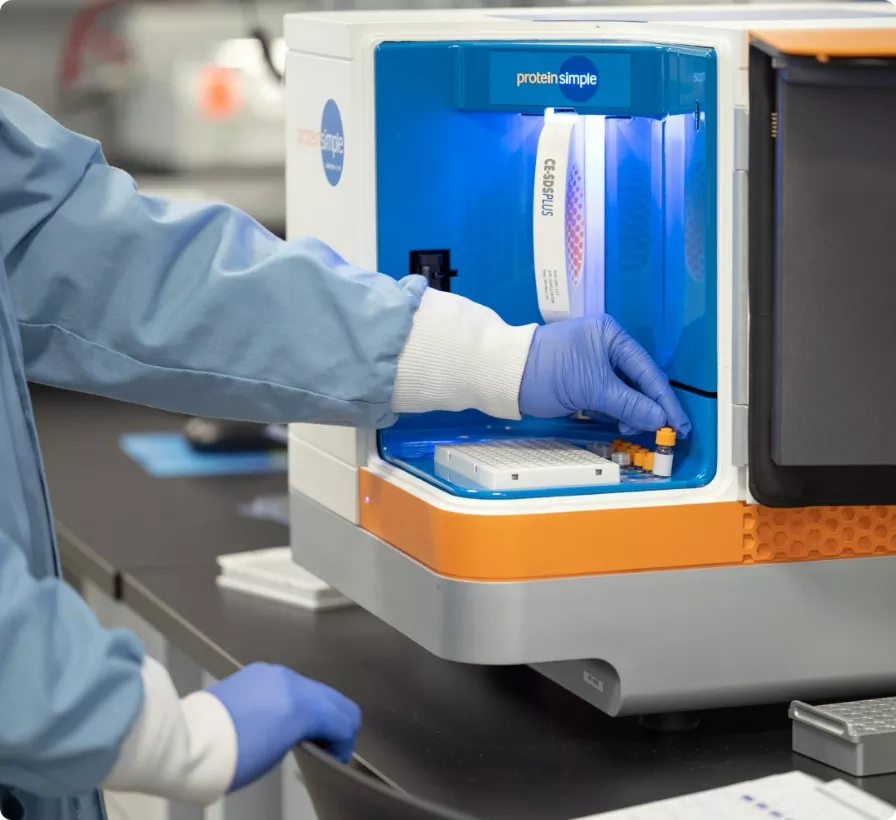
A scientist in a lab coat and gloves loads samples into a ProteinSimple instrument for analysis.

Integrated GxP Framework for IND Submission

Each of these specialized assessments is integrated into a cohesive GxP program designed for regulatory submission. By combining these complex endpoints, we provide a comprehensive safety narrative that supports an accelerated development timeline. This approach of Data-Driven Safety Intelligence Engineered for Advanced Therapeutics has been central to our clients’ success. Franklin Biolabs, which launched in 2024, builds on a legacy of a 100% IND success rate since 2019, consistently delivering programs that meet regulatory requirements within an 18-24 month IND timeline.

Scientific Process Diagram

This content is for informational purposes. For guidance specific to your therapeutic program, please contact our team for a consultation.