GLP Safety Pharmacology Studies (Core Battery) for Advanced Biologics and Cell Therapies

PROVEN INTELLIGENCE ACCELERATING NEXT-GENERATION THERAPIES

GLP Safety Pharmacology Studies (Core Battery) for Advanced Biologics and Cell Therapies

GLP Safety Pharmacology for Advanced Biologics

CELL & GENE | RNA | BIOLOGICS

A close-up of a Pall Corporation single-use bioreactor system in a cleanroom environment, showing the control panel, vessel with cell culture media, and tubing.

Proven Intelligence Accelerating Next-Generation Therapies.

Executive Summary

Standard safety pharmacology core battery assessments require significant adaptation for RNA, cell-based, and viral vector therapeutics. A tailored, science-driven preclinical strategy is necessary to accurately characterize potential effects on the cardiovascular, respiratory, and central nervous systems. Our approach integrates modality-specific supplemental studies with core battery evaluations in translationally relevant nonhuman primate (NHP) models, minimizing clinical risk and supporting an 18-24 month timeline to IND submission.

A 3D rendering of Y-shaped antibody molecules against a blue, abstract background.

Frequently Asked Questions

    What constitutes the core battery for safety pharmacology?

    The standard core battery evaluates the effects of a therapeutic candidate on three vital organ systems: the central nervous system (CNS), the cardiovascular system (CV), and the respiratory system. These studies are conducted under GxP conditions.

    How are these studies adapted for cell and gene therapies?

    Adaptation moves beyond the core battery to include supplemental studies tailored to the specific modality. This can involve assessing immunogenicity, cytokine release, and non-target tissue biodistribution, which are potential risks associated with AAV capsids, LNP delivery systems, or allogeneic cell constructs.

    Why are nonhuman primate models often required for these studies?

    NHP models possess an immune system that more closely mirrors human response compared to other species. This is vital for evaluating the potential for immunogenicity against viral vectors or transgenes, providing data with higher predictive value for human clinical trials.

    What is the typical timeline for these IND-enabling studies?

    These safety pharmacology studies are a component of the comprehensive IND-enabling toxicology program. For programs managed by our scientific team, the timeline from candidate selection to a successful IND submission is typically 18-24 months.

A close-up of a scientist in a lab, wearing blue gloves and examining the results of a gel electrophoresis or Western blot.

Adapting Core Battery Studies for Novel Modalities

A rigid, template-based approach to safety pharmacology is insufficient for today’s complex biologics. The preclinical strategy must be designed specifically for the asset’s mechanism of action and delivery system, whether it involves AAV vectors, lipid nanoparticle (LNP) delivery of an RNA payload, or an ex vivo cell-based therapy.

While the core battery assessments of central nervous, cardiovascular, and respiratory function remain the foundation, the real work involves identifying the need for supplemental studies. These investigations are designed to address risks unique to the therapeutic platform, such as:

  • Vector- or capsid-induced immune responses.

  • Unintended cellular activation or cytokine signaling.

  • Non-target tissue biodistribution and transgene expression.

The Translational Value of Nonhuman Primate Models

Selecting the correct animal model is fundamental for generating relevant safety data. For many advanced biologics, particularly those with the potential to elicit an immune response, NHP models provide indispensable data that cannot be obtained in lower-order species. Research has shown that NHP models can reveal robust, transgene-specific T cell responses that may not be observed in other preclinical models (PMID: 19441963).

This immunological fidelity is necessary for de-risking clinical translation. Understanding how specific structural determinants of a vector, such as an AAV capsid, can drive T cell activation is a key objective of IND-enabling toxicology studies (PMID: 23720715). Our expertise in conducting these complex studies in nonhuman primate models provides data with high predictive value for human clinical trials.

A close-up of a pipette dispensing liquid into a rack of test tubes, set against a cool-toned, sterile background.

A scientist in protective gear pipetting a sample into a vial within a sterile laboratory hood.

Animal Welfare and GxP Compliance

Executing these complex in vivo studies requires an unwavering commitment to animal welfare and data integrity. Our programs are designed to exceed regulatory expectations, providing enhanced housing conditions and cognitive enrichment.

Our approach to animal care is governed by the 3Rs Principle: Replacement, Reduction, and Refinement. All programs are conducted in our USDA-compliant and GxP-compliant facilities, which span over 100,000 square feet and feature flexible, modern housing designs.

Integrated Program Management and IND Submission

Safety pharmacology data does not exist in a vacuum. It is a key component of the integrated data package required for a successful regulatory submission. Our scientific team has achieved a 100% successful IND rate since 2019 for the programs they have managed. The Franklin Biolabs brand, which continues this legacy of scientific execution, launched in 2024.

By designing and executing these studies in-house, we maintain rigorous quality control and provide sponsors with a clear, efficient path toward their clinical objectives.

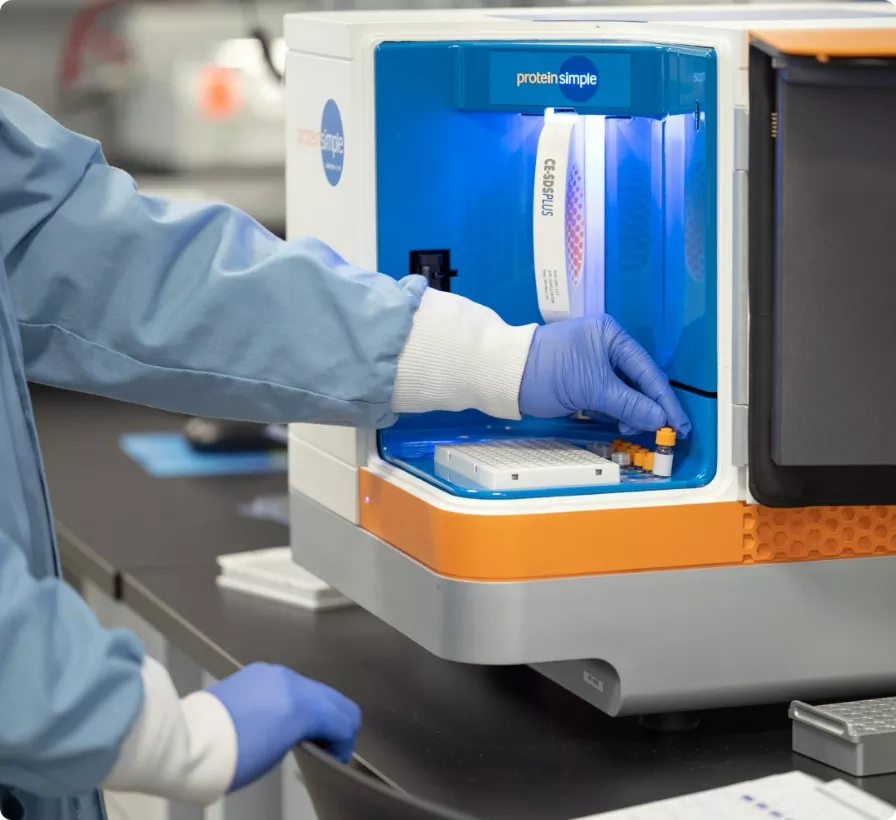
A scientist in a lab coat and gloves loads samples into a ProteinSimple instrument for analysis.

Technical Visualization: GxP Safety Pharmacology Workflow for Advanced Biologics

Scientific Process Diagram

This content is for informational purposes. For guidance specific to your therapeutic program, please contact our team for a consultation.