Neurobehavioral Assessments in a Rhesus Macaque Model of Alzheimer’s Disease for Evaluating AAV-Delivered Therapeutics

PROVEN INTELLIGENCE ACCELERATING NEXT-GENERATION THERAPIES

Neurobehavioral Assessments in a Rhesus Macaque Model of Alzheimer’s Disease for Evaluating AAV-Delivered Therapeutics

Neurobehavioral Assessments in Rhesus Macaque Models of Alzheimer’s Disease

CELL & GENE | RNA | BIOLOGICS

Executive Summary

Evaluating the efficacy of AAV-delivered therapeutics for Alzheimer’s Disease (AD) requires a non-human primate (NHP) model that recapitulates key aspects of human cognitive decline. The rhesus macaque offers a sophisticated translational platform for this purpose. This asset details the design and execution of neurobehavioral assessment batteries within GxP-compliant NHP studies, focusing on quantifying cognitive changes, integrating behavioral data with fluid and imaging biomarkers, and generating a robust data package to support an 18-24 month Investigational New Drug (IND) application timeline.

A senior scientist leads a discussion with a group of diverse junior scientists in a bright, modern laboratory setting.

Frequently Asked Questions

    What specific neurobehavioral tests are used in your NHP AD models?

    A: We employ a customized battery of tests, often including the Cambridge Neuropsychological Test Automated Battery (CANTAB) for executive function and memory, delayed non-matching to sample (DNMS) tasks for recognition memory, and spatial navigation tasks to assess hippocampal-dependent memory. The final test selection is tailored to the therapeutic’s mechanism of action.

    How do you correlate behavioral outcomes with biological changes?

    A: Behavioral data is integrated with longitudinal biomarker analysis. This includes serial cerebrospinal fluid (CSF) sampling for Aβ42/40 and p-Tau levels, advanced in vivo imaging (PET/MRI) to track amyloid plaque and tau tangle pathology, and terminal histology and immunochemistry for definitive target engagement and non-target tissue biodistribution analysis.

    What is the typical study duration for an AAV therapeutic in this model?

    A: Study timelines vary based on the specific research questions and vector construct. A typical study involves a baseline characterization period, followed by post-administration assessments extending from 6 to 24 months to capture both acute effects and long-term durability of cognitive and pathological changes.

    How does Franklin Biolabs ensure animal welfare in NHP studies?

    A: Through our strategic partnership with Bioculture Group, all NHP programs are conducted in AAALAC-accredited and USDA-registered facilities. Our approach to animal welfare is centered on the 3Rs (Replacement, Reduction, Refinement), with dedicated programs for environmental enrichment, social housing, and positive reinforcement training to ensure the well-being of the animals and the integrity of the scientific data.

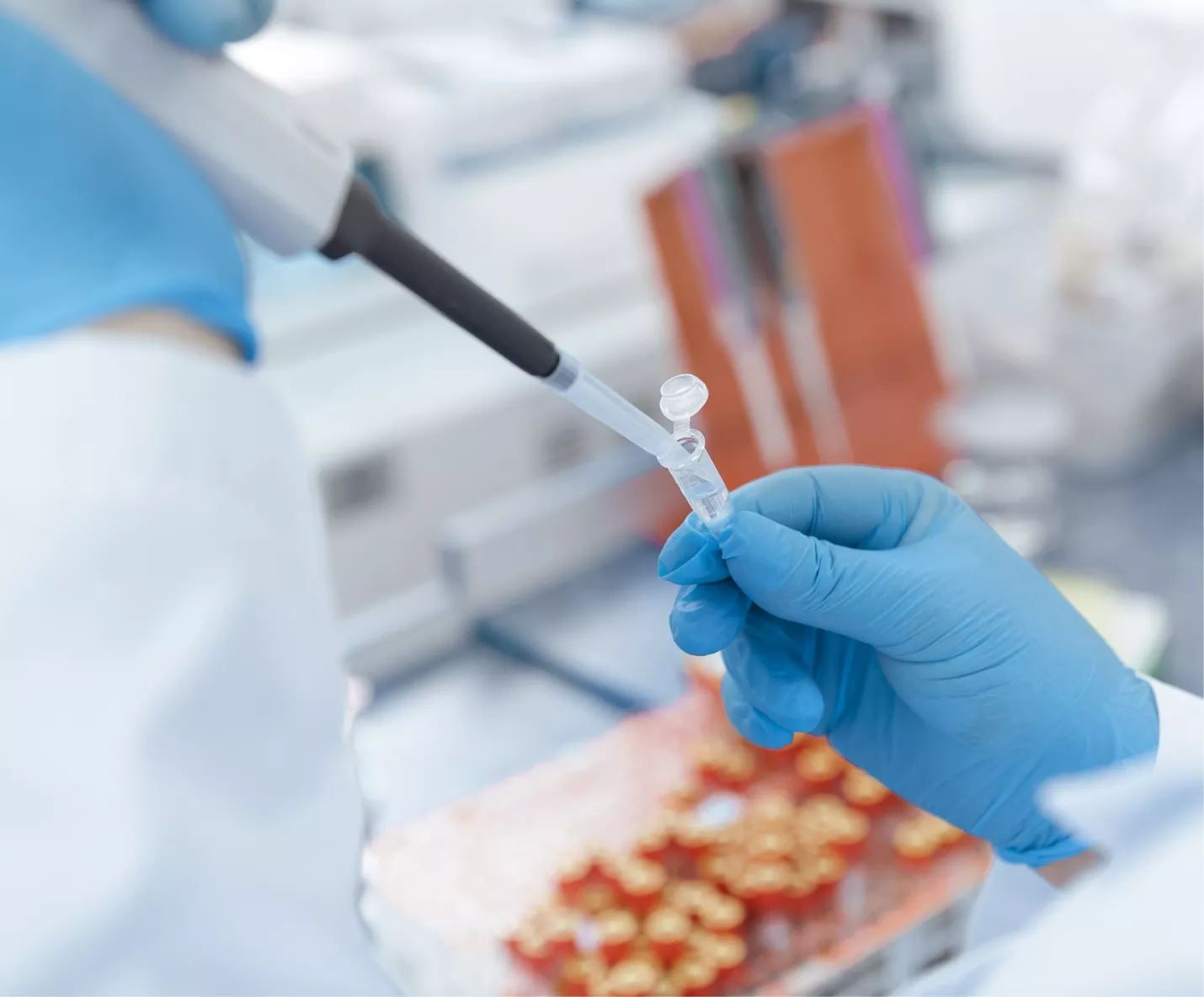
A close-up shot of a scientist in a lab coat and blue gloves using a micropipette to transfer a liquid sample into a small test tube.

The Translational Challenge: Quantifying Cognitive Restoration

For AAV-based therapeutics targeting neurodegenerative conditions like Alzheimer’s Disease, demonstrating a clear restoration of cognitive function is a primary objective. The challenge lies in selecting and validating behavioral endpoints in a translational model that are sensitive enough to detect subtle changes and directly relevant to the human clinical experience. The rhesus macaque, with its complex cognitive abilities and neuroanatomical similarity to humans, provides the necessary platform to bridge this gap.

A successful program is built on a meticulously designed study that can distinguish therapeutic effect from random variation. This involves establishing stable pre-treatment performance baselines for each animal and using a battery of validated tests to assess multiple cognitive domains.

Neurobehavioral Assessment Battery for NHP Models

A robust assessment strategy utilizes a combination of cognitive tasks to provide a comprehensive profile of brain function. This multi-domain approach mitigates the risk of over-reliance on a single endpoint and provides a richer dataset for evaluating therapeutic efficacy.

Assessment Domain Representative Task(s) Primary Cognitive Function Measured
Executive Function Cambridge Neuropsychological Test Automated Battery (CANTAB) Planning, cognitive flexibility, working memory
Recognition Memory Delayed Non-Matching to Sample (DNMS) Object recognition, short-term and long-term memory
Spatial Memory Spatial Navigation Tasks Hippocampal-dependent spatial learning and memory
Motor Function Fine Motor Skill Assessments Dexterity, coordination, motor planning

A close-up of a gloved hand handling PCR tubes with blue liquid in a laboratory rack, with a blue color overlay.

A close-up of a Pall Corporation single-use bioreactor system in a cleanroom environment, showing the control panel, vessel with cell culture media, and tubing.

Integrating Biomarkers with Behavioral Endpoints

Behavioral outcomes gain significant power when correlated with quantitative biological markers. This integration provides mechanistic evidence linking the therapeutic intervention to the observed functional changes. The principle of using a vector to achieve a measurable phenotypic rescue has been validated in other disease contexts, where AAV delivery has been shown to normalize key disease-related biomarkers (PMID: 34454844). Combining behavioral testing with CSF analysis and in vivo imaging builds a comprehensive and compelling narrative of safety and efficacy for regulatory submissions.

)

Franklin Biolabs’ GxP-Compliant NHP Programs

Our preclinical programs are executed within a >100,000 sq ft facility designed for complex large animal studies. We provide the scientific and regulatory expertise to move promising AAV candidates toward the clinic. Since the Franklin Biolabs brand launched in 2024, programs originating from our scientific leadership have maintained a 100% IND success rate since 2019.

“We started collaborating with UPenn Vector core in 2023 and the AAV vector which they manufactured laid a foundation for development of a gene therapy candidate which will enter soon preclinical studies. The key people from UPenn Vector Core joined Franklin Biolabs and our partnership transitioned without interruption from UPenn Vecor Core to Franklin Biolabs Research Vector Division. Franklin Biolabs is our trusted partner in our AAV-vector based gene therapy candidate development and we hope to continue the partnership for years to come.”
— Biotech Partner

Our team, which includes key scientific leadership from world-renowned vector cores like the UPenn Vector Core, brings decades of specialized experience in designing and executing these pivotal studies. We partner with sponsors to develop customized protocols that meet specific therapeutic goals and satisfy global regulatory expectations.

” ]

Scientific Process Diagram

This content is for informational purposes. For guidance specific to your therapeutic program, please contact our team for a consultation.