
Tech Transfer Protocols for Clinical Grade Vector Manufacturing
FREQUENTLY ASKED QUESTIONS
Programmatic Asset
CELL & GENE | RNA | BIOLOGICS
How does a tech transfer protocol for siRNA-LNP therapy differ from viral vector programs?
The primary distinction lies in the manufacturing process and analytical characterization. For siRNA-LNP therapies, the tech transfer focuses on the precise control of lipid chemistry, microfluidic mixing parameters, and nucleic acid encapsulation efficiency. The analytical strategy is heavily weighted toward particle characterization (size, polydispersity, zeta potential) and payload integrity, which present different challenges than viral capsid protein analysis and vector genome titering.
What are the key process parameters to define for scalable LNP production before initiating GxP manufacturing?
A robust process requires locking down several parameters. These include the precise molar ratios of ionizable lipids, helper lipids, cholesterol, and PEG-lipids. The total lipid concentration, total flow rate (TFR) and flow rate ratio (FRR) in the microfluidic mixing device, and downstream purification methods like tangential flow filtration must also be rigorously defined and validated to ensure batch-to-batch consistency for IND-enabling toxicology studies.
How does Franklin Biolabs ensure a clear path to an Investigational New Drug (IND) submission for a novel LNP therapeutic?
We align the CMC development strategy with the preclinical program from the outset. This involves phase-appropriate process development and analytical method qualification under GxP conditions. By establishing a scalable manufacturing process early, we generate representative material for toxicology and biodistribution studies, ensuring the data submitted to the FDA is directly relevant to the proposed clinical product. This integrated approach supports our 18-24 month IND timelines.

Tech Transfer for Clinical-Grade siRNA-LNP Production
Proven Intelligence in RNA Therapeutic Manufacturing.
The transition of a promising siRNA lipid nanoparticle (LNP) therapy from discovery to a clinical-grade asset requires a meticulously planned technology transfer process. This process establishes the manufacturing controls and analytical methods necessary to produce consistent, high-quality material suitable for IND-enabling studies and eventual human trials. A well-executed tech transfer minimizes program risk and accelerates timelines.
The core challenge in LNP manufacturing is achieving reproducible scalability. Laboratory-scale batch methods often fail to translate to larger volumes, introducing variability that can compromise product quality and delay programs. Modern, scalable production platforms, such as parallelized microfluidic devices, offer a solution by enabling consistent LNP formation at significantly higher throughput rates, as demonstrated in foundational academic work (PMID: 34189917). This approach ensures that the material used in pivotal nonclinical studies is representative of the final clinical product.

Defining the Process and Analytical Framework
A successful tech transfer is built on a deep understanding of the relationship between process parameters and the final product’s key quality attributes (CQAs).
Key process parameters that must be defined and locked include:
-
Lipid Component Ratios: The precise molar ratio of ionizable, helper, structural, and PEGylated lipids.
-
Nucleic Acid Payload: Concentration and quality of the siRNA drug substance.
-
Microfluidic Mixing Conditions: Total flow rate and flow rate ratio, which directly control particle size and encapsulation.
-
Downstream Processing: Parameters for tangential flow filtration (TFF) for purification and concentration.
This process development occurs within our >100,000 sq ft of specialized laboratory and manufacturing space. The corresponding analytical strategy must be equally robust, with qualified assays to measure CQAs such as particle size, polydispersity index (PDI), zeta potential, encapsulation efficiency, and siRNA integrity.
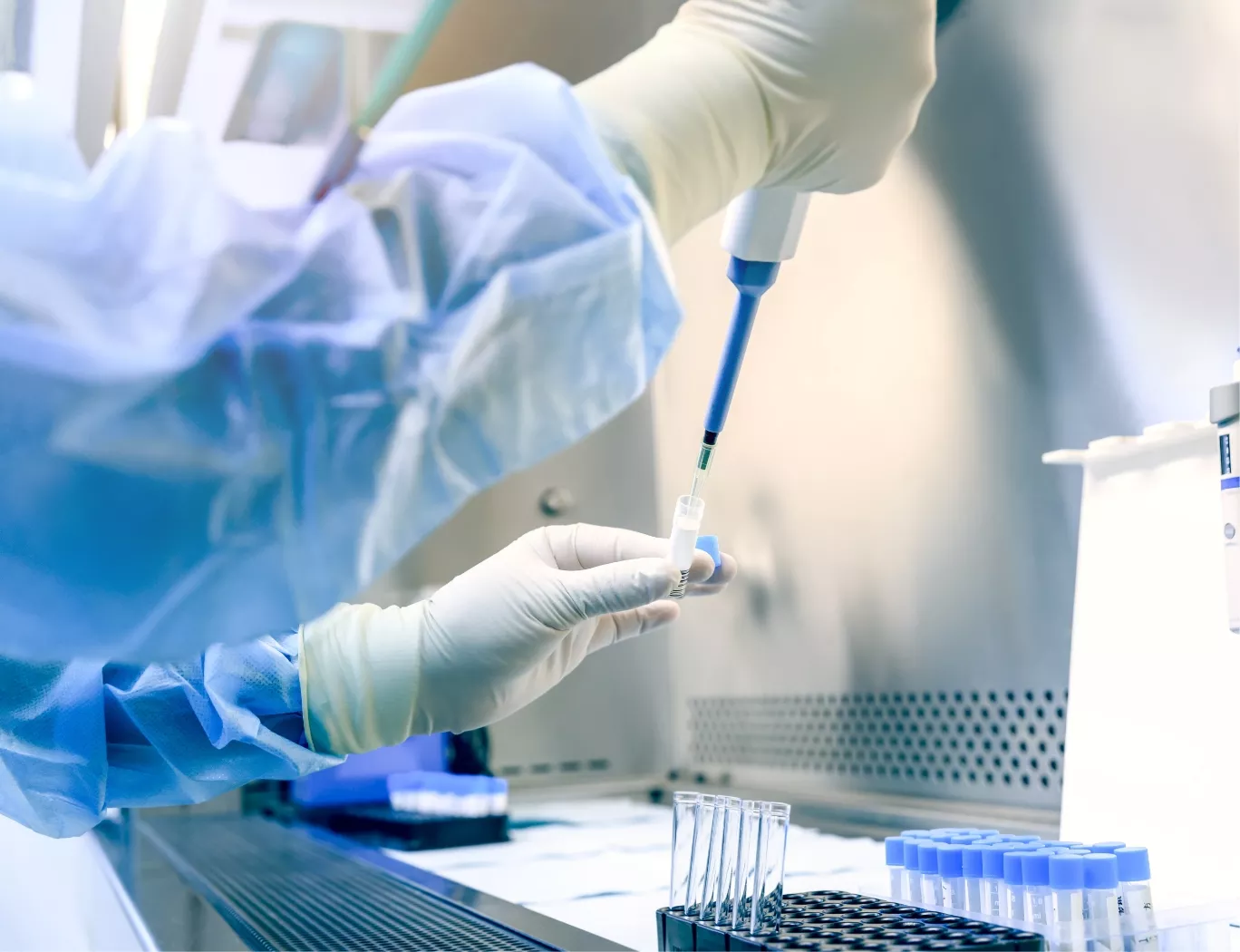
From Bench to IND-Ready Therapeutic
The objective of the tech transfer is to establish a manufacturing process that is compliant with GxP requirements and capable of producing material for formal regulatory submissions. This integrated strategy is fundamental for next-generation therapeutics, including mutation-independent approaches that offer broad applicability for genetic disorders (PMID: 39001827).
By aligning the manufacturing science with the preclinical and regulatory pathway, sponsors can confidently advance their siRNA-LNP programs. This methodical approach is central to the track record of the core Franklin Biolabs scientific team, which has maintained a 100% successful IND rate since 2019, prior to the formal company launch in 2024.
This program connects directly to our broader capabilities in Vector | CMC | Analytics Services, providing a comprehensive framework for advancing novel RNA therapeutics.
LNP Synthesis: A Comparison of Production Methodologies

This content is for informational purposes. For guidance specific to your therapeutic program, please contact our team for a consultation.