
Analysis of Viral Shedding in Semen for AAV-based Gene Therapies: Swissmedic Considerations
PROVEN INTELLIGENCE ACCELERATING NEXT-GENERATION THERAPIES
Analysis of Viral Shedding in Semen for AAV-based Gene Therapies: Swissmedic Considerations
AAV Gene Therapy Viral Shedding in Semen: Bioanalytical Strategies for Swissmedic Submissions
CELL & GENE | RNA | BIOLOGICS
What is the primary regulatory concern for viral shedding in semen for AAV gene therapies?
The principal concern is the potential for inadvertent germline transmission. Regulatory bodies, including Swissmedic, require robust data to assess the risk of vector DNA integrating into germ cells, which could lead to vertical transmission of the transgene to offspring. A comprehensive shedding analysis in semen is a required component of this risk assessment.
Which bioanalytical assays are required by Swissmedic for quantifying AAV shedding in semen?
Quantitative polymerase chain reaction (qPCR) or droplet digital PCR (ddPCR) are the standard methods for detecting and quantifying AAV vector DNA in semen samples. These assays must be rigorously validated under GxP guidelines to ensure sensitivity, specificity, and reproducibility appropriate for a regulatory submission.
How long should AAV shedding be monitored in preclinical studies?
The monitoring duration is determined on a case-by-case basis, guided by the specific AAV serotype, route of administration, and early study data. Typically, sample collection continues until vector DNA concentrations fall below the validated limit of quantification or reach a stable, low-level plateau across multiple time points.
Does AAV capsid choice influence shedding profiles in semen?
Yes. Capsid tropism is a primary determinant of vector biodistribution. Different AAV capsids exhibit varied affinities for specific tissues, including reproductive organs. The selection of a natural or engineered capsid, such as AAV3B or AAVrh10, directly impacts the likelihood and magnitude of vector shedding in semen, which requires capsid-specific characterization.
For adeno-associated virus (AAV) gene therapies, quantifying viral shedding in semen is a mandatory component of the preclinical safety assessment for Swissmedic and other global regulatory bodies. This analysis directly addresses the risk of germline transmission. A successful regulatory submission depends on sensitive, validated bioanalytical methods and a study design that accurately characterizes the kinetics of vector clearance from reproductive tissues. The choice of AAV capsid and other vector elements significantly influences biodistribution, requiring a tailored analytical strategy. Franklin Biolabs provides GxP-compliant qPCR and ddPCR assays within a comprehensive bioanalytical framework to support these specialized studies, aligning with the rigorous data requirements for programs on an 18-24 month IND timeline.
Regulatory Framework for AAV Biodistribution in Switzerland
Swissmedic’s guidance for gene therapy products mandates a thorough evaluation of biodistribution and shedding. The objective is to build a comprehensive safety profile that characterizes where the AAV vector travels in the body and how it is cleared. Data from semen analysis are scrutinized to understand the potential for vector presence in male reproductive organs and the associated risk of transmission.
Designing these studies requires a forward-looking regulatory strategy. Key considerations include:
- Time Points: Selecting appropriate sample collection intervals to capture the peak and clearance phases of shedding.
- Assay Sensitivity: Ensuring the lower limit of quantification (LLOQ) is sufficient to meet regulatory expectations for “no detection.”
- Sample Integrity: Implementing robust collection and processing protocols to prevent sample degradation and ensure accurate quantification.
Our bioanalytical teams operate within our >100,000 sq ft facility to develop and validate assays that meet these stringent requirements, providing the high-quality data necessary for regulatory review.
The Influence of Vector Design on Shedding Profiles
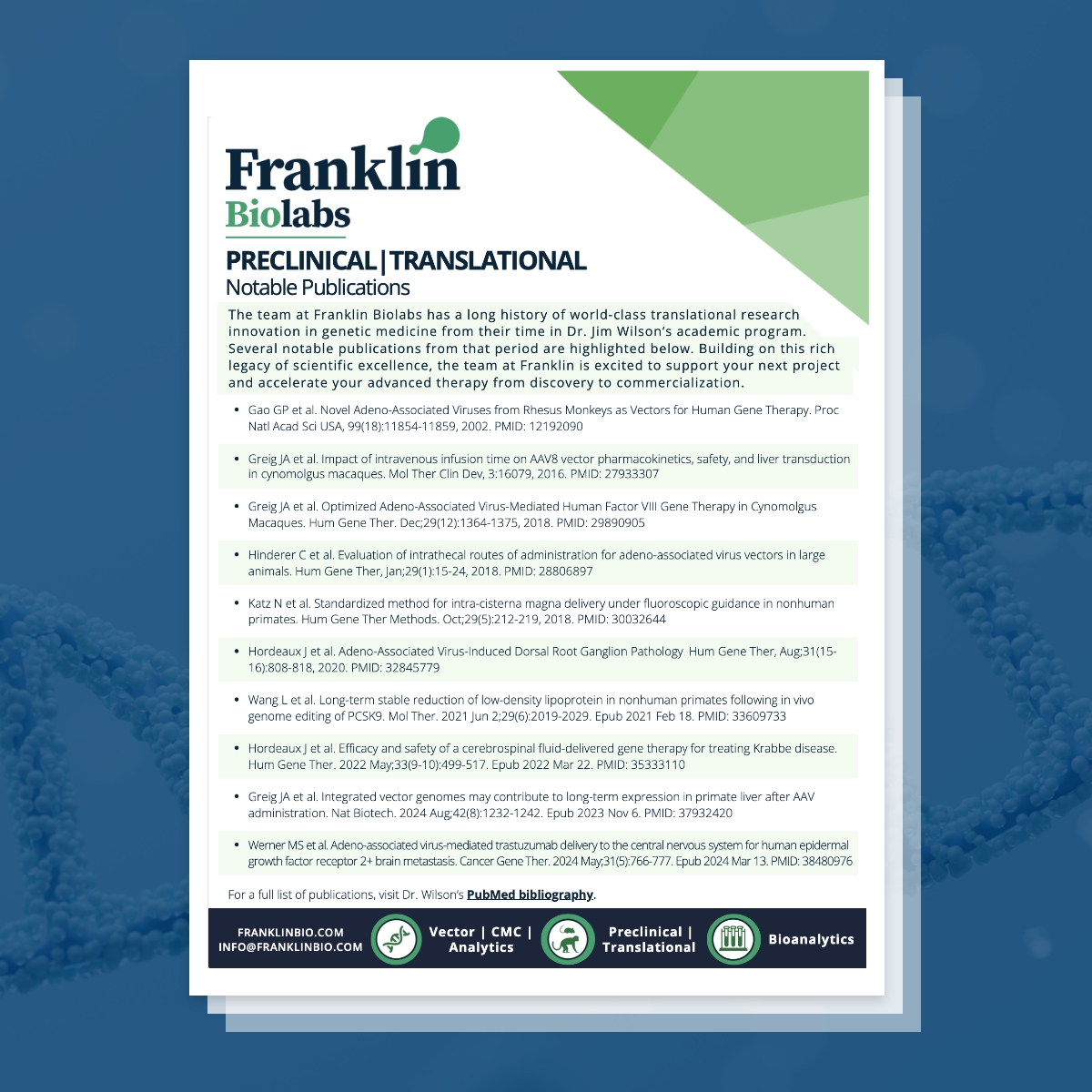
The biodistribution of an AAV vector is not generic: it is dictated by its underlying biology. Capsid selection is a primary factor influencing tissue tropism and, consequently, shedding patterns. As demonstrated in comparative studies, engineered capsids like AAV3B can exhibit transduction profiles distinct from other serotypes, highlighting the need for program-specific assessments rather than relying on platform data (PMID: 26412589). A capsid with high liver tropism may present a different shedding risk compared to one that targets muscle or the central nervous system.
Beyond the capsid, other vector elements contribute to the safety profile. Strategies such as the use of short promoters or self-targeting mechanisms can increase the specificity of transgene expression, reducing activity in non-target tissues (PMID: 33359790). While focused on efficacy, these modifications also contribute to the overall risk assessment by limiting potential effects in off-target cell types, a concept that complements biodistribution data.
“We started collaborating with UPenn Vector core in 2023 and the AAV vector which they manufactured laid a foundation for development of a gene therapy candidate which will enter soon preclinical studies. The key people from UPenn Vector Core joined Franklin Biolabs and our partnership transitioned without interruption from UPenn Vecor Core to Franklin Biolabs Research Vector Division. Franklin Biolabs is our trusted partner in our AAV-vector based gene therapy candidate development and we hope to continue the partnership for years to come.”
— Biotech Partner
Quantitative Bioanalytical Methodologies
Accurate quantification of vector DNA in complex biological matrices like semen is a significant technical challenge. Franklin Biolabs employs GxP-compliant qPCR and ddPCR platforms to provide the necessary precision and sensitivity.
| Feature | Quantitative PCR (qPCR) | Droplet Digital PCR (ddPCR) |
|---|---|---|
| Principle | Relative quantification against a standard curve | Absolute quantification via sample partitioning |
| Sensitivity | High; dependent on assay optimization | Very high; less susceptible to PCR inhibitors |
| Precision | Good; relies on standard curve accuracy | Excellent; provides higher precision at low copy numbers |
| Regulatory Acceptance | Widely accepted | Increasingly accepted; preferred for low-target assays |
The choice between qPCR and ddPCR is driven by the specific needs of the program, including the expected level of shedding and the requirements of the target regulatory agency. Our scientific team provides consultative support to select and validate the most appropriate methodology for your AAV construct and development plan.

This content is for informational purposes. For guidance specific to your therapeutic program, please contact our team for a consultation.
Explore More Capabilities
Related Hub
Immunogenicity Intelligence for Advanced Therapies.
Related Hub
Bioanalysis that Guides Genetic Medicines and Biologics Development
Related Hub
Proven Biodistribution Frameworks Validating Target Engagement.