Development of a Cell-Based Neutralizing Antibody (NAb) Assay for Gene Therapy Clinical Trials

PROVEN INTELLIGENCE ACCELERATING NEXT-GENERATION THERAPIES

Development of a Cell-Based Neutralizing Antibody (NAb) Assay for Gene Therapy Clinical Trials

Cell-Based Neutralizing Antibody (NAb) Assays for Viral Vectors

CELL & GENE | RNA | BIOLOGICS

Proven Intelligence Accelerating Next-Generation Therapies.

A digital rendering of a DNA double helix on a dark blue background with floating particles.

A stylized, 3D rendering of a DNA double helix in light blue and white, set against a soft-focus, light gray background.

Executive Summary

A robust, validated cell-based neutralizing antibody (NAb) assay is a required component of the immunogenicity assessment for most viral vector-based gene therapy programs. These assays quantify the functional ability of antibodies in patient serum to inhibit vector transduction, providing data that directly informs patient selection, dose-response modeling, and overall risk assessment. Franklin Biolabs develops and validates phase-appropriate NAb assays for AAV, lentiviral, and adenoviral vectors under GxP conditions, supporting programs from preclinical characterization through pivotal clinical trials.

Frequently Asked Questions

    What is the primary purpose of a NAb assay in a gene therapy trial?

    The primary purpose is to quantify the level of pre-existing or treatment-emergent antibodies that can functionally neutralize the viral vector, which could prevent the therapy from reaching its target cells and exerting its effect. This data is used for patient screening and monitoring immune responses post-administration.

    Why is a cell-based assay preferred over a simple binding assay (e.g., ELISA)?

    While binding assays detect the presence of anti-vector antibodies, they do not measure their functional impact. A cell-based NAb assay directly measures the inhibition of vector transduction into a target cell, providing a more biologically relevant assessment of immunogenicity that is expected by regulatory agencies.

    At what stage should a NAb assay be developed?

    Assay development should begin during the preclinical phase to support IND-enabling toxicology studies. The assay is then qualified and subsequently validated in a phase-appropriate manner to meet GxP requirements for clinical sample analysis.

    Can a single NAb assay be used for multiple AAV serotypes?

    No. NAb responses are highly specific to the vector capsid. A separate, qualified assay must be developed for each unique AAV serotype (e.g., AAV8, AAV9) used in a clinical program.

The Challenge of Vector Immunogenicity

The efficacy of a viral vector gene therapy can be significantly impacted by the host immune system. Pre-existing antibodies to vectors like Adeno-Associated Virus (AAV), often resulting from natural exposure, can neutralize the therapeutic vector upon administration. Quantifying this neutralizing antibody response is a standard regulatory expectation for clinical development.

An effective immunogenicity strategy hinges on a well-characterized, functional assay. The data informs patient inclusion/exclusion criteria and helps interpret clinical outcomes. For instance, clinical investigations have shown that sustained transgene expression is possible even when T-cell responses develop, underscoring the need to specifically measure the functional impact of humoral immunity (PMID: 19706466). A precisely calibrated NAb assay provides this functional data.

A scientist in a sterile laboratory setting uses a multichannel pipette to transfer pink liquid into a multi-well plate for a high-throughput experiment.

Developing a Robust Cell-Based NAb Assay

Our scientific team, operating within a >100,000 sq ft facility, designs NAb assays tailored to your specific vector and program needs. The process is built on a foundation of scientific rigor to ensure reproducibility and accuracy.

  • Vector & Cell Line Selection: The assay uses a reporter construct (e.g., luciferase, GFP) packaged in your specific clinical vector capsid (AAV2, AAV5, AAV8, etc.). We select or engineer a target cell line that is highly permissive to transduction by your vector.

  • Assay Optimization: We systematically optimize key parameters, including cell density, vector concentration (multiplicity of infection), and serum incubation times to establish a sensitive and reproducible assay window.

  • Cut Point Determination: Statistical analysis of serum from a large, healthy donor population is performed to establish a statistically valid screening cut point, which differentiates negative samples from potentially positive samples.

Phase-Appropriate Validation and Regulatory Alignment

A NAb assay intended for clinical trial support must be validated according to GxP guidelines. Our validation protocols are designed to meet FDA and EMA expectations, assessing parameters such as precision, accuracy, specificity, and robustness. This rigorous approach provides confidence in the data used for clinical decision-making.

This level of detail is necessary for programs targeting indications where achieving high and well-tolerated vector delivery and expression are primary objectives (PMID: 32937039). Our approach to building a solid analytical foundation contributes to a projected 18-24 month timeline to get candidates to IND. This methodology has supported a 100% successful IND submission rate for programs initiated since 2019, with the Franklin Biolabs brand itself launching in 2024.

A blue-toned image of white lab rats in their cages within a laboratory or vivarium setting, likely for scientific research or testing.

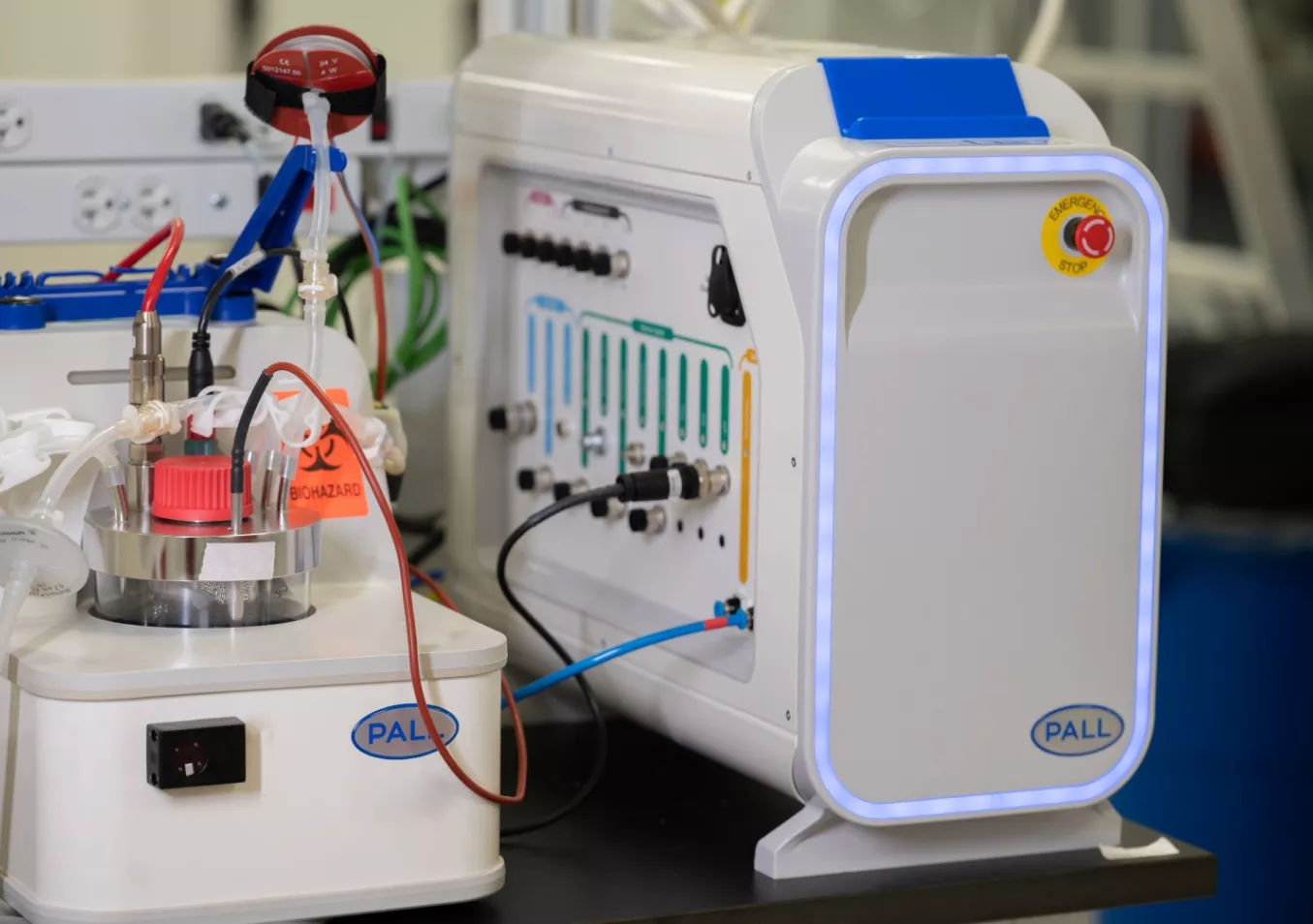
A close-up shot of a modern bioreactor system and control unit from Pall Corporation in a clean laboratory environment.

Beyond AAV: Assays for Lentiviral and Adenoviral Vectors

While AAVs are a common focus, our expertise extends to other clinically relevant viral vectors. We apply the same scientific principles to develop and validate custom NAb assays for lentiviral (LV) and adenoviral (AdV) platforms, adapting the assay design to the unique biology of each vector system. This capability ensures comprehensive immunogenicity support across a diverse range of gene therapy approaches.

Featured Resource: Process Optimization

A stylized 3D rendering of a DNA double helix, composed of light-colored spheres on a translucent blue backbone, set against a soft-focus, light blue background.

Technical Visualization: NAb Assay Development & Validation Pathway

Scientific Process Diagram

This content is for informational purposes. For guidance specific to your therapeutic program, please contact our team for a consultation.