The Role of Analytical Development in De-risking CMC for Advanced Therapies

PROVEN INTELLIGENCE ACCELERATING NEXT-GENERATION THERAPIES

The Role of Analytical Development in De-risking CMC for Advanced Therapies

The Role of Analytical Development in De-risking CMC for Viral Vectors

CELL & GENE | RNA | BIOLOGICS

A scientist in protective gear pipetting a sample into a vial within a sterile laboratory hood.

Proven Intelligence Accelerating Next-Generation Therapies.

Executive Summary

A robust analytical development program is a primary component of a successful Chemistry, Manufacturing, and Controls (CMC) strategy for viral vectors like AAV, Lentivirus, and Adenovirus. Phase-appropriate characterization of the drug substance and product minimizes regulatory risk, prevents program delays, and provides the data integrity required to support an 18-24 month timeline to IND. This involves a suite of assays to define vector identity, purity, quantity, and potency, ensuring lot-to-lot consistency and a comprehensive understanding of the therapeutic’s quality attributes.

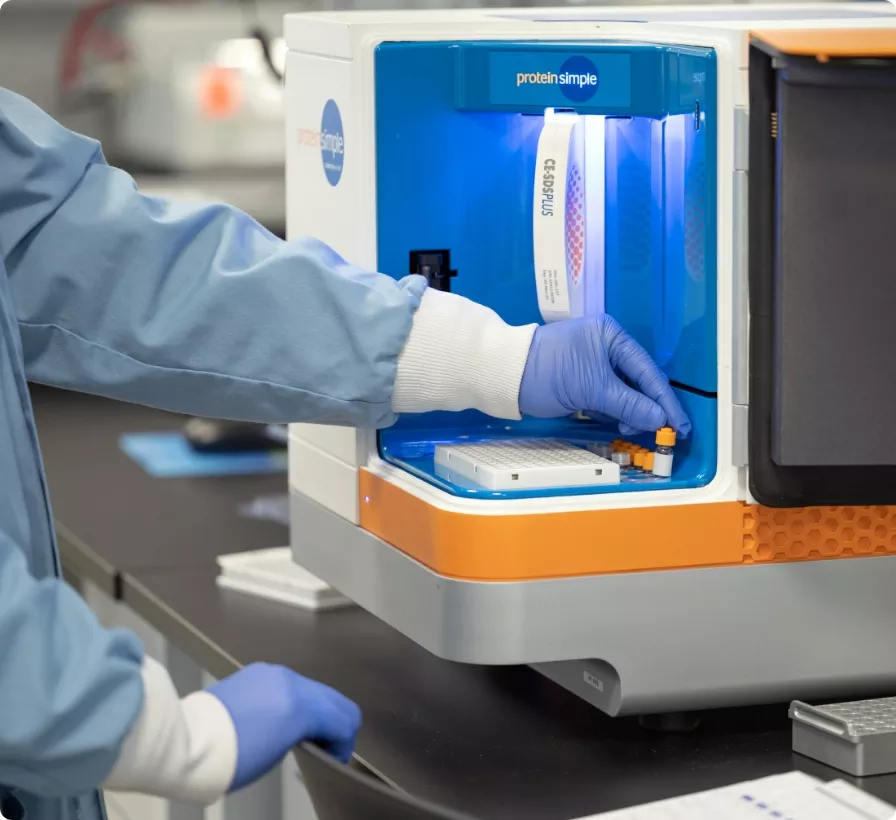
A scientist in a lab coat and gloves loads samples into a ProteinSimple instrument for analysis.

Frequently Asked Questions

    What is the primary goal of analytical development for AAV vectors?

    The goal is to establish a comprehensive profile of the vector’s physical, chemical, and biological properties. This ensures the product is consistent, effective, and provides the data package necessary to support regulatory submissions such as an IND or IMPD.

    When should potency assay development begin?

    Potency assay development should begin as early as possible, ideally during the research phase. An early, well-characterized potency assay provides a functional measure of the vector that is invaluable for process development, stability studies, and establishing product specifications.

    How does Franklin Biolabs approach empty vs. full capsid analysis?

    We employ multiple orthogonal methods to quantify empty and full capsids, including transmission electron microscopy (TEM), analytical ultracentrifugation (AUC), and charge detection mass spectrometry (CDMS). This multi-faceted approach provides a highly accurate assessment of this quality attribute.

    Are these analytical methods GxP compliant?

    Yes, all methods are developed and qualified or validated in a phase-appropriate manner to meet GxP requirements for preclinical and clinical programs.

A researcher in a lab coat and blue gloves gently holds three white lab mice, symbolizing animal models in scientific research.

Building a Submittable Data Package

Regulatory expectations for viral vector characterization are well-defined. A successful submission requires a data package that leaves no ambiguity regarding the product’s identity, purity, and strength. A failure to adequately characterize the product is a common reason for clinical holds. The analytical strategy must be designed from the beginning to build a coherent narrative about the product and the process used to manufacture it.

Our approach focuses on establishing a deep understanding of the vector’s quality attributes early in the process. This strategy of accelerated characterization for rapid product validation includes:

  • Identity: Confirming the correct transgene, capsid serotype (e.g., AAV8, AAV9), and structural integrity.

  • Purity: Quantifying process-related impurities (host cell proteins, DNA) and product-related impurities (e.g., empty capsids, aggregates).

  • Quantity: Accurately titering the vector genome concentration and total particle count.

  • Potency: Developing a biologically relevant assay that measures the specific therapeutic function of the vector.

Our integrated teams possess deep expertise across all aspects of vector production and analytics, ensuring a comprehensive and scientifically sound approach to characterization.

Integrating Analytics with Process and Biology

Analytical development does not occur in a vacuum; it is directly linked to process development and the underlying biology of the therapeutic. Insights from biomarker discovery can inform the analytical control strategy. For example, work identifying specific biomarkers that correlate with disease phenotype and therapeutic response (PMID: 28934395) underscores the value of precise analytical measurements. A well-characterized vector, measured with validated assays, allows for a clear interpretation of such biomarker data in preclinical models.

This integrated view ensures that as the manufacturing process scales, the analytical methods are robust enough to detect any potential changes in the product profile.

A digital rendering of a DNA double helix on a dark blue background with floating particles.

A stylized, 3D rendering of a DNA double helix in light blue and white, set against a soft-focus, light gray background.

Phase-Appropriate Method Qualification and Validation

A common misstep is applying a rigid, one-size-fits-all validation template to analytical methods. The required rigor of an assay evolves with the program’s clinical progression.

Phase Analytical Objective Level of Rigor
Research Method development, proof-of-concept Fit-for-purpose
IND-Enabling Method qualification, CQA definition Qualified for precision, accuracy, linearity
Clinical Full method validation GxP compliant, validated per ICH guidelines

This phase-appropriate strategy conserves resources while building the necessary data integrity to support each stage of the program. This disciplined, forward-looking approach has supported a 100% successful IND submission rate for programs initiated since 2019, with the Franklin Biolabs brand itself launching in 2024.

Technical Visualization: Integrated Analytical Workflow for Viral Vectors

Scientific Process Diagram

This content is for informational purposes. For guidance specific to your therapeutic program, please contact our team for a consultation.