A Comprehensive Guide to Upstream Process Development for Recombinant AAV Vectors

PROVEN INTELLIGENCE ACCELERATING NEXT-GENERATION THERAPIES

A Comprehensive Guide to Upstream Process Development for Recombinant AAV Vectors

Upstream Process Development for Recombinant AAV Vectors

CELL & GENE | RNA | BIOLOGICS

A close-up of a scientist in a lab, wearing blue gloves and examining the results of a gel electrophoresis or Western blot.

Executive Summary

Effective upstream process development (UPD) for recombinant adeno-associated virus (AAV) vectors is a prerequisite for a scalable, high-yield manufacturing program. This guide details key parameters for optimizing cell culture, transfection, and bioreactor conditions to produce high-quality viral vectors suitable for IND-enabling toxicology studies. The focus is on establishing a robust and reproducible process that minimizes batch-to-batch variability and builds a direct path toward GxP manufacturing.

Frequently Asked Questions: AAV Upstream Process

    What is the primary goal of AAV upstream process development?

    The primary goal is to define and optimize the cell culture conditions and transfection parameters that maximize the production of functional, full AAV capsids per cell before the harvest stage. This involves balancing cell density, viability, and vector productivity.

    How does upstream development impact downstream purification?

    A well-optimized upstream process directly simplifies downstream challenges. By maximizing vector yield and minimizing cellular debris and host cell protein contamination, subsequent purification steps become more efficient, leading to higher recovery and purity. This principle is a cornerstone of developing scalable chromatography methods for viral vectors.

    Which is better: adherent or suspension culture for AAV production?

    Both platforms have specific applications. Adherent systems like iCELLis® are effective for certain cell lines and smaller-scale production. Suspension culture, utilizing single-use bioreactors, is generally preferred for large-scale clinical and commercial manufacturing due to its scalability from 2L to 500L+ and superior process control.

    How early should scalability be considered?

    Scalability must be a consideration from the initial process design. Media selection, feed strategies, and transfection methods should be chosen based on their proven performance in large-volume bioreactors to avoid costly process changes late in development.

Optimizing AAV Production from Plasmid to Bioreactor

A tailored preclinical strategy is required for every AAV therapeutic. The upstream process begins with the optimization of plasmid DNA ratios and transfection reagents to ensure efficient delivery to producer cells. This phase establishes the baseline for vector packaging and expression.

Subsequent work focuses on cell culture conditions. Key parameters include:

  • Media Selection & Feed Strategy: Identifying optimal growth media and nutrient feeds to support high-density cell cultures and maintain viability throughout the production run.

  • Cell Line Stability: Characterizing the producer cell line to ensure consistent growth and productivity across multiple passages.

  • Transfection Parameter Optimization: Refining the conditions for introducing plasmid DNA into the cells, including cell density at transfection and the complexation method.

We started collaborating with UPenn Vector core in 2023 and the AAV vector which they manufactured laid a foundation for development of a gene therapy candidate which will enter soon preclinical studies. The key people from UPenn Vector Core joined Franklin Biolabs and our partnership transitioned without interruption from UPenn Vecor Core to Franklin Biolabs Research Vector Division. Franklin Biolabs provides the essential scientific and manufacturing support for our AAV-vector based gene therapy candidate development, and we hope to continue the partnership for years to come.

A close-up of a pipette dispensing liquid into a rack of test tubes, set against a cool-toned, sterile background.

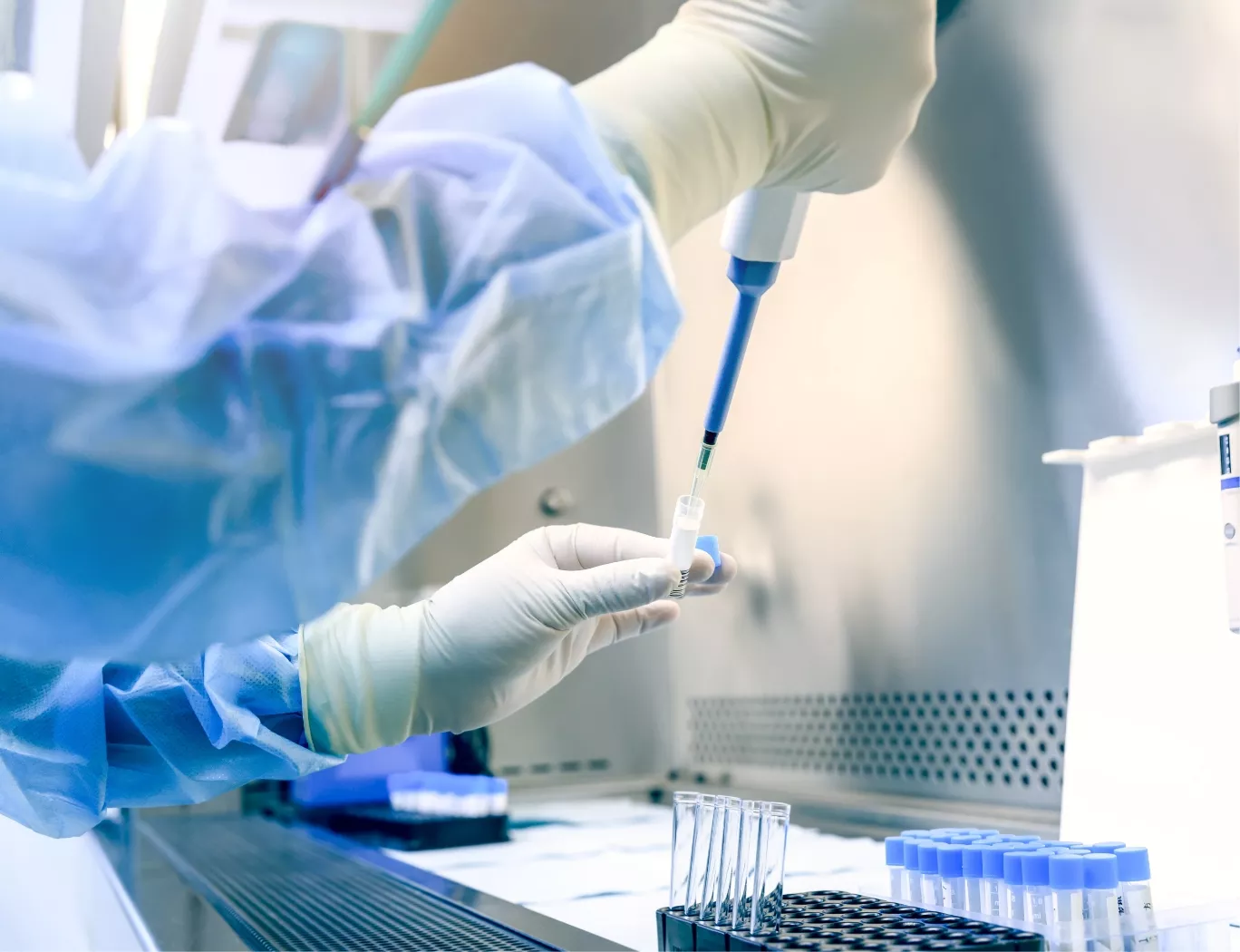
A scientist in protective gear pipetting a sample into a vial within a sterile laboratory hood.

From Bench Scale to IND-Enabling Production

Confirming scalability is a pivotal step. Processes developed in shake flasks or small-scale bioreactors must be validated in larger, pilot-scale systems that mimic the GxP production environment. These confirmation runs provide the data needed to lock the process parameters.

This phase also informs the analytical strategy. In-process controls are established to monitor culture health and vector productivity, ensuring that each batch meets predefined specifications before proceeding to harvest and downstream purification. This rigorous, data-driven approach is part of a development pathway that has supported a 100% successful IND rate for programs since 2019, with the Franklin Biolabs brand formally launching in 2024 to continue this legacy of scientific execution.

Upstream vector design can have profound impacts on the clinical safety profile. Incorporating specific genetic elements, such as microRNA binding sites, into the vector construct can mitigate potential toxicities observed in preclinical models (PMID: 33177182). This demonstrates how intelligent upstream design directly contributes to minimizing clinical risk.

Technical Visualization: AAV Upstream Process Development Workflow

Scientific Process Diagram

This content is for informational purposes. For guidance specific to your therapeutic program, please contact our team for a consultation.