Franklin Biolabs Selected as a 2026 PHL Inno Fire Awards Honoree by the Philadelphia Business Journal
Learn more
AAV Downstream Process Development for Scalable Manufacturing
PROVEN INTELLIGENCE ACCELERATING NEXT-GENERATION THERAPIES
AAV Downstream Process Development for Scalable Manufacturing
CELL & GENE | RNA | BIOLOGICS
Proven Intelligence in AAV Purification and Analytics.
Executive Summary
Effective downstream purification is a determining factor in the viability of large-scale AAV manufacturing. Moving from research-grade to clinical-grade material requires a process that can consistently remove process-related impurities : including host cell proteins, residual DNA, and empty capsids : while maximizing the recovery of potent, full capsids. This involves a multi-step strategy, often employing affinity, ion-exchange, and size-exclusion chromatography, tailored to the specific AAV serotype and intended clinical application. Franklin Biolabs leverages a >100,000 sq ft facility and a scientific team with a proven track record to design and implement purification protocols that meet global regulatory expectations, supporting an 18-24 month timeline to IND.
Frequently Asked Questions
What are the primary challenges in AAV downstream purification when scaling from bench to clinical production?
The primary challenges involve maintaining product quality and yield. Key issues include efficiently separating full (genome-containing) capsids from empty ones, removing process-related impurities like host cell DNA and proteins, and ensuring the final formulation is stable. Each step, from clarification to final filtration, must be optimized to prevent vector aggregation and loss of potency, which requires deep expertise in both the vector’s biology and chromatography methods.
How does Franklin Biolabs approach purification for novel or engineered AAV capsids?
For novel or engineered capsids, a standard platform purification process may not be optimal. We initiate a tailored process development program. This involves screening various chromatography resins and buffer conditions to identify a purification train that specifically matches the capsid’s surface charge and biophysical properties. This data-driven approach ensures high purity and recovery for next-generation vectors that fall outside the parameters of common serotypes like AAV8 or AAV9.
Why is analytical development so tightly integrated with AAV downstream process development?
Analytical development is inseparable from purification because you can only purify what you can accurately measure. Phase-appropriate analytical assays are required at every step to quantify titer, assess the full-to-empty capsid ratio, measure purity, and confirm potency. Without robust, qualified analytics, it is impossible to validate that a downstream process is effectively removing impurities and preserving the quality of the final AAV product for IND-enabling toxicology studies.
The transition from small-scale AAV production to a scalable manufacturing process capable of supplying clinical programs hinges on a robust and reproducible downstream purification strategy. While upstream advancements have increased raw vector yields, the ultimate success of a therapeutic candidate depends on the ability to isolate a pure, potent, and safe final product. This is a core competency that underpins our work in [Large-Scale AAV Manufacturing and Process Development](/large-scale-aav-manufacturing-and-process-development/).
The requirement for scalable, clinical-grade AAV production methods has been a consistent theme in the field for over a decade (PMID: 19618999). A well-designed downstream process directly addresses this by creating a viable path to generating sufficient material for comprehensive GxP-compliant studies and eventual commercial supply.
Tailoring Purification to Vector and Indication
A one-size-fits-all template for AAV purification does not exist. The optimal strategy is dictated by several factors:
-
AAV Serotype: Natural serotypes (e.g., AAV2, AAV5, AAV8, AAV9) and engineered capsids possess different isoelectric points and surface chemistries, requiring distinct chromatography conditions.
-
Upstream Platform: The choice of adherent versus suspension culture introduces different impurity profiles that the downstream process must be designed to remove.
-
Target Indication & Dose: High-dose systemic applications demand exceptional purity to minimize potential immunogenicity, whereas localized delivery may have different primary quality attributes.
Our approach integrates deep analytical expertise with process development. As one partner noted, our team has, “Vast knowledge in all aspects of vector production and analytics.” This integration is foundational to developing a purification train that delivers consistent results.
Core Methodologies in AAV Purification
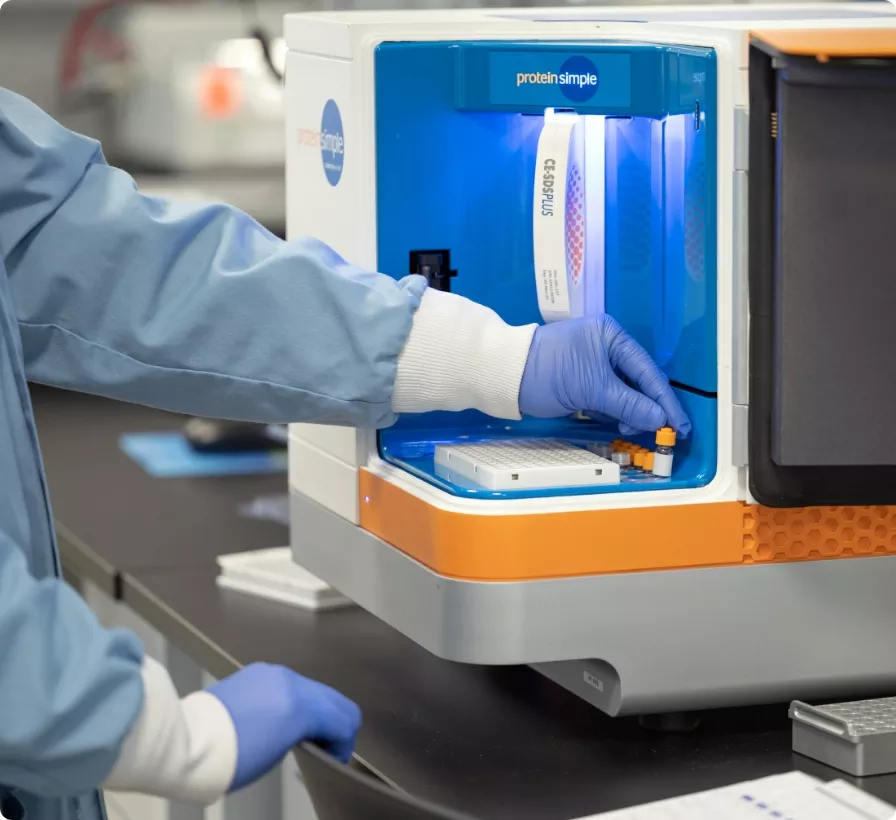
A typical downstream process involves several orthogonal chromatography steps to separate the AAV vector from contaminants. This multi-step approach ensures the removal of a wide range of impurities. The process generally includes clarification and concentration steps followed by a series of column chromatography techniques.
The design of these protocols is informed by decades of safety data, including foundational large-scale studies confirming the low intrinsic risk profile of AAV vectors when produced to a high standard of purity (PMID: 16043099). By effectively removing residual helper virus components and host cell DNA, a robust purification process ensures the final product’s safety aligns with regulatory expectations. For a deeper look at process design, our webinar on initiating AAV vector programs provides additional context.
This rigorous approach to purification and analytics is a hallmark of the scientific team at Franklin Biolabs. While the Franklin Biolabs brand was launched in 2024, this team’s execution is responsible for the 100% successful IND rate achieved since 2019, reflecting a long history of technical and regulatory execution.

This content is for informational purposes. For guidance specific to your therapeutic program, please contact our team for a consultation.