AAV Downstream Process Intensification for High-Purity Vector Recovery

PROVEN INTELLIGENCE ACCELERATING NEXT-GENERATION THERAPIES

AAV Downstream Process Intensification for High-Purity Vector Recovery

CELL & GENE | RNA | BIOLOGICS

Proven Intelligence in AAV Purification and Analytics.

A senior scientist leads a discussion with a group of diverse junior scientists in a bright, modern laboratory setting.

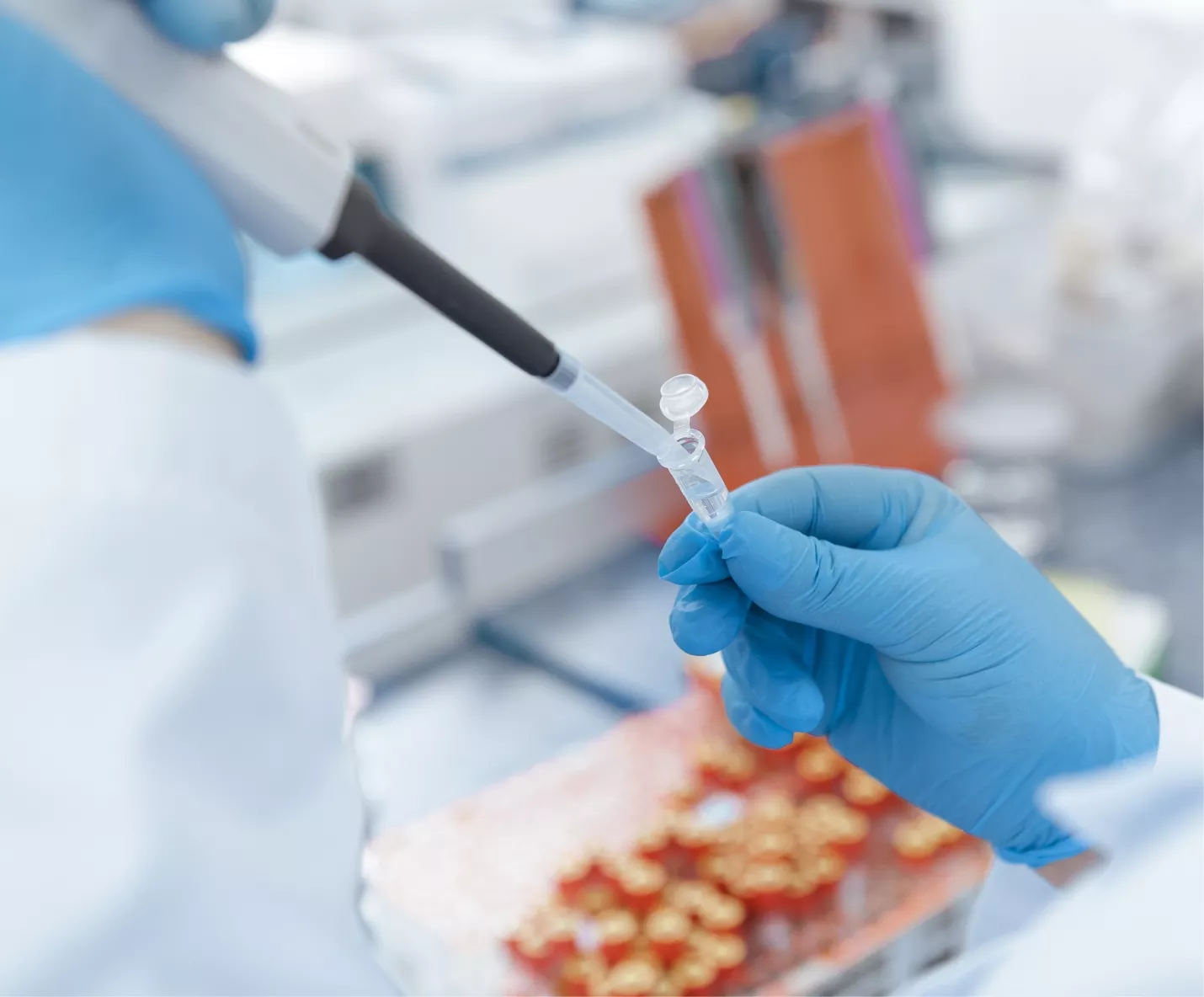
A close-up shot of a scientist in a lab coat and blue gloves using a micropipette to transfer a liquid sample into a small test tube.

Executive Summary

The efficiency of downstream processing is a primary determinant in the viability of an adeno-associated virus (AAV) program. High upstream titers are negated if purification methods fail to deliver a potent, high-purity final product. This page details technical challenges in AAV downstream processing and outlines strategies for process intensification, focusing on separating full and empty capsids and removing process-related impurities. The objective is to secure a high-recovery, scalable purification process that meets the analytical standards required for US FDA IND submissions. Franklin Biolabs operates from a >100,000 sq ft facility, and while the company formally launched in 2024, our founding scientific leadership’s track record includes a 100% successful IND rate since 2019. This history of execution informed our collaboration with leading industry partners and enables 18-24 month timelines to IND.

Frequently Asked Questions

What are the primary challenges in AAV downstream processing that intensification addresses?

The main challenges are efficiently separating full (genome-containing) capsids from empty capsids, removing host cell protein and DNA impurities, and maintaining vector potency throughout the purification train. Process intensification focuses on optimizing chromatography and filtration steps to maximize yield and purity, which supports the development of a scalable process for IND-enabling toxicology studies.

How does a platform-based purification process accelerate IND timelines for AAV vectors?

A platform purification process, developed for common AAV serotypes like AAV8 and AAV9, utilizes established chromatography resins and buffer systems. This approach reduces process development time, allowing programs to move from bioreactor harvest to purified bulk material faster. It accelerates the generation of material for GxP-compliant toxicology studies, directly supporting 18-24 month IND timelines.

What analytical methods are used to confirm high-purity AAV vector recovery?

A panel of qualified analytical assays is used. Vector genome titer is determined by ddPCR. Capsid titer is measured by ELISA. The ratio of full to empty capsids is assessed using analytical ultracentrifugation (AUC) or transmission electron microscopy (TEM). Purity is confirmed via SDS-PAGE and silver stain, while residual host cell DNA and protein levels are quantified using qPCR and ELISA, respectively.

The Downstream Bottleneck

The viability of an AAV-based next-generation therapy depends equally on robust downstream purification and high-titer upstream vector production. As suspension culture systems scale to 500L and beyond, the purification workflow must handle increased volumes and biomass without sacrificing recovery or purity. Inefficient downstream processing can lead to low yields and inconsistent product quality, jeopardizing program timelines.

Key technical hurdles in AAV purification include:

  • Full/Empty Capsid Separation: Achieving a high percentage of full, genome-containing capsids is a primary objective. Anion-exchange chromatography is a common method, but its effectiveness can be serotype-dependent.

  • Impurity Clearance: The process must effectively remove residual host cell proteins, host cell DNA, and plasmid DNA used during transfection.

  • Scalability: A purification process developed at the 2L research scale must be linearly scalable to the 50L or 200L+ volumes required for late-stage preclinical and clinical manufacturing.

A close-up of a gloved hand handling PCR tubes with blue liquid in a laboratory rack, with a blue color overlay.

Strategies for Process Intensification and Purity

A data-driven approach to downstream process development is tailored to the specific AAV serotype and intended clinical application. While platform methodologies provide a valuable starting point for common capsids (e.g., AAV8, AAV9), novel or engineered capsids often require customized development to optimize separation and yield.

Our scientific team designs purification trains that balance speed with product quality, a capability a partner recognized as a “Vast knowledge in all aspects of vector production and analytics.” This involves a multi-step chromatography process, typically combining affinity chromatography with ion-exchange and size-exclusion methods, complemented by tangential flow filtration (TFF) for concentration and buffer exchange.

The translational impact of a highly pure and potent vector preparation is significant. Demonstrating high activity of the therapeutic payload, as shown in studies with rAAV-delivered therapeutics, is foundational to building a data package that supports the intended biological effect for IND submissions to the FDA (PMID: 36006993).

This focused work on downstream processing ensures that the vectors produced in our large-scale systems are ready for pivotal preclinical evaluation. For a comprehensive overview of how capsid engineering and scalability fit into a successful AAV program, our webinar on initiating vector programs provides further context on preclinical safety profiling.

Learn more about our comprehensive services at the parent hub: Large-Scale AAV Manufacturing and Process Development.

AAV Downstream Strategy Visualization

Scientific Process Diagram

This content is for informational purposes. For guidance specific to your therapeutic program, please contact our team for a consultation.