
Adherent AAV Production at Scale Using Fixed-Bed Bioreactors
PROVEN INTELLIGENCE ACCELERATING NEXT-GENERATION THERAPIES
Adherent AAV Production at Scale Using Fixed-Bed Bioreactors
CELL & GENE | RNA | BIOLOGICS
Proven Intelligence in Scalable Vector Manufacturing.


Executive Summary
For specific AAV programs, adherent cell culture in fixed-bed bioreactors offers a highly controlled and productive environment for generating high-titer vector material. Franklin Biolabs utilizes iCELLis® and scale-X™ fixed-bed systems up to 200+ m2 to create a low-shear environment, enhancing vector quality for certain cell lines and serotypes. This manufacturing approach directly supports the generation of sufficient material for comprehensive, IND-enabling toxicology studies and aligns with global regulatory expectations (ICH) for multi-jurisdictional submissions.
Frequently Asked Questions
How do fixed-bed bioreactors like iCELLis® support large-scale AAV production for IND-enabling toxicology studies?
Fixed-bed bioreactors provide an exceptionally high surface-area-to-volume ratio in a controlled, low-shear environment. This allows for the production of large, concentrated batches of AAV vector with consistent quality attributes, which is necessary for supplying the material required for robust, multi-dose IND-enabling toxicology studies in relevant animal models.
What are the primary advantages of an adherent AAV platform for certain serotypes or therapeutic programs?
Adherent platforms can be advantageous for cell lines that exhibit poor growth in suspension or for AAV serotypes whose productivity is sensitive to the shear stress found in stirred-tank bioreactors. The stable, predictable environment of a fixed-bed system can lead to higher per-cell productivity and improved vector quality metrics for these specific applications.
Can a process developed in a 200+ m2 fixed-bed system be aligned with global regulatory expectations for an IMPD or IND submission?
Yes. A manufacturing process developed and optimized in a large-scale fixed-bed bioreactor provides a robust data package on process consistency, scalability, and product characterization. This data is fundamental to the CMC section of an IND or IMPD submission and demonstrates manufacturing control to global agencies like the FDA and MHRA.
The Rationale for Adherent Fixed-Bed Platforms
While suspension culture is a common path for AAV production, adherent platforms using fixed-bed bioreactors provide a distinct solution for specific therapeutic programs. Systems such as the iCELLis® and scale-X™ bioreactors are engineered to maximize surface area, creating a stable, low-shear-stress environment.
This approach is particularly beneficial for:
-
Sensitive producer cell lines that are susceptible to hydrodynamic stress.
-
Optimizing the yield of specific natural and engineered AAV serotypes.
-
Enhancing vector packaging efficiency in a highly controlled setting.
The controlled conditions within these systems mitigate the stresses that can impact cell viability, resulting in a highly consistent and reproducible manufacturing process.

Process Control and Scalability to 200+ m2
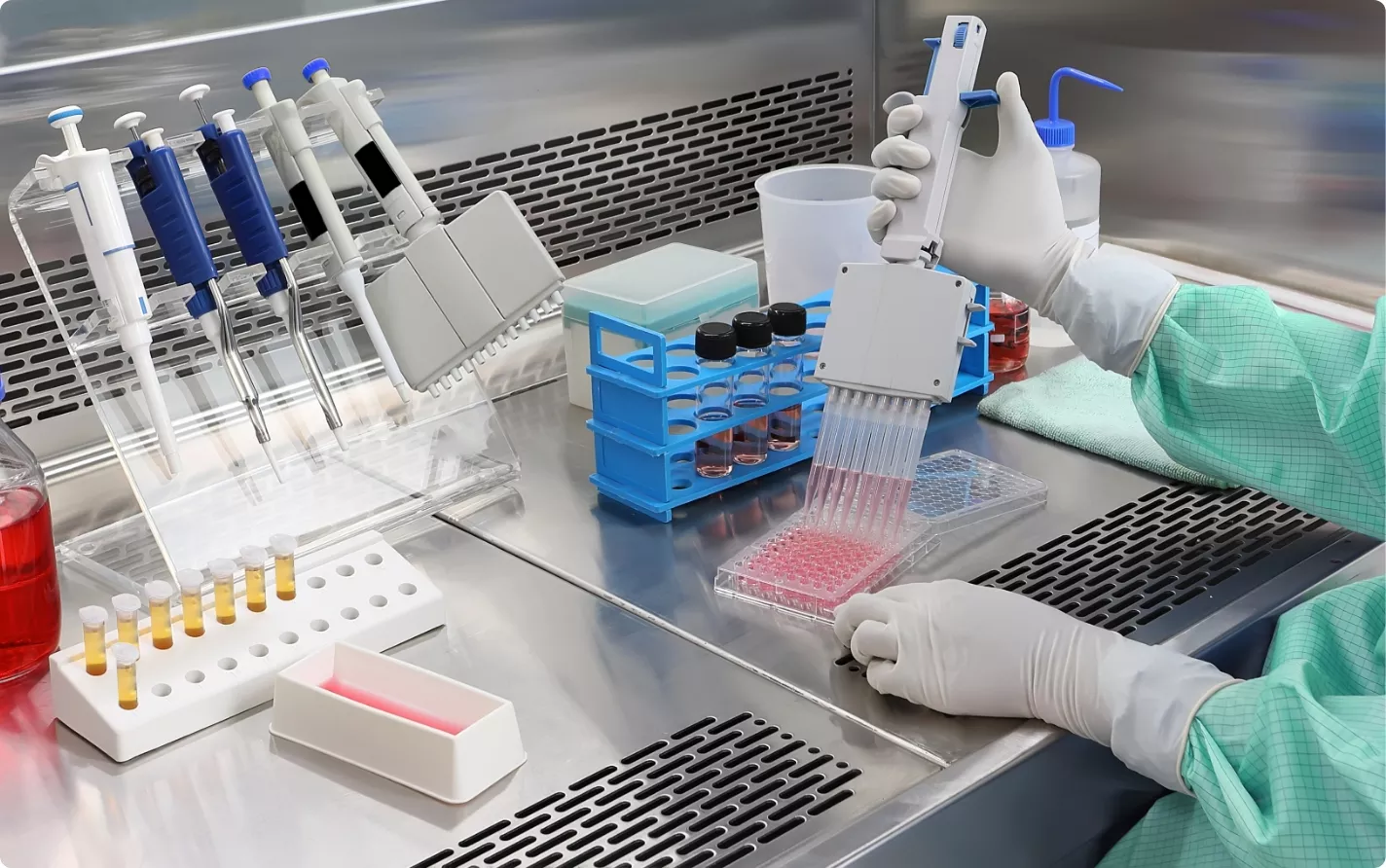
Achieving clinical scale requires a process that is not only productive but also predictable. The architecture of fixed-bed bioreactors allows for precise control over media perfusion, dissolved oxygen, and pH, ensuring uniform cell growth and vector production across the entire bed. This level of control is foundational to generating the high-quality material needed for next-generation therapies.
The scientific challenge of producing sufficient clinical-grade vector has been a long-standing focus in the field (PMID: 19618999). Adherent platforms provide a direct engineering solution, enabling linear scalability from small development-scale units to commercial-scale systems exceeding 200 m2 without fundamentally altering the cellular microenvironment. This approach simplifies process transfer and reduces the risks associated with scale-up.
De-risking Clinical Translation with Robust Supply
A core component of de-risking a therapeutic program is generating a deep understanding of its in vivo biological activity well before first-in-human administration. Large-scale adherent production provides the necessary quantity of vector to execute comprehensive biodistribution and toxicology studies. The established safety profile of AAV vectors, supported by extensive nonclinical data, provides a strong foundation for clinical translation (PMID: 16043099).
The continuity of process knowledge is a significant factor in program success. The same scientific leadership and principal scientists who developed these scalable processes now lead this work at Franklin Biolabs.
The transition of key scientific leadership from academic vector cores to Franklin Biolabs ensures seamless project continuity for our partners. For instance, a gene therapy program initiated in 2023, for which the foundational AAV vector was developed, transitioned to our Research Vector Division without interruption. This program is now advancing toward preclinical studies, with Franklin Biolabs serving as the dedicated manufacturing partner for its AAV vector development.
This continuity, combined with our >100,000 sq ft facility that also supports major developers like our partners, provides the operational stability required to move programs toward IND on an 18-24 month timeline. The track record of our founding scientific team includes a 100% successful IND rate since 2019, established prior to the formal launch of Franklin Biolabs in 2024.
This programmatic page is a specific extension of our core services. For a broader overview, please see our parent hub page on Large-Scale AAV Manufacturing and Process Development.

This content is for informational purposes. For guidance specific to your therapeutic program, please contact our team for a consultation.