GMP-Comparable Raw Material Sourcing and Qualification for Clinical-Grade AAV Vector Manufacturing

PROVEN INTELLIGENCE ACCELERATING NEXT-GENERATION THERAPIES

GMP-Comparable Raw Material Sourcing and Qualification for Clinical-Grade AAV Vector Manufacturing

GMP-Comparable Raw Material Sourcing for AAV Vector Manufacturing

CELL & GENE | RNA | BIOLOGICS
Executive Summary & Frequently Asked Questions

The framework for sourcing and qualifying raw materials for AAV vector manufacturing intended for IND-enabling studies is a key determinant of program success. The quality of foundational components, particularly plasmid DNA and cell culture media, directly correlates to final vector potency, purity, and consistency. A GMP-comparable approach mitigates risks long before GMP manufacturing begins.

    What defines a “GMP-comparable” raw material?

    A GMP-comparable raw material is sourced with full traceability, produced under a robust quality management system, and is accompanied by a Certificate of Analysis (CoA). While not produced under full GMP, it provides a clear and reproducible path to a GMP-grade equivalent, minimizing process changes during clinical scale-up.

    Why is plasmid DNA sourcing a focus for AAV production?

    The three plasmids used in transient transfection AAV systems (containing the GOI, Rep/Cap, and helper functions) are the biological blueprint for the final vector. Variability in plasmid quality, purity, or the percentage of supercoiled forms can impact transfection efficiency, vector titer, and the ratio of full to empty capsids.

    What are the primary risks of inadequate raw material qualification?

    Inconsistent raw materials can lead to batch-to-batch variability, failed manufacturing runs, and downstream purification challenges. This introduces confounding variables into preclinical studies and can jeopardize the typical 18-24 month path to IND if a process needs to be fundamentally re-developed.

Foundational Integrity: Plasmid DNA and Cell Line Diligence

The quality of an AAV vector is determined long before downstream purification. It begins with the foundational biological materials: the plasmid DNA that encodes the vector and the host cell line that produces it. We implement stringent incoming qualification protocols that extend beyond a vendor’s CoA.

For plasmid DNA, this includes verification of identity, concentration, and purity. We also assess the ratio of supercoiled plasmid, a parameter that directly influences transfection efficiency in both adherent and scalable suspension systems. For cell lines, we ensure stability, viability, and freedom from adventitious agents, establishing a well-characterized bank for all subsequent production runs.

The key people from UPenn Vector Core joined Franklin Biolabs and our collaboration transitioned without interruption from UPenn Vecor Core to Franklin Biolabs Research Vector Division. Franklin Biolabs is our collaborator in our AAV-vector based gene therapy candidate development and we hope to continue the collaboration for years to come.
— Biotech Partner

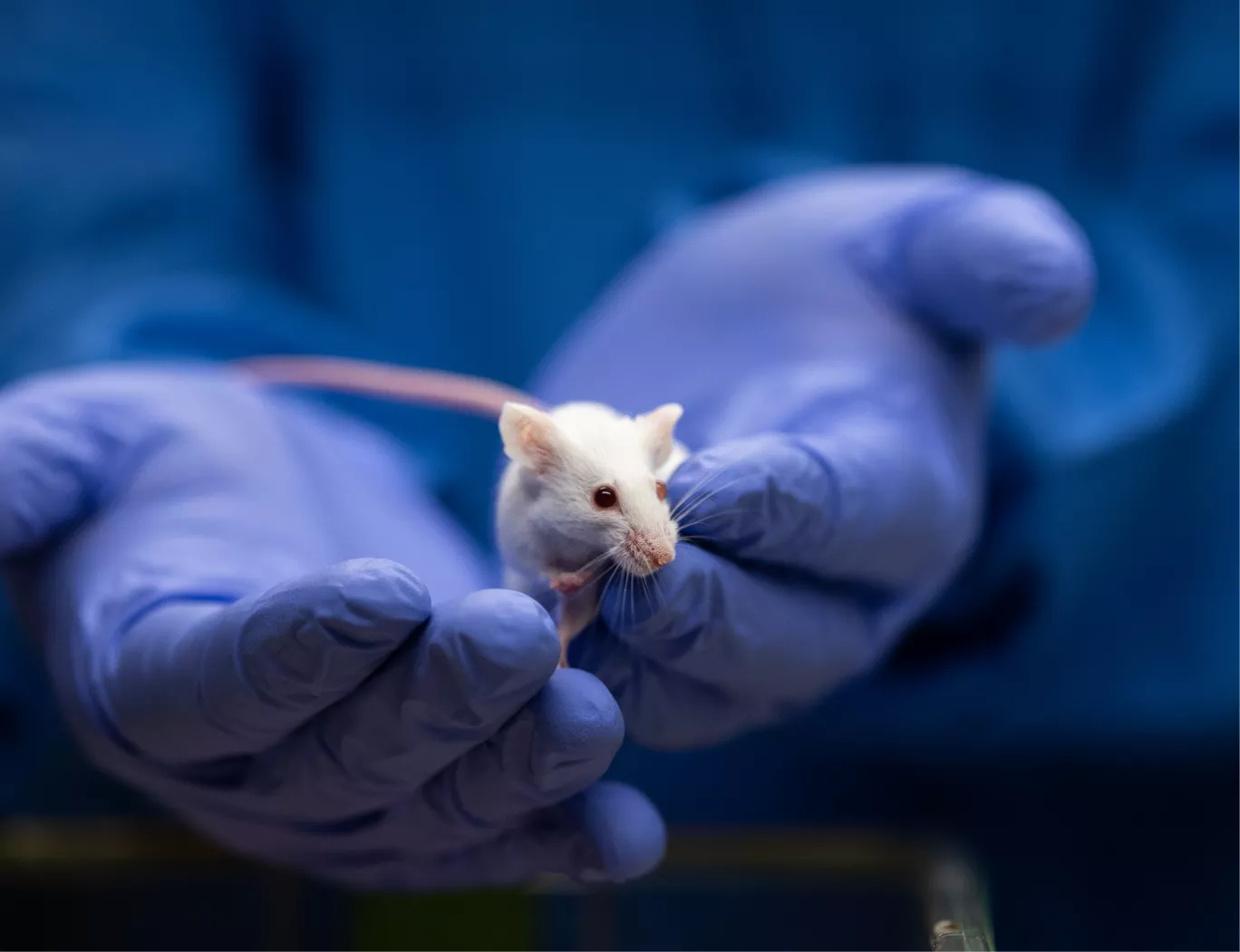
A close-up of a scientist in blue gloves gently holding a small, white laboratory mouse, likely in a research setting.

Establishing a Reproducible Process for IND-Enabling Toxicology Studies

A manufacturing process that yields a consistent product is a prerequisite for generating reliable preclinical data. The ability to define a minimally effective dose and characterize a safety profile, as demonstrated in foundational AAV research (PMID: 30112420), depends on a vector with predictable quality attributes (CQAs).

Our approach focuses on locking in key process parameters and raw material suppliers early. This minimizes process-related variability during toxicology and biodistribution studies. By establishing a well-documented, consistent manufacturing process, the data generated in these IND-enabling studies is directly relevant to the material that will be produced for clinical use.

Key qualification steps include:

  • Vendor Audits and Dual-Sourcing Strategies

  • Incoming Identity and Purity Verification (beyond CoA)

  • Small-Scale Functional Testing

  • Leachables and Extractables Assessment for Product-Contact Components

This diligence ensures that the vector supplied for pivotal nonclinical evaluation is representative of the final clinical product, minimizing clinical risk and supporting a successful IND submission. Our >100,000 sq ft facility is equipped to handle these parallel workflows, connecting CMC development with nonclinical program execution.

Technical Visualization: Raw Material Qualification Pathway

Scientific Process Diagram

This content is for informational purposes. For guidance specific to your therapeutic program, please contact our team for a consultation.