Optimizing Transfection Parameters in HEK293 Cells for AAV Manufacturing in Germany

PROVEN INTELLIGENCE ACCELERATING NEXT-GENERATION THERAPIES

Optimizing Transfection Parameters in HEK293 Cells for AAV Manufacturing in Germany

CELL & GENE | RNA | BIOLOGICS

A stylized 3D rendering of a DNA double helix, composed of light-colored spheres on a translucent blue backbone, set against a soft-focus, light blue background.

Executive Summary

Achieving consistent, high-titer AAV production at scale requires a systematic optimization of transfection parameters within HEK293 suspension cultures. This process moves beyond research-grade protocols to establish a robust, reproducible manufacturing blueprint suitable for IND-enabling studies and Investigational Medicinal Product Dossier (IMPD) submissions in Europe. Franklin Biolabs focuses on a data-driven methodology, refining variables such as plasmid ratios, cell density at transfection, and reagent selection to create a scalable process. This approach directly supports an 18-24 month timeline to IND, building on a legacy of a 100% successful IND rate since 2019 for programs originating from our foundational team, with the Franklin Biolabs brand officially launching in 2024.

Frequently Asked Questions

    What are the most common variables optimized during AAV process development?

    Key variables include the ratio of the three plasmids (rep/cap, GOI, and helper), the total amount of DNA used, cell density at the time of transfection, the specific transfection reagent, and post-transfection media and feed strategies.

    How does Franklin Biolabs ensure scalability from 2L to 500L+ runs?

    We establish a scalable process by first defining optimal parameters in small-scale bioreactors (e.g., 2L). These parameters are then confirmed in intermediate-scale runs before being implemented in large-scale single-use bioreactors, ensuring process consistency and predictable vector yields.

    Why is a platform approach to process development beneficial for German/EU submissions?

    A platform approach provides a well-characterized, robust starting point for manufacturing. This consistency generates the comprehensive CMC data required by European authorities for Advanced Therapy Medicinal Product (ATMP) classification and IMPD submissions.

    How does upstream process development impact downstream purification?

    Optimizing transfection efficiency and cell health upstream leads to higher volumetric productivity and a cleaner crude harvest. This simplifies downstream purification, often resulting in higher recovery rates and improved final product purity, including a better full-to-empty capsid ratio.

The Challenge of Scalable Transfection

Reproducibility in AAV manufacturing begins with the transfection event. A protocol that yields sufficient material for initial discovery work rarely translates directly to the larger volumes required for IND-enabling toxicology studies. Scaling up a non-optimized process often amplifies inconsistencies, leading to variable titers, poor full-to-empty capsid ratios, and costly batch failures.

A tailored preclinical strategy requires a manufacturing process that is equally tailored. Establishing a robust and scalable transfection protocol is a foundational step.

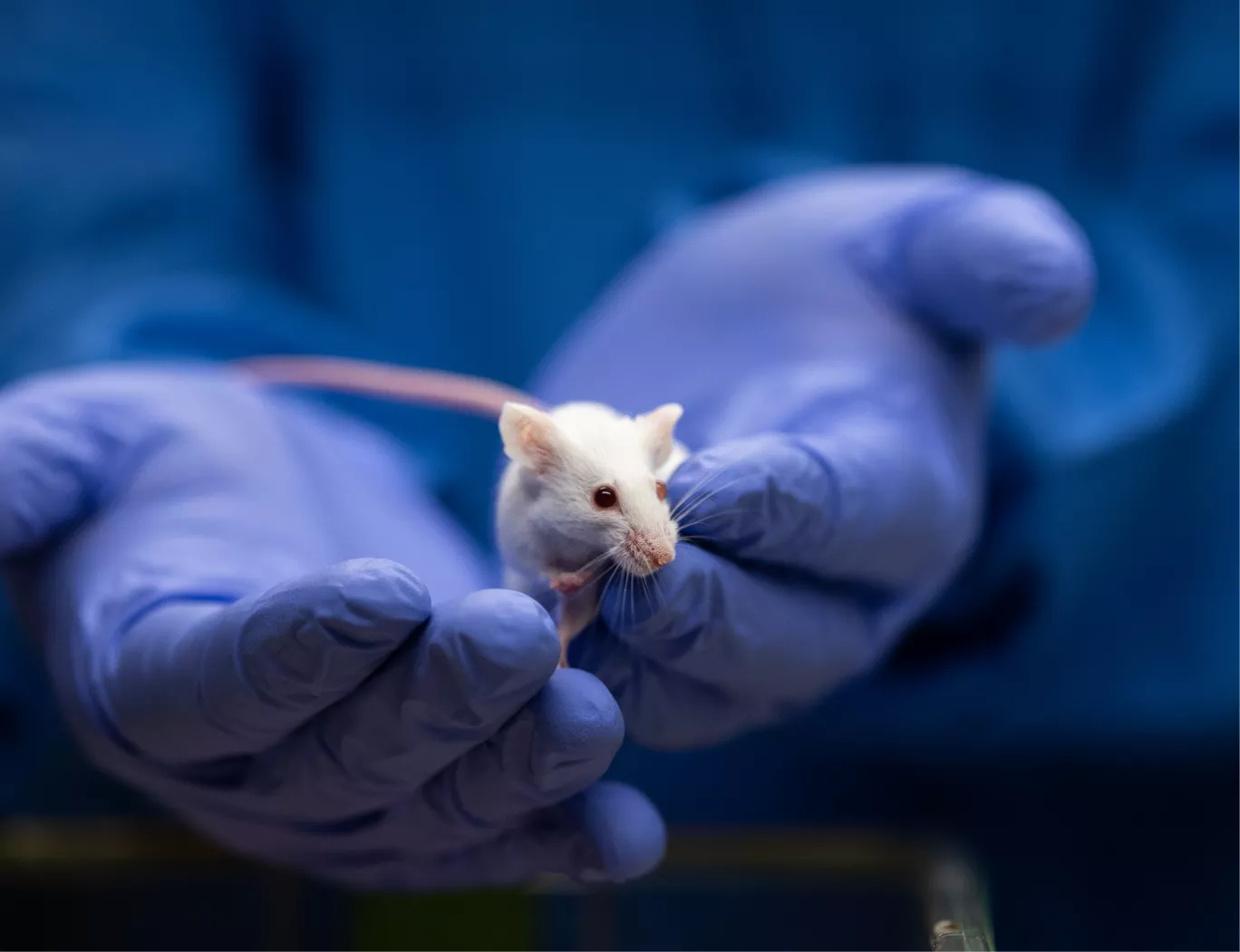
A close-up of a scientist in blue gloves gently holding a small, white laboratory mouse, likely in a research setting.

A Data-Driven Approach to Parameter Optimization

We address this challenge by systematically evaluating the core components of the transfection process in HEK293 suspension cultures. The work involves a methodical investigation to define a process that performs consistently within defined operational ranges.

Our development studies focus on:

  • Plasmid Stoichiometry: Defining the precise molar ratio of helper, rep/cap, and gene-of-interest (GOI) plasmids to maximize packaging efficiency for specific AAV serotypes like AAV8 and AAV9.

  • Cell Density & Viability: Identifying the optimal viable cell density (VCD) at the point of transfection to ensure maximal cellular uptake and productivity.

  • Reagent & DNA Complexing: Evaluating and selecting the most effective transfection reagents and defining the conditions for forming DNA-reagent complexes to ensure efficient delivery.

  • Media & Feed Strategy: Optimizing the culture environment post-transfection to support cell health and sustain high-level vector production.

Learn more about our >100,000 sq ft facilities by viewing the full tour [here]).

From Bench Scale to Bioreactor

The output of this work is a finalized manufacturing protocol, confirmed in scale-up runs within our Sartorius single-use bioreactors. This provides clients with a reliable process ready for producing GxP-compliant material for preclinical programs. This continuity of process knowledge is a significant advantage, de-risking the path to clinical manufacturing.

“We started collaborating with UPenn Vector core in 2023 and the AAV vector which they manufactured laid a foundation for development of a gene therapy candidate which will enter soon preclinical studies. The key people from UPenn Vector Core joined Franklin Biolabs and our partnership transitioned without interruption from UPenn Vecor Core to Franklin Biolabs Research Vector Division. Franklin Biolabs is integral to our AAV-vector based gene therapy candidate development and we hope to continue the partnership for years to come.”
— Biotech Partner

A stylized rendering of a DNA double helix on the left side of a light blue gradient background.

The Link Between CMC and In Vivo Outcomes

The quality of the vector produced has direct implications for its in vivo performance and immunogenicity. A well-defined manufacturing process minimizes process-related impurities and can improve the ratio of full to empty capsids, which may influence host immune responses (PMID: 17979679). An understanding of the vector’s interaction with the immune system is vital for clinical trial design, as even vectors that initially avoid immune detection can become targets under certain inflammatory conditions (PMID: 20234342). A robust CMC package provides the foundation for interpreting these complex biological outcomes.

Technical Visualization: AAV Process Development Workflow

Scientific Process Diagram

This content is for informational purposes. For guidance specific to your therapeutic program, please contact our team for a consultation.