Process choices directly influence the final product’s characteristics. For instance, selecting AAV serotypes with favorable secretion profiles can simplify purification, reducing the presence of process-related impurities. A highly controlled and reproducible process ensures that the vector administered in pivotal nonclinical toxicology studies is representative of the material used in human trials, minimizing the risk of unexpected clinical outcomes.
A primary source of program delay for ATMPs is manufacturing variability. Inconsistent vector production introduces significant uncertainty into nonclinical safety assessments and can compromise the integrity of a clinical data package submitted to regulatory bodies like Swissmedic or the EMA. The foundation of a successful program is a manufacturing process built for reproducibility from the outset.
Vector biology informs the approach to optimizing manufacturability. For example, scientific understanding of the differential release mechanisms of AAV serotypes dictates purification strategies. Knowledge that serotypes like AAV8 and AAV9 are efficiently secreted into culture media allows for the design of streamlined downstream processes that enhance yield and purity (PMID: 20649475). This tailored approach reduces complexity and improves batch consistency.
This manufacturing control is directly linked to clinical predictability. A well-characterized and reproducible vector lot enables the precise determination of a minimally effective dose and therapeutic window in IND-enabling toxicology studies (PMID: 34652966). This clarity is fundamental for establishing a safe starting dose in humans and provides regulators with a clear, data-driven rationale for the proposed clinical plan.
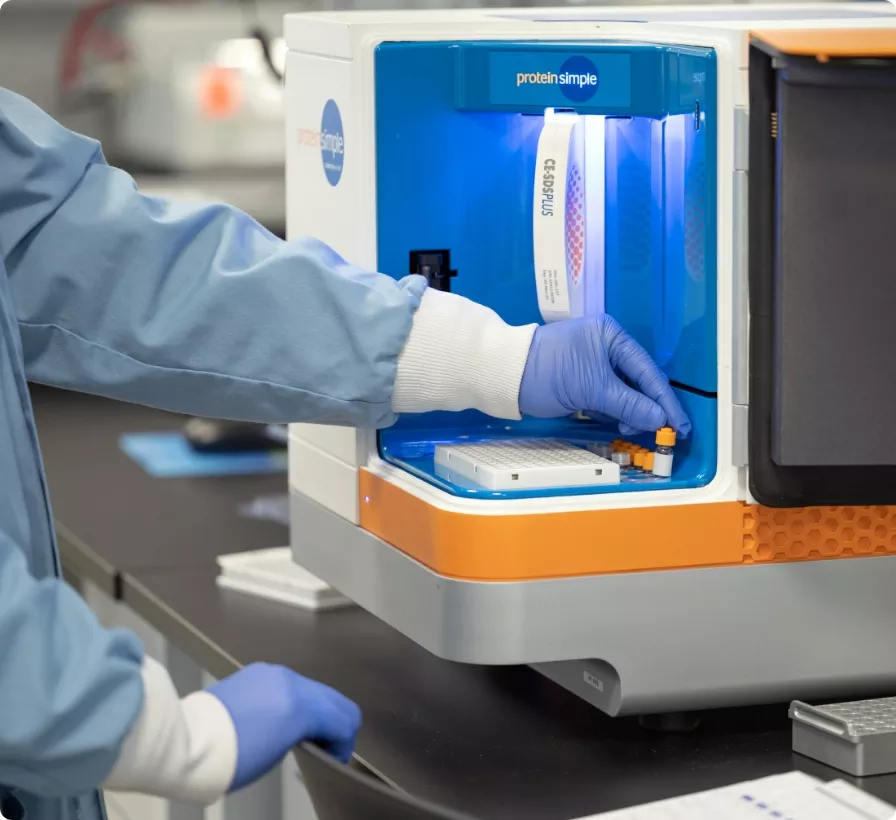
This level of process control is achieved through deep scientific expertise spanning all facets of vector production and analytics, from initial process development to final quality control.
Franklin Biolabs provides both adherent and suspension AAV production platforms to meet program-specific needs. Our experience spans adherent processes in iCELLis® fixed-bed bioreactors and highly scalable suspension cultures in Sartorius single-use systems up to 500L+. This operational flexibility, housed within our >100,000 sq ft facility, ensures we can develop a phase-appropriate process that aligns with your long-term clinical and commercial goals.The scientific leadership and core operational teams at Franklin Biolabs carry forward the track record that achieved a 100% successful IND rate since 2019, prior to the formal launch of the Franklin Biolabs brand in 2024. This continuity provides sponsors with confidence in our ability to generate a robust CMC data package suitable for global regulatory submissions.
For more information on our core platforms, see our primary service page on [Large-Scale AAV Manufacturing and Process Development](/large-scale-aav-manufacturing-and-process-development/).
—