Webinar Alert! Assessing the Use of Non-Human Primates in Translational Research Today Register Today!
Nonhuman Primate Studies for Next Generation Therapies
We provide nonhuman primate (NHP) studies for gene therapies, RNA therapeutics, cell therapies, biologics, vaccines, and other advanced therapeutic programs.
NHP Expertise for Advanced Therapeutic Development
Nonhuman primate (NHP) studies play an important role in evaluating the safety, pharmacology, biodistribution, immunogenicity, and biological activity of novel therapeutics before they enter the clinic. Because every program is different, study design should be tailored to the therapeutic modality, mechanism of action, route of administration, target tissue, and stage of development. Franklin works closely with sponsors to select the right model and develop a study strategy that generates the data needed to move programs forward.
Our experience spans a wide range of advanced therapies, where NHP studies often extend beyond traditional toxicology. By integrating in-life observations with bioanalytical testing, immunogenicity assessments, biodistribution studies, and histopathology, we help sponsors gain a more complete understanding of their therapeutic and its performance in vivo.
Franklin combines scientific expertise with the infrastructure needed to execute complex NHP programs. Our AAALAC-accredited, USDA-registered facilities are located on a campus of more than 100,000 square feet and include over 75,000 square feet of USDA- and GLP-compliant animal space. With BSL-2/ABSL-2 capabilities, dedicated quarantine and isolation areas, and experience dosing more than 1,300 NHPs across multiple routes of administration, we provide the resources and operational experience sponsors need to support IND-enabling studies and other critical development milestones.
NHP Studies Across Therapeutic Modalities
Franklin Biolabs supports NHP studies across a range of advanced therapeutic programs. Study design and endpoints are tailored to the specific characteristics and development requirements of each modality.
NHP studies can help characterize the safety, pharmacology, biodistribution, immunogenicity, and biological activity of viral vector-based therapies.
For AAV programs, relevant assessments may include vector biodistribution, transgene expression, neutralizing antibodies, cellular immune responses, and vector shedding.

NHP studies can support the development of mRNA, siRNA, oligonucleotide, and other RNA-based therapeutics through evaluation of safety, exposure, pharmacodynamic activity, biodistribution, biomarkers, and immune responses.

NHP studies can be used to evaluate safety, persistence, biodistribution, immune responses, and other program-specific endpoints for cell-based therapies.
Study design can be adapted to the type of cell therapy, intended mechanism, route of administration, and questions being addressed during development.

NHP models can provide valuable information for biologics and other large-molecule therapeutics, including toxicology, pharmacokinetics, pharmacodynamics, immunogenicity, and biomarker assessments.

NHP studies can support vaccine development through evaluation of safety and immune responses, along with other pharmacology or biological endpoints appropriate to the program.

Therapies targeting the central nervous system and other specialized tissues may require study designs that incorporate specialized administration, sampling, and tissue assessments.
Depending on the program, endpoints may include neurological observations, CSF analysis, biodistribution, biomarkers, immunogenicity, and histopathology.
Learn more about our CNS capabilities
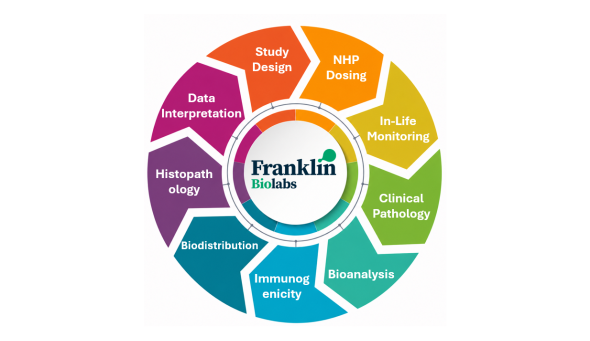
From NHP Study to Integrated Data Package
An NHP study generates more than in-life observations. The value comes from connecting findings across multiple disciplines. Franklin’s integrated capabilities allow sponsors to coordinate these activities as part of a connected preclinical program. The result is a more complete view of the therapeutic — from how it behaves in the body to its potential effects on target and non-target tissues.
Franklin Biolabs is committed to the highest standards of lab animal treatment and welfare,Learn More
NHP Models & Study Considerations
Selecting the appropriate NHP model is an important part of study design. Species, age, sex, serostatus, route of administration, dose, study duration, and planned endpoints should all be considered in the context of the therapeutic program. We work with you to develop study designs that align the NHP model and study endpoints with the questions that your program needs to answer.
Rhesus Macaques
An established model for a range of preclinical studies and can be relevant to programs requiring evaluation of systemic, immune, CNS, or other therapeutic effects.
Cynomolgus Macaques
Widely used in nonclinical development and may be appropriate for toxicology, pharmacology, biodistribution, and other safety assessments depending on the therapeutic and study objectives.
Marmosets
An established model for a range of preclinical studies and can be relevant to programs requiring evaluation of CNS, gene therapy, infectious disease, or other therapeutic effects.
Baboons
Well-characterized NHP models that may be appropriate for preclinical programs requiring evaluation of pharmacology, immunology, cardiovascular function, transplantation, or other complex therapeutic effects.
African Green Monkeys
African green monkeys are used in a range of preclinical studies and can be relevant to programs involving infectious disease, vaccines, immunology, gene therapy, and other therapeutic applications.
Squirrel Monkeys
Able to support specialized preclinical studies and may be appropriate for programs involving neuroscience, pharmacology, infectious disease, behavioral research, or other therapeutic applications.
Baboons
Well-characterized NHP models that may be appropriate for preclinical programs requiring evaluation of pharmacology, immunology, cardiovascular function, transplantation, or other complex therapeutic effects.
African Green Monkeys
African green monkeys are used in a range of preclinical studies and can be relevant to programs involving infectious disease, vaccines, immunology, gene therapy, and other therapeutic applications.
Squirrel Monkeys
Able to support specialized preclinical studies and may be appropriate for programs involving neuroscience, pharmacology, infectious disease, behavioral research, or other therapeutic applications.
These capabilities are designed to deliver accurate, reproducible data that accelerate your path to the clinic.
In Vivo Operations
Our experienced team includes board-certified veterinarians, toxicologists, and skilled technical staff who deliver expert veterinary, clinical, animal care, and welfare services, including rodent colony management. At Franklin Biolabs, we provide exceptional routine and specialized care for over 8 laboratory animal species and are dedicated to the health and well-being of the lab animals that are involved in our research programs.
Franklin Biolabs is committed to strict compliance with all applicable international, federal, and local regulations that govern the care and use of lab animals in biomedical research. We recognize and adhere to best practices in lab animal work, including a commitment to Reduce, Replace, and Refine the use of lab animals in research.

Case Study: NHP Experience in AAV-Based CNS Gene Therapy
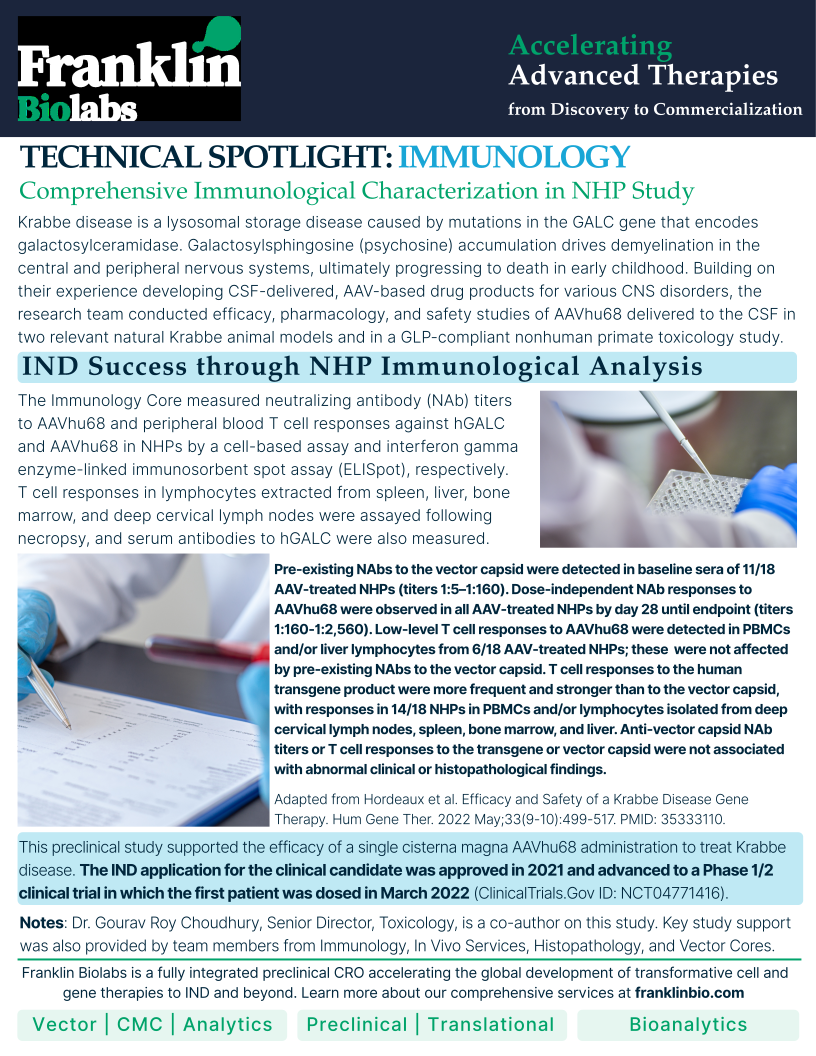
Franklin has supported GLP-compliant NHP toxicology studies for AAV-based CNS gene therapy programs. In one study supporting development of a therapy for Krabbe disease, Franklin evaluated an AAV-based treatment in rhesus macaques following CNS-directed administration. The study incorporated neurological monitoring, clinical pathology, CSF and blood analysis, neutralizing antibody assessments, histopathology, transgene expression, and cellular immune response testing.
Click here to learn how the study demonstrates Franklin’s ability to connect NHP toxicology with bioanalysis, immunogenicity, biodistribution, and pathology within a single preclinical program.
Why Franklin Biolabs for NHP Studies?
Advanced Therapeutic Experience
- Franklin supports the development of gene therapies, RNA therapeutics, cell therapies, biologics, vaccines, and other advanced therapeutic programs.
Integrated Capabilities
- NHP studies can be supported by Franklin’s preclinical, bioanalytical, immunogenicity, biodistribution, and pathology capabilities.
Connected Data
- Bringing multiple study endpoints together can provide a more complete understanding of safety, exposure, biological activity, and treatment-related effects.
GLP & Non-GLP Capabilities
- Franklin supports studies across different stages of development, from exploratory work through GLP studies supporting regulatory submissions.
Featured Resources

Partner with a Team
You Can Trust
If you are in need of NHP expertise, our experts are here to help move your science forward.
Speak with our Scientists