Automated Tissue Processing and Staining for High-Throughput Preclinical Toxicology Programs

PROVEN INTELLIGENCE ACCELERATING NEXT-GENERATION THERAPIES

Automated Tissue Processing and Staining for High-Throughput Preclinical Toxicology Programs

CELL & GENE | RNA | BIOLOGICS

    What is the typical slide capacity of your automated staining platforms?

    A: Our GxP-compliant platforms are configured for high-throughput toxicology. They are designed to process large batches of slides per run, enabling the efficient evaluation of multi-organ tissue sets typical of IND-enabling programs.

    How does automation improve consistency over manual histology techniques?

    A: Automation removes operator-dependent variability in key steps like reagent dispensing, incubation timing, and washing cycles. This results in highly reproducible staining intensity and morphology across all tissues and study groups, which is fundamental for accurate pathologist interpretation.

    Can your automated systems handle specialized stains for novel biologics?

    A: Yes. Our platforms are validated for a comprehensive menu of routine (H&E) and specialized stains, including immunohistochemistry (IHC) and in situ hybridization (ISH). We develop and optimize custom protocols to detect specific therapeutic payloads or biomarkers associated with novel delivery systems.

    What is the standard turnaround time for a high-throughput toxicology batch?

    A: While project-specific, our automated workflow is designed for efficiency. Following tissue fixation, a standard batch of slides for H&E staining can be processed, scanned, and prepared for pathologist review, providing rapid pathology insights accelerating preclinical readouts.

For toxicology programs involving novel RNA therapeutics and other complex biologics, manual histology can present a significant bottleneck and introduce variability that may compromise data integrity. Franklin Biolabs utilizes fully automated tissue processing and staining platforms to deliver highly consistent, GxP-compliant histology data at the scale required for comprehensive IND-enabling studies. This approach standardizes every step from fixation to digital slide analysis, ensuring reproducible results for accurate evaluation of on-target efficacy and non-target tissue biodistribution. Our integrated workflow is designed to support accelerated IND timelines, which typically range from 18-24 months.

The Throughput Challenge in Nonclinical Toxicology

Evaluating the safety profile of novel biologic candidates requires extensive histological analysis across a wide range of tissues. Traditional, manual processing methods are labor-intensive and prone to inter-sample and inter-technician variability. This inconsistency can obscure subtle but significant findings, complicating the interpretation of toxicology data and potentially delaying program advancement. For high-volume studies, these limitations create a significant bottleneck, impacting overall development timelines.

A digital rendering of a DNA double helix on a dark blue background with floating particles.

A stylized, 3D rendering of a DNA double helix in light blue and white, set against a soft-focus, light gray background.

Standardizing Histology: Automation and GxP Compliance

Our >100,000 sq ft facility is equipped with advanced automated histology platforms that standardize the entire workflow. By automating tissue fixation, processing, embedding, and staining, we mitigate the risks associated with manual techniques.

  • Reproducible Processing: Automated systems ensure every tissue sample is exposed to reagents for precisely controlled durations and temperatures.

  • Consistent Staining: Robotic platforms deliver uniform staining quality across thousands of slides, which is vital for comparative analysis between dose groups and control cohorts.

  • GxP Data Integrity: The entire process operates within a GxP framework, providing a complete audit trail and ensuring the data is suitable for regulatory submission.

Our Commitment to Program Integrity and Welfare

Reproducible data generation is underpinned by an unwavering commitment to the highest ethical and quality standards. Our programs operate in strict accordance with AAALAC and USDA guidelines, reflecting our dedication to responsible research practices.

[VIDEO]

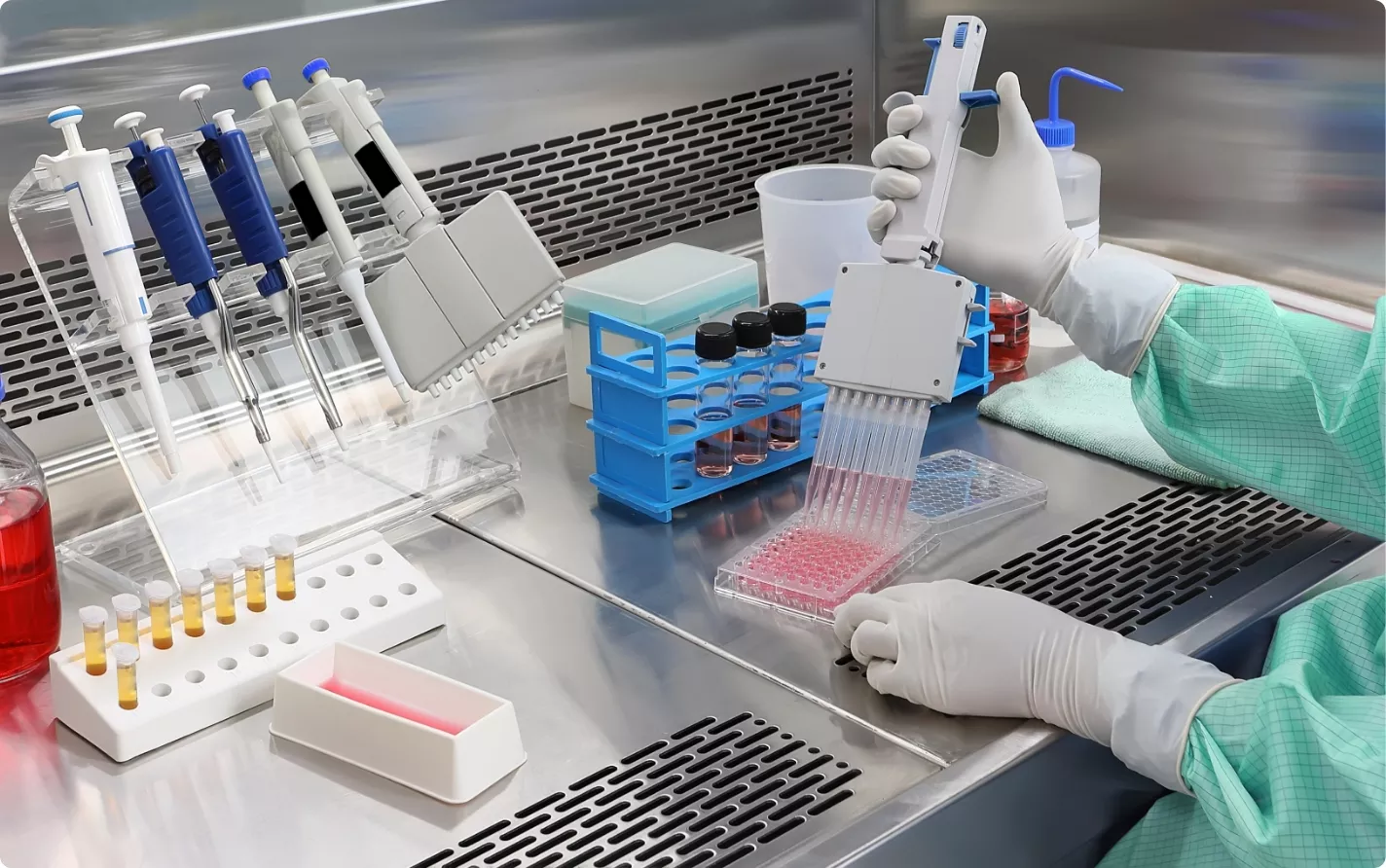
A scientist in a sterile laboratory setting uses a multichannel pipette to transfer pink liquid into a multi-well plate for a high-throughput experiment.

Evaluating Tissue-Specific Delivery of mRNA Therapeutics

The development of advanced delivery vehicles, such as the siloxane-incorporated lipid nanoparticles (SiLNPs) described in recent literature (PMID: 39354147), underscores the need for robust histological assessment. These platforms are engineered for enhanced cellular uptake and tissue-specific delivery. Verifying their performance requires a systematic, high-throughput evaluation of both target organs and potential non-target tissues. Automated histology provides the necessary scale and precision to confirm the biodistribution profile and assess any local tissue response, generating the reliable data needed for a confident safety assessment.

From Slide to Submission: Integrated Data for IND Filings

The output from our automated histology platforms feeds directly into our digital pathology workflow, where board-certified pathologists conduct their analysis. This integrated system ensures that high-quality, consistent data forms the basis of the pathology report. This rigorous, technology-driven approach reflects the methodology that has been a key component in programs achieving a 100% IND approval success rate, a track record established by our core scientific team collectively since 2019. (The Franklin Biolabs brand was launched in 2024).

Scientific Process Diagram

This content is for informational purposes. For guidance specific to your therapeutic program, please contact our team for a consultation.