Characterizing the Pharmacokinetics and Target Engagement of Bispecific Antibodies in Cynomolgus Macaques

PROVEN INTELLIGENCE ACCELERATING NEXT-GENERATION THERAPIES

Characterizing the Pharmacokinetics and Target Engagement of Bispecific Antibodies in Cynomolgus Macaques

CELL & GENE | RNA | BIOLOGICS
Frequently Asked Questions (FAQ)

Question Franklin Biolabs Approach
How is target-mediated drug disposition (TMDD) modeled for bispecific antibodies in non-human primates? We employ specialized non-linear mixed-effects models. These models account for the binding kinetics to both targets simultaneously, allowing for a more accurate prediction of the therapeutic window and human dose projection compared to standard linear PK models.
What analytical methods are optimal for quantifying bispecific antibody concentrations? Quantification of total, free, and target-bound drug requires the development of custom ligand-binding assays (LBAs). A comprehensive program integrates platform-specific ELISAs or MSD-ECL assays to selectively measure these different forms, providing a full view of drug distribution and target interaction.
What are the key considerations for selecting dose levels and sampling schedules in a first-in-primate bispecific PK study? Dose selection is guided by allometric scaling from rodent data and in vitro potency against both targets. Sampling schedules are intensified around the expected Cmax and distribution phases, with sparse sampling later to accurately capture the terminal half-life, all designed to maximize data quality while adhering to Animal Welfare principles.
How is immunogenicity assessed and correlated with the PK profile? Assessing immunogenicity requires a multi-tiered anti-drug antibody (ADA) strategy, including screening, confirmatory, and neutralizing antibody (NAb) assays. Any ADA-positive results are correlated with individual PK profiles to determine the clinical relevance of the immune response.

Executive Summary

Bispecific antibodies present unique pharmacokinetic (PK) and pharmacodynamic (PD) challenges that diverge significantly from traditional monoclonal antibodies. Their dual-target nature can lead to complex distribution patterns, altered clearance mechanisms, and pronounced target-mediated drug disposition (TMDD). A robust non-human primate study in cynomolgus macaques is fundamental for de-risking clinical development. This requires an integrated approach that combines precise in vivo execution with advanced analytical methods for quantification and sophisticated PK/PD modeling to accurately predict human therapeutic outcomes.

A stylized rendering of a DNA double helix on the left side of a light blue gradient background.

Defining the PK Profile of Dual-Arm Constructs

The structural complexity of a bispecific antibody directly influences its in vivo behavior. Understanding this behavior is a prerequisite for a successful IND submission.

Our approach focuses on several key parameters:

  • Absorption and Distribution: Characterizing how the molecule distributes between circulation, interstitial fluid, and target tissues.

  • Clearance Mechanisms: Quantifying clearance rates, which can be influenced by binding to one or both targets, in addition to standard pathways like the neonatal Fc receptor (FcRn) system.

  • Impact of Target Expression: Evaluating how varying levels of target expression in different tissues affect the overall PK profile, a key component of building a reliable translational model.

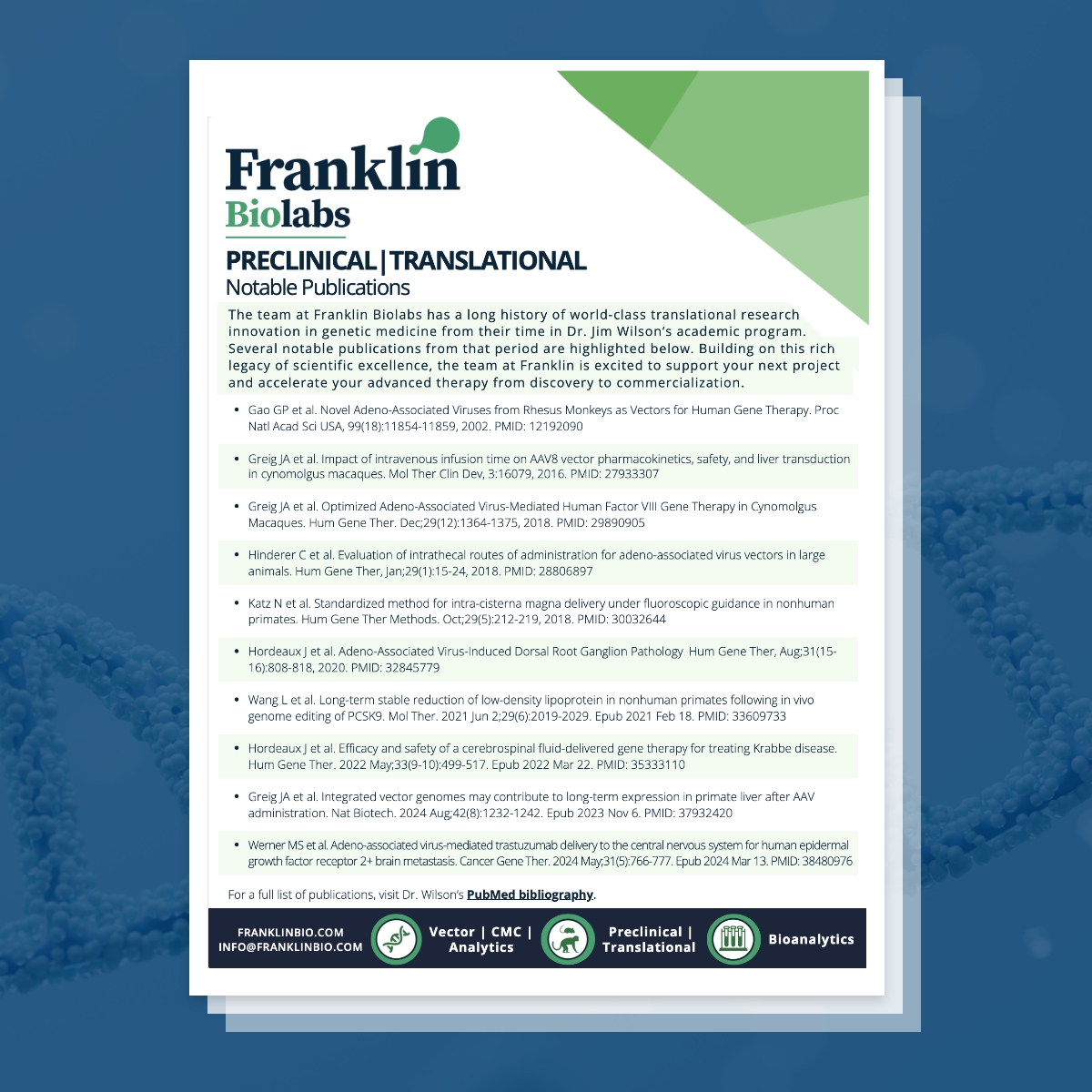
Our experience across modalities informs our rigorous study designs. For example, learnings from viral vector programs regarding the influence of administration parameters on biodistribution (PMID: 27933307) reinforce the need for meticulous control over every variable in a GxP environment to ensure data integrity for complex biologics.

Quantifying Target Engagement and Occupancy

A complete PK profile must be correlated with PD data to determine if the drug engages its intended targets at therapeutically relevant concentrations.

We design studies to provide clear answers on:

  • Receptor Occupancy (RO): Developing and validating flow cytometry or ligand-binding assays to measure the percentage of target receptors bound by the bispecific antibody over time and at different dose levels.

  • Downstream Biomarkers: Measuring changes in soluble targets or signaling pathway components to confirm biological activity and establish a clear PK/PD relationship.

  • Correlation with Efficacy: Integrating PK and target engagement data to define the minimum concentration required for the desired biological effect, which is foundational for clinical dose selection.

Watch the full-length video ‘DIVERSIFYING THE VALUE CHAIN’

A close-up, blue-toned image of scientific glassware, featuring vials placed in a dish filled with clear, spherical beads, suggesting a laboratory or research setting.

Integrated IND-Enabling Programs

Executing these complex studies requires significant infrastructure and expertise. Our >100,000 sq ft GxP-compliant facility is designed to support these demanding programs. Our integrated approach to in vivo services, sample analysis, and regulatory strategy has enabled our scientific teams to achieve a 100% IND success rate since 2019, contributing to a typical 18-24 month IND timeline for our sponsors. Franklin Biolabs, as a brand, launched in 2024 to carry this legacy forward.

All studies are conducted in facilities operating in full compliance with USDA regulations.

Scientific Process Diagram

This content is for informational purposes. For guidance specific to your therapeutic program, please contact our team for a consultation.