Cross-Reactive IHC for Evaluating Biologic Target Engagement in Human and NHP Tissues

PROVEN INTELLIGENCE ACCELERATING NEXT-GENERATION THERAPIES

Cross-Reactive IHC for Evaluating Biologic Target Engagement in Human and NHP Tissues

CELL & GENE | RNA | BIOLOGICS

What is the primary purpose of an IHC cross-reactivity study?

The objective is to verify that a biologic therapeutic binds its intended molecular target within a comprehensive panel of normal human tissues. The study also serves to identify any potential and unanticipated binding to other tissue components, which could indicate a risk for non-target toxicities.

Why are non-human primate (NHP) tissues evaluated alongside human tissues?

NHP tissues are included to establish a scientific bridge between the NHP toxicology model and human clinical applications. Confirming that the biologic’s binding profile is conserved between the two species provides confidence that the safety and efficacy data generated in the preclinical model are relevant to the intended human trial population.

How does this analysis differ from a quantitative biodistribution study?

Immunohistochemistry (IHC) provides a qualitative, high-resolution assessment of binding at the cellular and subcellular level. It identifies precisely which cells and structures a biologic interacts with. This contrasts with quantitative biodistribution assays (e.g., qPCR, ELISA), which measure the overall concentration of a therapeutic within a bulk organ homogenate but do not provide cellular-level localization.


Confirming target conservation and binding specificity between preclinical models and humans is a standard component of de-risking biologic therapeutics. Immunohistochemistry (IHC) screening on human and non-human primate (NHP) tissues provides direct, visual evidence of on-target engagement and identifies potential non-target binding liabilities before first-in-human studies. This evaluation is particularly relevant for AAV-based gene therapies, where capsid tropism and payload expression introduce multiple variables that can differ across species.

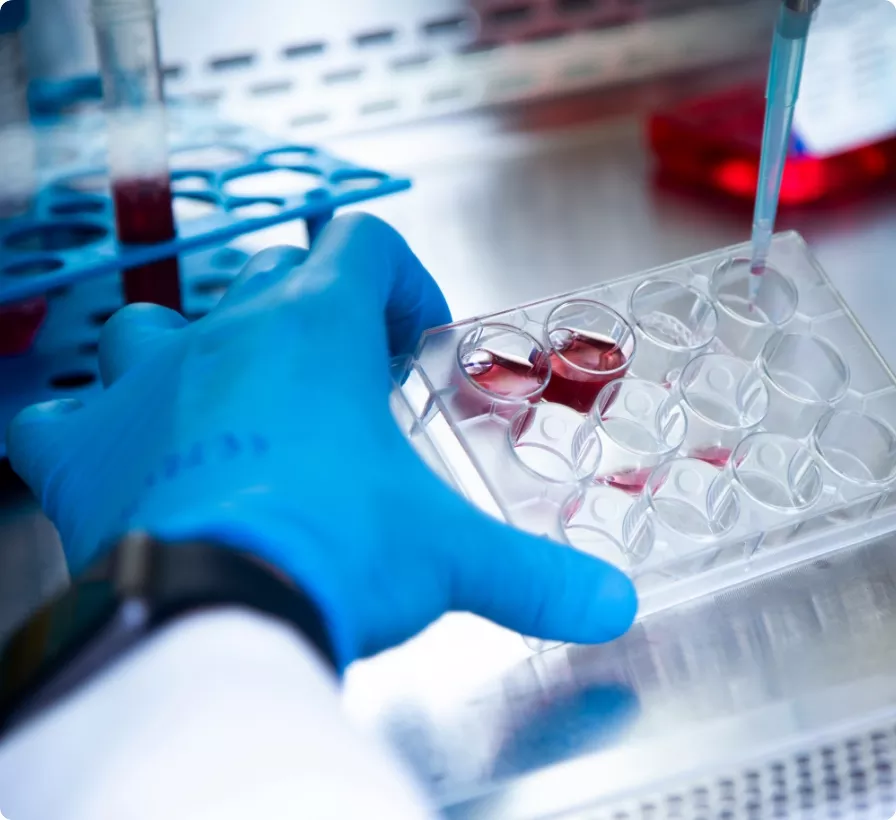
A scientist pipetting a red liquid into a multi-well plate in a laboratory setting.

The Translational Bridge for Target Validation

A biologic’s interaction with its target is governed by complex molecular mechanics that do not always translate predictably across species. Preclinical models provide safety data, but verification of the therapeutic’s binding profile in human tissue is the definitive measure of clinical relevance. This is especially true for gene therapies, where vector-cell surface interactions can be species-specific. For example, research into engineered AAV9 vectors demonstrates that modifications to glycan binding can produce significant differences in tissue avidity between preclinical models and NHPs (PMID: 39001819). This finding reinforces the need for direct evaluation in primate tissues to accurately forecast human biodistribution and target engagement.

Our cross-reactivity platform provides the necessary data to bridge this translational gap. We utilize a systematic approach to evaluate your biologic against a full panel of FDA- and ICH-recommended tissues.

  • Reagent Qualification: Initial optimization and titration of the biologic to establish ideal staining conditions and confirm specificity on control tissues.

  • Parallel Screening: Simultaneous evaluation on comprehensive panels of human and NHP tissues, processed under identical GxP conditions for direct comparability.

  • Pathologist Review: Interpretation of binding patterns by board-certified pathologists to distinguish specific on-target engagement from non-specific or non-target binding.

This systematic process generates the specific binding data required for confident program decisions.

Integrating Histology with IND-Enabling Programs

Cross-reactivity data does not exist in a vacuum. These findings directly inform the design and interpretation of subsequent non-target tissue biodistribution studies and the overall safety assessment. Understanding the baseline prevalence of related viral vectors in human tissues, as shown in studies of AAV clades (PMID: 15163731), adds another layer of complexity. A thorough histological assessment helps distinguish the specific binding of your therapeutic payload from the background biological landscape.

At our >100,000 sq ft facility, we integrate these specialized pathology services into comprehensive IND-enabling programs. This approach has supported our clients in achieving a 100% IND success rate since 2019 (the Franklin Biolabs brand itself launched in 2024), helping them navigate the typical 18-24 month IND timeline with greater confidence.

Scientific Process Diagram

This content is for informational purposes. For guidance specific to your therapeutic program, please contact our team for a consultation.