Efficacy Evaluation of Autologous CAR-T Therapies in Custom Rodent Models

PROVEN INTELLIGENCE ACCELERATING NEXT-GENERATION THERAPIES.

Efficacy Evaluation of Autologous CAR-T Therapies in Custom Rodent Models

CELL & GENE | RNA | BIOLOGICS
Frequently Asked Questions

    What are the primary challenges in designing efficacy studies for autologous CAR-T?

    The main complexities involve selecting an appropriate immunodeficient rodent model that supports human cell engraftment, managing tumor implantation and growth kinetics to create a relevant therapeutic window, and monitoring for potential off-target effects or graft-versus-host-disease (GvHD).

    How do you ensure a rodent model is relevant for a human cell therapy?

    Relevance is achieved through the use of highly immunodeficient strains (e.g., NSG, NOG) that permit the engraftment of human tumor cell lines and the functional persistence of human CAR-T cells. In some cases, human cytokine support is used to enhance immune cell function. Each tumor model is validated for consistent growth characteristics before study initiation.

    What are the typical endpoints in a CAR-T efficacy study?

    Primary endpoints include tumor growth inhibition and overall survival analysis. Secondary and exploratory endpoints often involve quantifying CAR-T cell persistence and biodistribution via flow cytometry or qPCR, monitoring for cytokine release syndrome (CRS) markers, and performing immunohistochemistry (IHC) on terminal tissues to confirm tumor infiltration.

Tailored Pharmacology Studies for CAR-T Programs

Evaluating autologous Chimeric Antigen Receptor (CAR)-T cell constructs requires a preclinical strategy that accounts for the unique biology of these Advanced Therapeutics and Complex Biologics. A standardized testing template is insufficient. The core scientific team that launched Franklin Biolabs in 2024 achieved a 100% successful IND rate since 2019, a track record built on applying proven intelligence in preclinical pharmacology to accelerate next-generation therapies.

The foundation of a meaningful CAR-T efficacy study is a well-characterized and reproducible tumor model. We focus on developing custom xenograft models in immunodeficient rodent strains that are tailored to the specific target antigen and tumor type of your therapeutic program. This ensures the preclinical model’s biological environment can sustain both tumor growth and the subsequent activity of the administered human CAR-T cells.

Comprehensive Study Execution

A typical study design incorporates several key phases to generate a comprehensive data package.

  • Model Development: Selection of an appropriate immunodeficient strain and validation of the tumor cell line for consistent engraftment and growth kinetics.
  • Efficacy Range-Finding: Administration of the autologous CAR-T therapy across multiple cell concentration cohorts to identify an efficacious range.
  • Longitudinal Monitoring: Regular measurement of tumor volume, body weight, and clinical observations to track therapeutic response and animal welfare.
  • Terminal Analysis: Collection of blood and tissues for detailed analysis of CAR-T cell persistence, biodistribution, and infiltration into the tumor microenvironment.

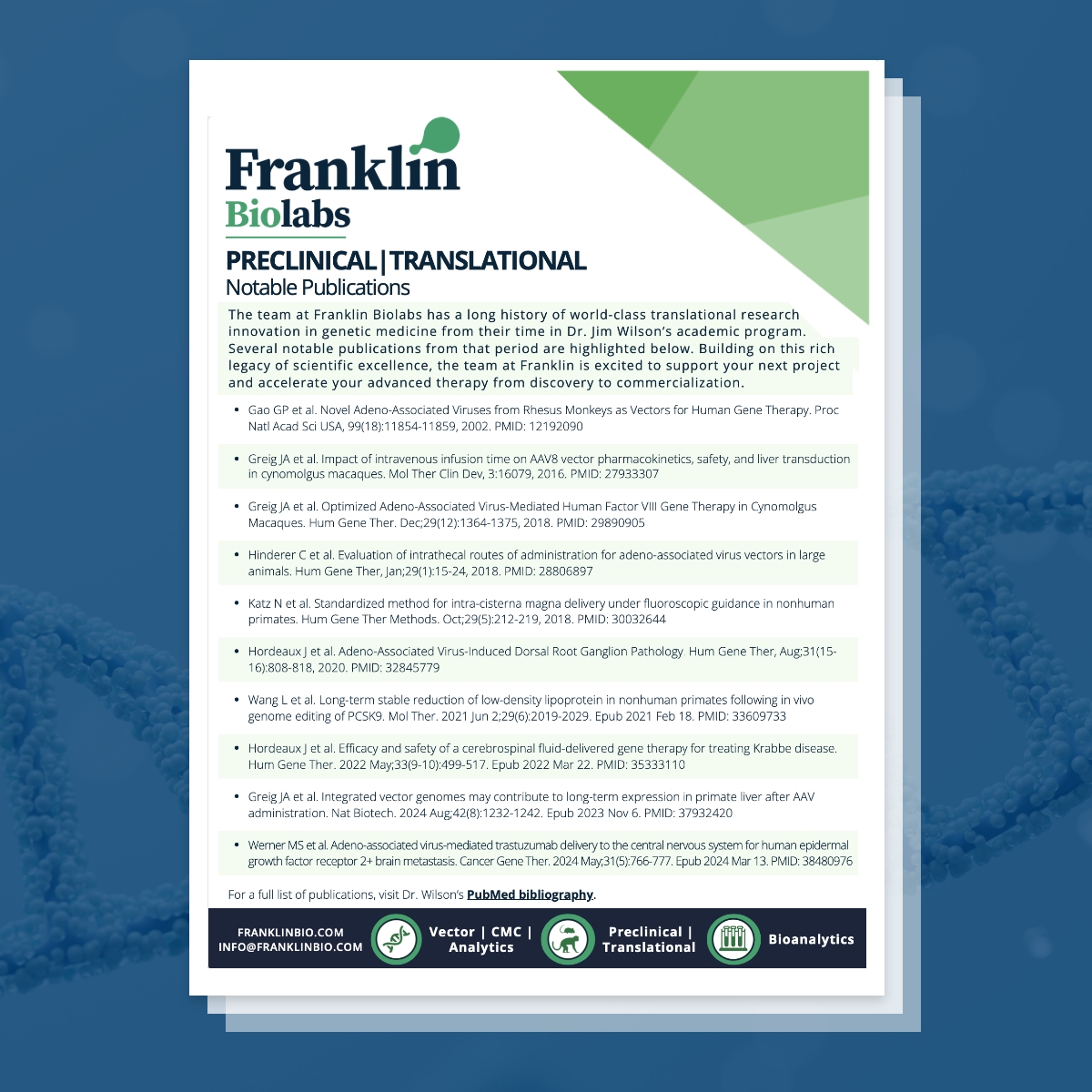
The principles guiding these complex evaluations are consistent with established frameworks for assessing the therapeutic benefit and safety profiles of novel Cell & Gene Therapies in relevant preclinical systems (PMID: 35333110). Data generated from these pharmacology studies directly inform the design of subsequent IND-enabling toxicology programs and provide a clear, data-driven path to regulatory submission within 18-24 months.


Featured Resource: Responsibility and Animal Welfare

This video details Franklin Biolabs’ commitment to animal care and welfare, highlighting our adherence to international guidelines and the three Rs (Reduce, Refine, Replace) of animal research.

Scientific Process Diagram

This content is for informational purposes. For guidance specific to your therapeutic program, please contact our team for a consultation.