In Vivo Potency Assay Development for Cell-Based Therapies Under MHRA Guidelines

PROVEN INTELLIGENCE ACCELERATING NEXT-GENERATION THERAPIES

In Vivo Potency Assay Development for Cell-Based Therapies Under MHRA Guidelines

CELL & GENE | RNA | BIOLOGICS

A stylized 3D rendering of a DNA double helix, composed of light-colored spheres on a translucent blue backbone, set against a soft-focus, light blue background.

Aligning In Vivo Potency Assays with MHRA Regulatory Frameworks.

Executive Summary

Developing a robust in vivo potency assay for cell-based therapies requires a strategy that aligns the therapeutic’s mechanism of action with clinically relevant endpoints and satisfies stringent MHRA and international regulatory expectations. A successful Investigational Medicinal Product Dossier (IMPD) submission depends on demonstrating consistent biological activity in a suitable animal model. This involves selecting appropriate in vivo systems, defining meaningful functional readouts, and ensuring the assay is sufficiently qualified for its intended purpose within a GxP framework.

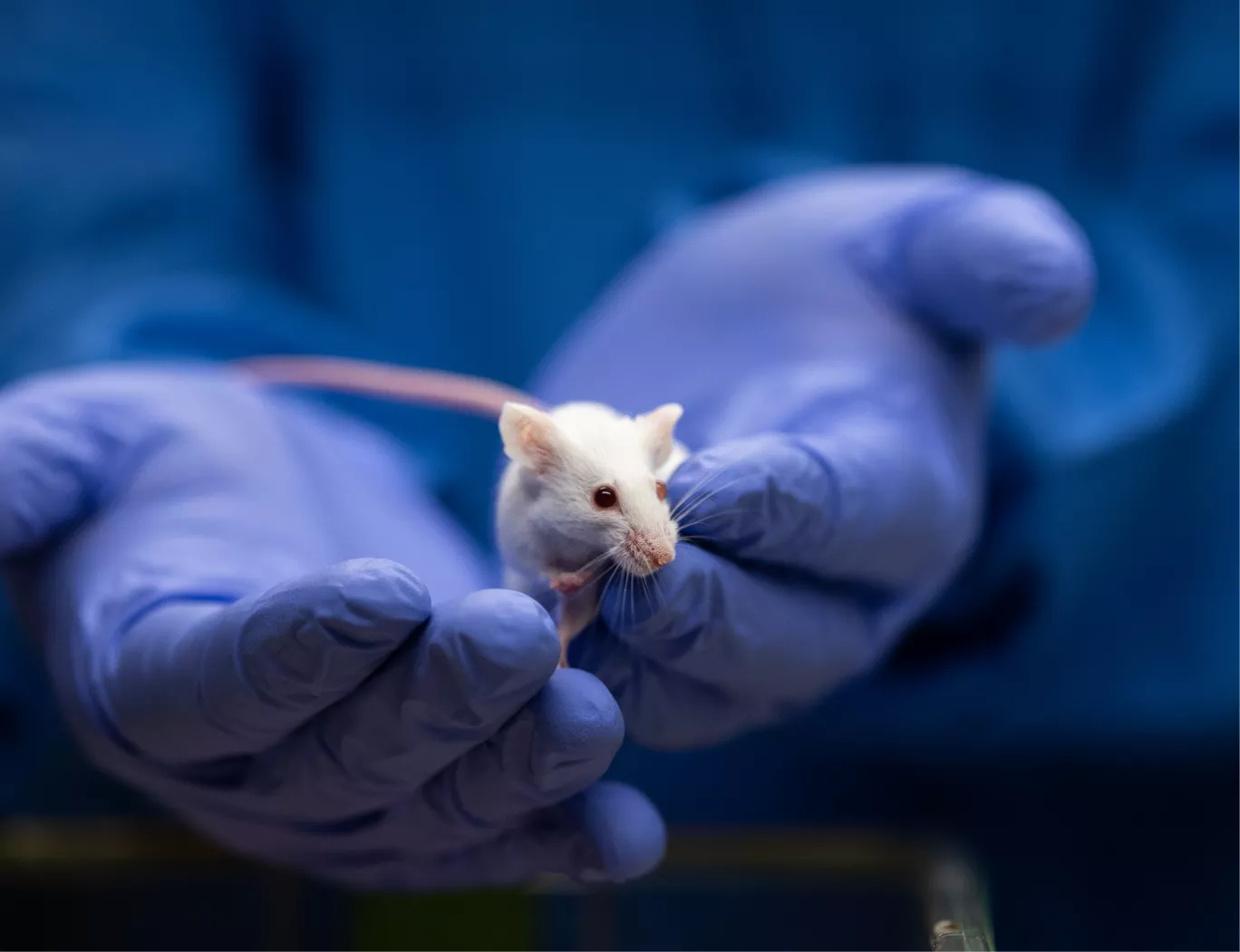
A close-up of a scientist in blue gloves gently holding a small, white laboratory mouse, likely in a research setting.

Frequently Asked Questions

What are the MHRA’s primary expectations for in vivo potency assays for cell therapies like CAR-T?

The MHRA, in alignment with harmonized ICH guidelines, expects potency assays for Advanced Therapy Medicinal Products (ATMPs) to be quantitative and reflect the therapy’s specific biological mechanism of action. For a CAR-T product, this would involve demonstrating target-specific cell killing, cytokine release, and/or tumor burden reduction in a relevant in vivo model, rather than relying solely on in vitro characterization.

How do you select an appropriate animal model for an in vivo potency assay for an allogeneic stem cell therapeutic?

Model selection is dictated by the therapeutic’s biology and intended clinical effect. For allogeneic products, this often involves using immunodeficient rodent models to prevent graft rejection and allow for functional assessment of the human cells. The model must be capable of recapitulating a key aspect of the target disease pathology that the stem cell therapeutic is designed to address.

Can a single in vivo potency assay be used from preclinical development through to commercial batch release?

Not typically. A phase-appropriate approach is necessary. Early preclinical development may use a complex, discovery-oriented in vivo model to confirm the mechanism of action. For later-stage clinical trials and commercial release, the assay often needs to be simplified and optimized for higher throughput, reproducibility, and validation under GxP conditions, while still retaining its ability to measure a clinically relevant biological function.

Defining Biological Activity for Living Therapeutics

For cell-based therapeutics, including CAR-T, TCR-T, and iPSC-derived products, establishing a matrix of assays to define potency is a foundational regulatory requirement. An in vivo potency assay is a functional measure of the product’s ability to execute its intended purpose, confirming that complex biological activity observed in vitro translates to a therapeutic effect within a living system.

The design of these assays must be tailored, as a standard template does not exist. The scientific strategy begins with the specific mechanism of action (MoA) of the therapeutic candidate.

  • For CAR-T/TCR-T cells: Assays are often designed around xenograft tumor models, where endpoints include tumor growth inhibition, survival, and persistence of the engineered cells.

  • For Stem Cell Therapeutics (iPSCs, MSCs): The assay must measure the intended regenerative or immunomodulatory function, such as tissue repair or suppression of inflammation in a disease-relevant model.

  • For Gene Editing Systems (CRISPR, Base Editors): Potency is linked to demonstrating the desired genomic modification in target cells in vivo, leading to a measurable physiological change.

Aligning with MHRA and International Regulatory Frameworks

For UK and EU submissions, the Investigational Medicinal Product Dossier (IMPD) must contain a robust data package supporting the product’s quality and consistency. The MHRA places significant emphasis on the relevance of the potency assay. The data must convincingly demonstrate that each batch of the cell therapy product will perform as expected clinically.

Our approach ensures that assay development is conducted with regulatory expectations in mind from the outset. This includes phase-appropriate qualification and validation, establishing clear acceptance criteria, and ensuring the method is transferable to a GxP environment for lot release testing if required. This forward-looking strategy is part of the integrated approach that has supported our core scientific team’s 100% successful IND rate since 2019, a track record established prior to the formal launch of Franklin Biolabs in 2024.

A stylized rendering of a DNA double helix on the left side of a light blue gradient background.

Translating Scientific Principles into Defensible Data

The core principle of a successful potency assay is its ability to measure a specific biological function. Historical work on engineered proteins, for instance, established that systemic delivery could block an intended biological process throughout an organism (PMID: 14668502). This principle of measuring a direct, systemic functional outcome is directly applicable to modern cell therapies. The goal is to create an assay that provides an unambiguous, quantitative result directly linked to the therapeutic effect.

A well-designed in vivo potency assay is a key component of a defensible data package, providing regulators with confidence in product consistency and biological activity. The responsible development of next-generation therapies requires a rigorous and transparent approach to data generation and interpretation (PMID: 40643951).

Commitment to Animal Welfare

All in vivo work is performed with an unwavering commitment to animal welfare. Our >100,000 sq ft facilities feature flexible housing and enrichment programs, and all programs adhere to the principles of the 3Rs (Replacement, Reduction, and Refinement). This ethical framework ensures the generation of high-quality, reproducible data while upholding the highest standards of care.

This work is a component of our broader capabilities in Preclinical and Translational Services, which are designed to move therapeutic candidates toward IND submission within an 18-24 month timeline.


Scientific Process Diagram

This content is for informational purposes. For guidance specific to your therapeutic program, please contact our team for a consultation.