Intracerebroventricular (ICV) Administration for CNS-Targeted Oligonucleotide Therapeutic Biodistribution Studies

PROVEN INTELLIGENCE ACCELERATING NEXT-GENERATION THERAPIES

Intracerebroventricular (ICV) Administration for CNS-Targeted Oligonucleotide Therapeutic Biodistribution Studies

Intracerebroventricular (ICV) Administration for CNS Biodistribution Studies

CELL & GENE | RNA | BIOLOGICS
A researcher in a lab coat and blue gloves gently holds three white lab mice, symbolizing animal models in scientific research.

Proven Intelligence Accelerating Next-Generation Therapies.

Executive Summary

Intracerebroventricular (ICV) administration is a primary route for delivering oligonucleotide therapeutics to the central nervous system (CNS). A common assumption is that this method confines the therapeutic agent within the CNS. Data from analogous advanced therapy programs indicates this is not the case; a significant fraction of the dose can distribute systemically. A tailored preclinical strategy is required to accurately quantify non-target tissue biodistribution and build a data package that satisfies global regulators, including the FDA, EMA, and Swissmedic.

A digital rendering of a DNA double helix on a dark blue background with floating particles.

Frequently Asked Questions

    What is the primary challenge with ICV administration for oligonucleotides?

    The main operational challenge is quantifying the significant portion of the therapeutic dose that escapes the CNS and distributes systemically. This has direct implications for toxicology assessments and calculating safety margins for an Investigational Medicinal Product Dossier (IMPD) or IND submission.

    How does systemic exposure affect the preclinical program?

    Uncharacterized systemic exposure complicates the interpretation of toxicology findings. It requires expanded tissue collection, more extensive bioanalytical analysis, and a clear understanding of potential non-target tissue liabilities, which must be addressed in the regulatory submission.

    Why are nonhuman primate (NHP) models used for these studies?

    NHP models possess a CNS and immune system that more closely mirrors human biology, providing more translatable data on biodistribution and potential immune responses. Selecting the appropriate model is a key component of a data-driven preclinical strategy.

A stylized, 3D rendering of a DNA double helix in light blue and white, set against a soft-focus, light gray background.

Quantifying Systemic Exposure After CNS Administration

Delivering next-generation therapies directly to the cerebrospinal fluid (CSF) is an established strategy to bypass the blood-brain barrier. The objective is to maximize therapeutic concentration in the target neural tissues while minimizing systemic exposure.

Recent findings in related modalities challenge this assumption. Quantitative imaging has demonstrated that following CSF administration, as much as 60-90% of a dose can enter systemic circulation (PMID: 37624734). This systemic distribution profile for an Advanced Therapy Medicinal Product (ATMP) necessitates a preclinical program designed to account for potential effects in peripheral tissues.

A standard preclinical template does not exist for these complex therapeutics. Our approach is to design a data-driven strategy tailored to your specific oligonucleotide construct and target indication, ensuring a comprehensive safety profile is established ahead of regulatory filings.

Designing IND-Enabling Studies for CNS-Targeted Oligonucleotides

Our scientific team, operating within a >100,000 sq ft facility, designs and executes GxP-compliant studies to characterize both CNS and peripheral biodistribution. This process is foundational to our clients’ 18-24 month timelines to get candidates to IND. While the Franklin Biolabs brand launched in 2024, our scientific leadership’s track record has contributed to a 100% successful IND rate since 2019.

Key study components include:

  • Dose Route & Volume Optimization: Tailoring the ICV administration parameters to the specific NHP model to ensure accurate and reproducible delivery.

  • Comprehensive Tissue Collection: Expanding necropsy and tissue collection protocols to include key peripheral organs identified as potential sites of accumulation.

  • Phase-Appropriate Bioanalysis: Developing and qualifying sensitive assays to quantify oligonucleotide concentrations in both CNS and non-target tissues.

  • Integrated Histology: Employing multiplex ISH and digital image analysis to visualize transgene expression and assess tissue-level findings.

Learn More: Watch the full “Diversifying the Value Chain” video

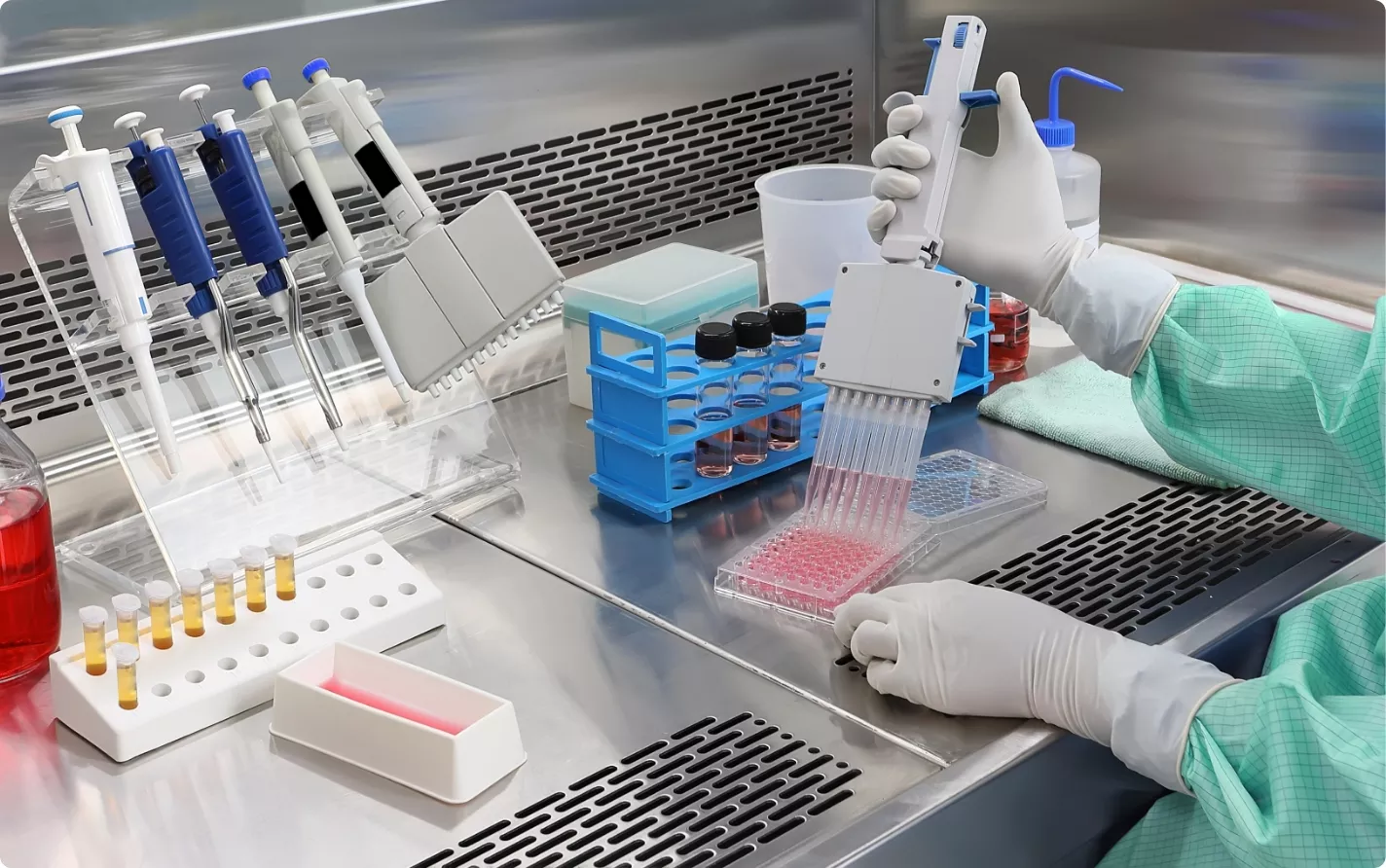
A scientist in a sterile laboratory setting uses a multichannel pipette to transfer pink liquid into a multi-well plate for a high-throughput experiment.

Animal Welfare and NHP Model Selection

All studies are conducted in compliance with AAALAC and USDA guidelines, with a commitment to the 3Rs principle (Replacement, Reduction, and Refinement). We utilize enhanced housing conditions and cognitive enrichment programs during the in-life phase of NHP studies. The selection of NHP models with an immunological profile that mirrors the human response is a key component of our preclinical strategy for generating translatable data.

This page is a specific extension of our core Preclinical | Translational Services.

Technical Visualization: ICV Administration Biodistribution Profile

Scientific Process Diagram

This content is for informational purposes. For guidance specific to your therapeutic program, please contact our team for a consultation.