Multi-species pharmacokinetic modeling for AAV-based gene replacement therapies

PROVEN INTELLIGENCE ACCELERATING NEXT-GENERATION THERAPIES

Multi-species pharmacokinetic modeling for AAV-based gene replacement therapies

Multi-Species Pharmacokinetic Modeling for AAV Gene Therapies

CELL & GENE | RNA | BIOLOGICS

Executive Summary

Effective translation of adeno-associated virus (AAV) based therapies from preclinical models to human trials depends on accurately predicting pharmacokinetic (PK) and biodistribution profiles. Multi-species PK modeling provides a quantitative framework to de-risk clinical development by integrating data from relevant animal models to forecast human vector clearance, tissue tropism, and transgene expression levels. This approach moves beyond simple allometric scaling to account for species-specific biological variables, informing optimal capsid selection, promoter design, and first-in-human dose calculations to support a robust Investigational New Drug (IND) application.

A digital rendering of a DNA double helix on a dark blue background with floating particles.

Frequently Asked Questions (FAQ)

    How does capsid selection influence the PK profile in different species?

    A: Capsid tropism is dictated by its affinity for specific cell surface receptors, such as AAVR, which can vary in expression and structure across species. This directly impacts vector uptake, biodistribution, and clearance rates. For example, comparative studies show that capsids like AAV3B can achieve high liver transduction, making them suitable for specific liver-directed gene therapies, but their performance relative to other serotypes must be validated in appropriate models.

    What is the standard species progression for AAV PK studies?

    A: A typical progression involves an initial rodent model for early screening and mechanism-of-action studies, followed by a larger, more translationally relevant species (e.g., non-human primate) for definitive IND-enabling PK and toxicology assessments. The choice of species is driven by factors like immune system homology, receptor conservation, and the specific disease indication.

    How do you account for pre-existing neutralizing antibodies (NAbs) in multi-species modeling?

    A: NAb screening is a standard part of subject selection for large animal studies. Animals are screened for pre-existing immunity to the specific AAV serotype being tested. NAb-positive subjects are typically excluded to ensure that the resulting PK data reflects the intrinsic properties of the vector itself, providing a cleaner dataset for modeling human exposure in a NAb-negative population.

    What bioanalytical methods quantify vector DNA and transgene expression for PK modeling?

    A: Vector DNA biodistribution and clearance from circulation are quantified using validated qPCR or ddPCR assays. Transgene expression (the resulting protein) is measured using methods like ELISA, MSD, or Western blot. Correlating vector copy numbers with protein expression levels over time is fundamental to building a comprehensive PK/PD model.

A stylized, 3D rendering of a DNA double helix in light blue and white, set against a soft-focus, light gray background.

The Challenge of AAV PK Extrapolation

The clinical behavior of an AAV vector is governed by a complex interplay between its biodistribution and transduction efficiency. The vector’s journey involves navigating the circulatory system, avoiding the immune system, binding to target cell receptors, internalizing, and successfully expressing its genetic payload. Each of these steps can be influenced by species-specific factors, making direct extrapolation from a single preclinical model to humans unreliable.

A robust multi-species PK program is designed to characterize these variables. By generating high-quality data in parallel across well-justified animal models, we can build sophisticated models that account for differences in:

  • Vector clearance rates from circulation.

  • Tissue-specific transduction efficiency.

  • Kinetics of transgene expression and protein production.

  • Potential for non-target tissue biodistribution.

Strategic Vector Design to Inform PK Modeling

The predictive power of any PK model begins with the vector construct itself. Strategic selection of the capsid and promoter elements is foundational to achieving the desired therapeutic profile and generating translatable data.

As demonstrated in comparative analyses, engineered capsids can offer significant advantages in transduction efficiency for specific targets like the liver (PMID: 26412589). By evaluating a panel of natural and engineered capsids, programs can select vectors with the highest potential for clinical success. Payload design strategies, such as the use of short promoters, also increase the specificity of gene expression. This approach reduces expression in non-target tissues, a key factor in minimizing potential off-target activity and building a stronger safety profile (PMID: 33359790).

Our >100,000 sq ft GxP-compliant facility is equipped to conduct these complex studies in-house, ensuring data integrity from vector manufacturing through final bioanalytical analysis.

)

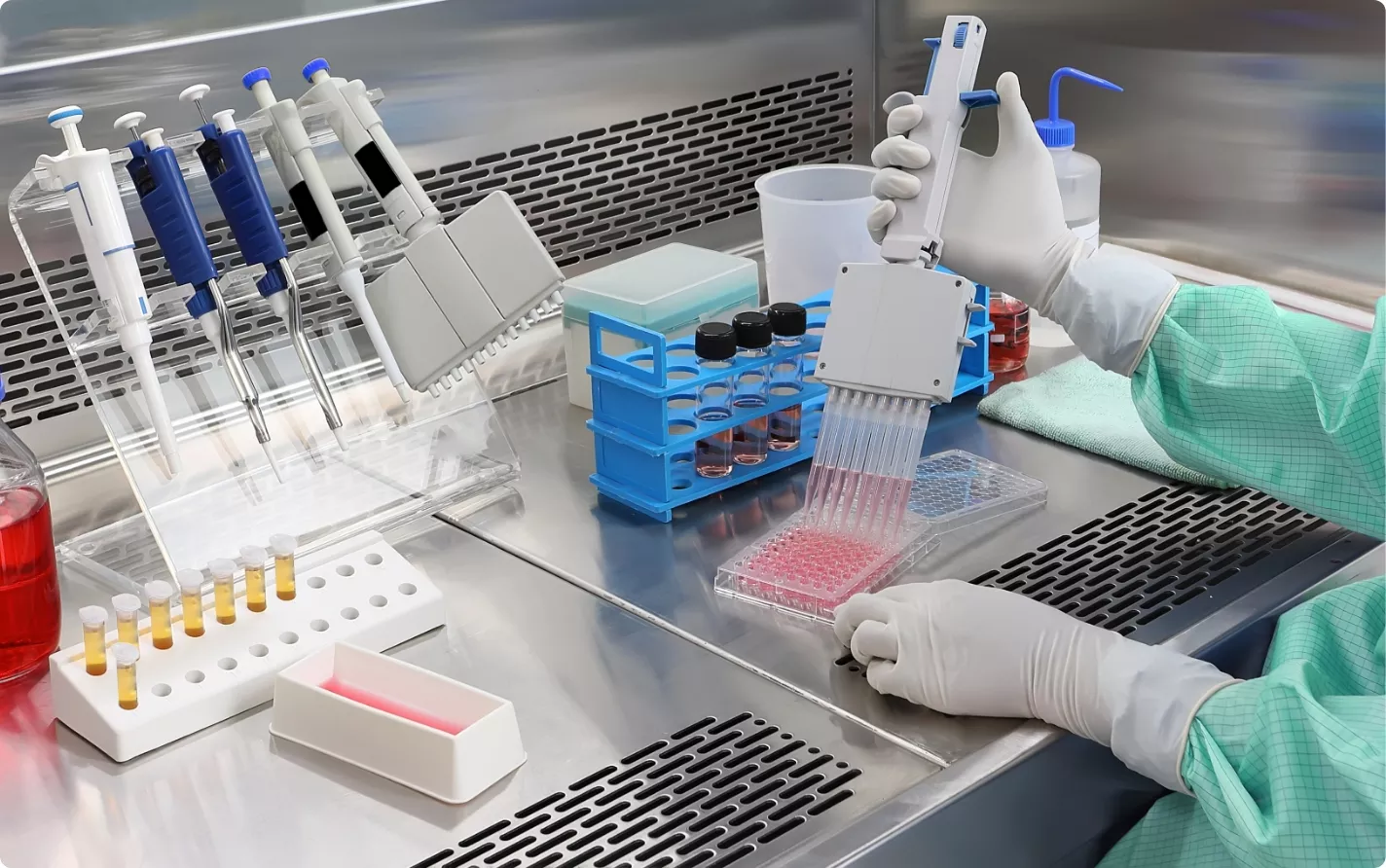
A scientist in a sterile laboratory setting uses a multichannel pipette to transfer pink liquid into a multi-well plate for a high-throughput experiment.

An Integrated Approach to IND-Enabling Studies

Franklin Biolabs integrates vector design, in vivo execution, and GxP bioanalysis to deliver a comprehensive data package. This integrated methodology provides a robust data package for PK profiling and efficient dose optimization. By managing the entire workflow, we reduce variability and shorten timelines, supporting an average 18-24 month IND timeline for our partners. Since the Franklin Biolabs brand launched in 2024, programs managed by our scientific leadership have maintained a 100% IND success rate dating back to 2019.

“We started collaborating with UPenn Vector core in 2023 and the AAV vector which they manufactured laid a foundation for development of a gene therapy candidate which will enter soon preclinical studies. The key people from UPenn Vector Core joined Franklin Biolabs and our partnership transitioned without interruption from UPenn Vecor Core to Franklin Biolabs Research Vector Division. Franklin Biolabs is our trusted partner in our AAV-vector based gene therapy candidate development and we hope to continue the partnership for years to come.”
— Biotech Partner

Commitment to Animal Welfare

All in vivo studies are conducted in strict compliance with AAALAC and USDA guidelines. Our animal welfare program is built upon the principles of the 3Rs (Replacement, Reduction, and Refinement) to ensure the ethical and responsible use of animals in research. This commitment ensures the highest quality of animal care and scientific data.

Scientific Process Diagram

This content is for informational purposes. For guidance specific to your therapeutic program, please contact our team for a consultation.