Tracking the in vivo fate and clearance of engineered NK cells in solid tumor xenograft models

PROVEN INTELLIGENCE ACCELERATING NEXT-GENERATION THERAPIES

Tracking the in vivo fate and clearance of engineered NK cells in solid tumor xenograft models

Pharmacokinetic Profiling of Engineered NK Cells in Solid Tumor Models

CELL & GENE | RNA | BIOLOGICS

A stylized 3D rendering of a DNA double helix, composed of light-colored spheres on a translucent blue backbone, set against a soft-focus, light blue background.

Executive Summary

Defining the in vivo persistence, trafficking, and clearance of engineered Natural Killer (NK) cells is fundamental to de-risking clinical translation for solid tumor indications. A robust pharmacokinetic (PK) profile provides the quantitative data needed to optimize dosing regimens, confirm on-target localization, and build a comprehensive safety case for regulatory submission. This asset outlines a framework for designing and executing these complex studies, focusing on multi-modal tracking methodologies that generate decision-enabling data for Investigational New Drug (IND) applications.

Technical FAQ: Engineered NK Cell PK Studies

Question Franklin Biolabs Approach
What is the optimal method for tracking NK cell biodistribution? We recommend a multi-modal strategy. Bioluminescence imaging (BLI) provides longitudinal, whole-body visualization of cell trafficking, while terminal flow cytometry and quantitative PCR (qPCR) on harvested tissues provide definitive, quantitative data on cell numbers in the tumor microenvironment and organs of interest.
How do you differentiate engineered NK cells from endogenous populations? This is achieved through stable genetic labeling of the therapeutic cells with reporters like luciferase or fluorescent proteins (e.g., GFP, mCherry) prior to administration. This ensures that all detected signals correspond directly to the administered cell product.
What is a typical study duration for an NK cell PK assessment? Study duration is dependent on the expected persistence of the specific NK cell construct. We typically design studies with multiple time points ranging from a few hours to several weeks post-administration to accurately model the distribution, peak concentration, and clearance phases.
How does PK data influence the IND submission? PK and non-target tissue biodistribution data are core components of the IND package. They directly support the proposed first-in-human dose, justify the dosing schedule, and inform the safety assessment by demonstrating where the cell therapy product distributes and how quickly it is cleared from the system.

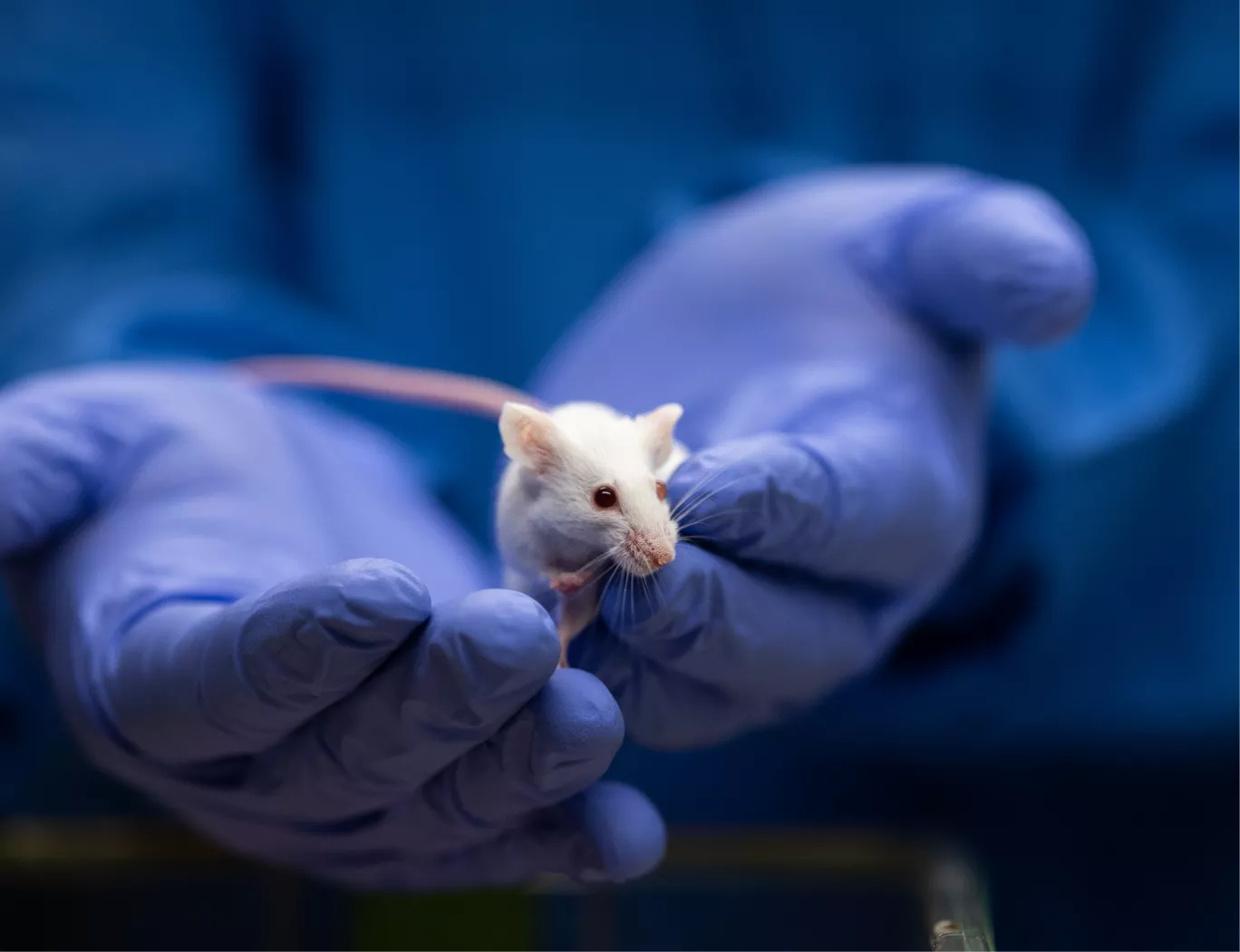
A close-up of a scientist in blue gloves gently holding a small, white laboratory mouse, likely in a research setting.

Characterizing In Vivo Cell Therapy Fate

The therapeutic potential of an engineered NK cell is directly linked to its ability to traffic to the tumor site, engage target cells, and persist long enough to exert a meaningful anti-tumor effect. Characterizing these behaviors is a prerequisite for a successful clinical program, allowing for the rational design of dosing strategies and providing a mechanistic link between exposure and response.

Our approach focuses on generating a precise, quantitative map of cell disposition. Key study endpoints include:

  • Tumor Infiltration: Quantifying the absolute number of engineered NK cells that successfully extravasate and penetrate the solid tumor microenvironment.

  • Systemic Persistence: Measuring the concentration of cells in circulation over time to define their in vivo half-life.

  • Clearance Kinetics: Identifying the primary routes and rate of elimination from the system.

  • Non-Target Tissue Biodistribution: Assessing accumulation in major organs to build a comprehensive safety profile.

Methodologies for Definitive Pharmacokinetic Assessment

A singular analytical method is insufficient to capture the complex dynamics of a cell-based therapy. We integrate multiple technologies to build a complete picture of in vivo behavior. This strategy provides orthogonal validation and ensures data integrity for regulatory review.

Our approach combines:

  • Whole-body, longitudinal imaging (BLI): Provides a macroscopic view of cell trafficking, homing to the tumor, and persistence over time in the same animal cohort, reducing animal usage.

  • Terminal, quantitative tissue analysis (qPCR, Flow Cytometry): Delivers precise cell counts within the tumor microenvironment and key organs, providing the definitive biodistribution data required for exposure and safety calculations.

This combination directly links the dynamic trafficking of the cell population with the final, quantitative measure of tumor infiltration and non-target tissue biodistribution. The result is a robust dataset that can support Accelerated PK Profiling for Rapid Dose Optimization.

A stylized rendering of a DNA double helix on the left side of a light blue gradient background.

Responsible In Vivo Science

[VIDEO: FBL-VID-09-Approved_enhanced_responsibility_clip_long.mp4]

IND-Enabling Data Generation

With a >100,000 sq ft GxP-compliant facility, our teams are equipped to execute the complex bioanalytical and histology assays required for IND-enabling PK studies. The data packages we deliver are designed for direct inclusion into regulatory filings, supporting an average 18-24 month IND timeline for our partners. Since the Franklin Biolabs brand launch in 2024, programs leveraging our preclinical services have maintained the 100% IND success rate established by our foundational teams since 2019.

Scientific Process Diagram

This content is for informational purposes. For guidance specific to your therapeutic program, please contact our team for a consultation.