U.S.-Based Quarantine Services for NHP Models

PROVEN INTELLIGENCE ACCELERATING NEXT-GENERATION THERAPIES

U.S.-Based Quarantine Services for NHP Models

CELL & GENE | RNA | BIOLOGICS

A stylized, 3D rendering of a DNA double helix in light blue and white, set against a soft-focus, light gray background.

Proven Intelligence in Preclinical Supply Chain Security.

Executive Summary

Delays in nonhuman primate (NHP) model acquisition and quarantine represent a significant bottleneck for initiating IND-enabling toxicology studies. An unsecured supply chain introduces timeline uncertainty and biological variability, which can compromise study data for next-generation therapeutics. Franklin Biolabs provides a direct solution through an integrated supply chain with the Bioculture Group, featuring U.S.-based quarantine and holding services. This infrastructure ensures access to Mauritian origin SPF cynomolgus macaques and accelerates the transition from model acclimation to active GxP study phases, directly supporting our 18-24 month candidate-to-IND timeline.

Frequently Asked Questions

How does a U.S.-based quarantine facility for NHP models reduce timelines for IND-enabling toxicology studies?

By managing quarantine and holding services in the U.S., we eliminate logistical handoffs and international transit variables that often delay study initiation. Models are acclimated under direct veterinary oversight in our >100,000 sq ft facility, allowing for a seamless transition into the in vivo study protocols required for FDA, MHRA, and other global regulatory submissions.

What is the significance of using single-origin Mauritian cynomolgus macaques for preclinical research?

Sourcing NHP models from a single, specific-pathogen-free (SPF) origin minimizes the genetic and microbiological variability within a study cohort. This biological consistency is vital for accurately interpreting toxicology data and observing in-life safety signals, as it reduces confounding factors that can arise from a heterogeneous animal population.

How does an integrated supply chain for NHP models help in minimizing clinical risk?

An integrated supply chain provides full traceability and oversight from the breeding colony to our U.S. facility. This control ensures the health and welfare of the animals, leading to more robust and reproducible data. Consistent model quality helps clarify dose-dependent effects and potential toxicities, providing a stronger data package for regulatory review and minimizing downstream clinical risk.

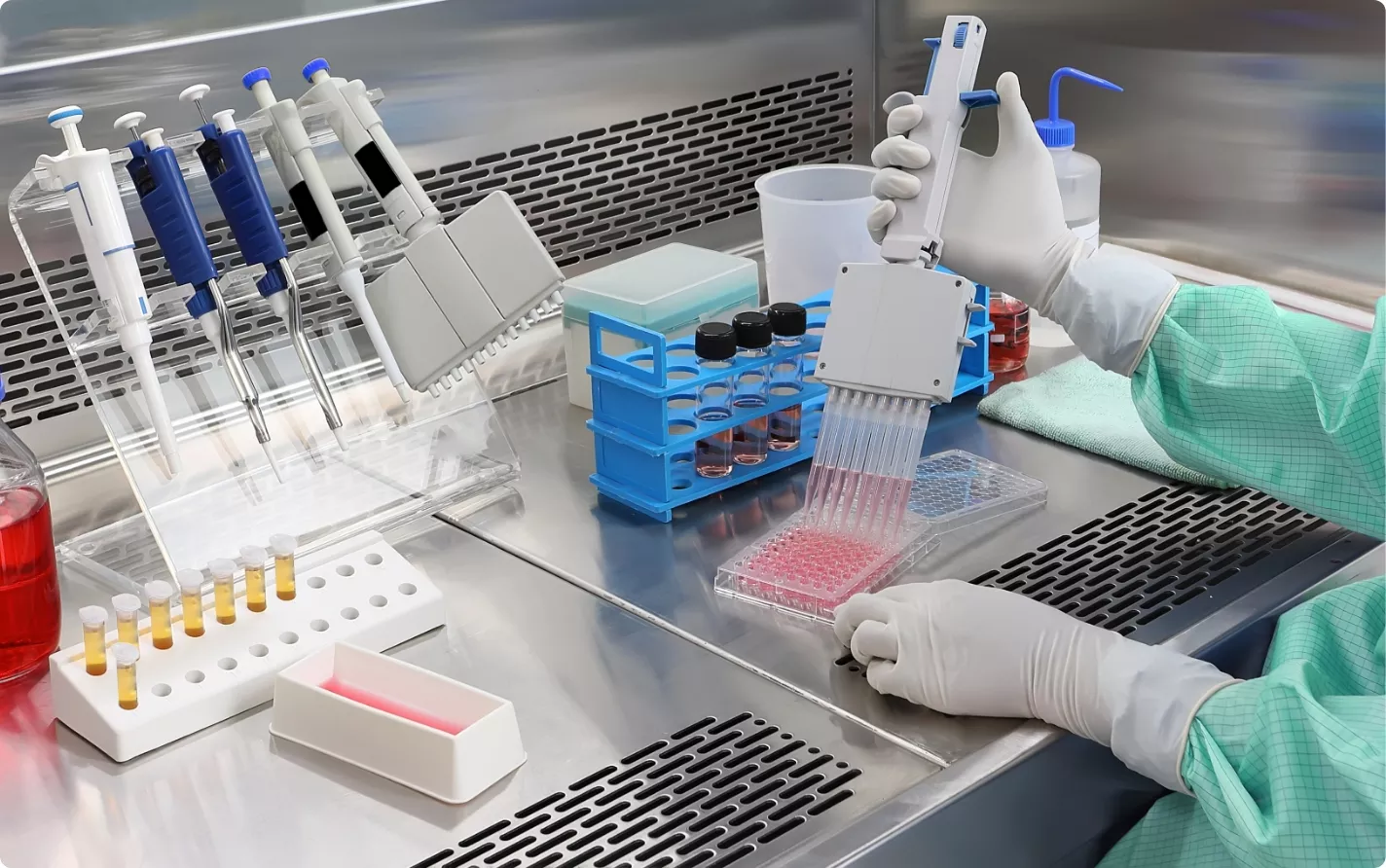
A scientist in a sterile laboratory setting uses a multichannel pipette to transfer pink liquid into a multi-well plate for a high-throughput experiment.

Securing Timelines with an Integrated NHP Supply Chain

The availability of high-quality nonhuman primate models is a frequent rate-limiting step in the preclinical development of next-generation therapeutics. Disjointed sourcing, international shipping, and third-party quarantine processes create timeline vulnerabilities and introduce risks to animal welfare and data integrity.

Franklin Biolabs addresses this challenge through a strategic integration with the Bioculture Group. This relationship establishes a secure, transparent, and efficient supply chain for Mauritian origin SPF cynomolgus macaques. The process is managed from the source colony through our U.S.-based quarantine and holding services, removing key dependencies on external providers.

The Advantage of U.S.-Based Quarantine and Acclimation

Our domestic infrastructure provides direct oversight and control over the most sensitive phase of NHP procurement. This approach offers several distinct advantages for therapeutic sponsors:

  • Regulatory Compliance: All import and quarantine procedures are managed to be fully compliant with U.S. regulations, ensuring a clear and documented chain of custody.

  • Accelerated Study Start: By co-locating quarantine and study facilities, the acclimation period transitions directly into the active study phase, compressing overall program timelines.

  • Enhanced Animal Welfare: Minimizing transit time and providing stable, enriched housing environments adheres to the highest ethical standards, including the 3Rs (Replacement, Reduction, and Refinement) and AAALAC/USDA guidelines.

This operational control is fundamental to de-risking preclinical programs. The ability to reliably interpret toxicology data from NHP models, as shown in safety evaluations of AAV8 vectors (PMID: 28319449), is contingent on starting with a healthy, well-characterized cohort. Uncontrolled variables in animal health can obscure the true safety profile of a therapeutic candidate. Early gene transfer studies highlighted the importance of managing all study variables to properly assess dose-dependent effects (PMID: 11779420). Our model for diversifying the value chain is detailed further here:.

While Franklin Biolabs was formally launched in 2024, our 100% successful IND rate since 2019 reflects the consistent track record of our founding scientific leadership and core preclinical study directors in executing these complex programs. By securing the NHP supply chain, we provide a stable foundation for the IND-enabling toxicology studies that are foundational to this success.

This integrated approach is a core component of our Preclinical | Translational Services, designed to move promising candidates toward regulatory submission with greater predictability.

Visualization: The Integrated NHP Sourcing & Study Initiation Timeline

Scientific Process Diagram

This content is for informational purposes. For guidance specific to your therapeutic program, please contact our team for a consultation.