AAV Analytical Comparability for Post-Change Manufacturing

PROVEN INTELLIGENCE ACCELERATING NEXT-GENERATION THERAPIES

AAV Analytical Comparability for Post-Change Manufacturing

CELL & GENE | RNA | BIOLOGICS

Analytical Comparability for AAV Program Progression.

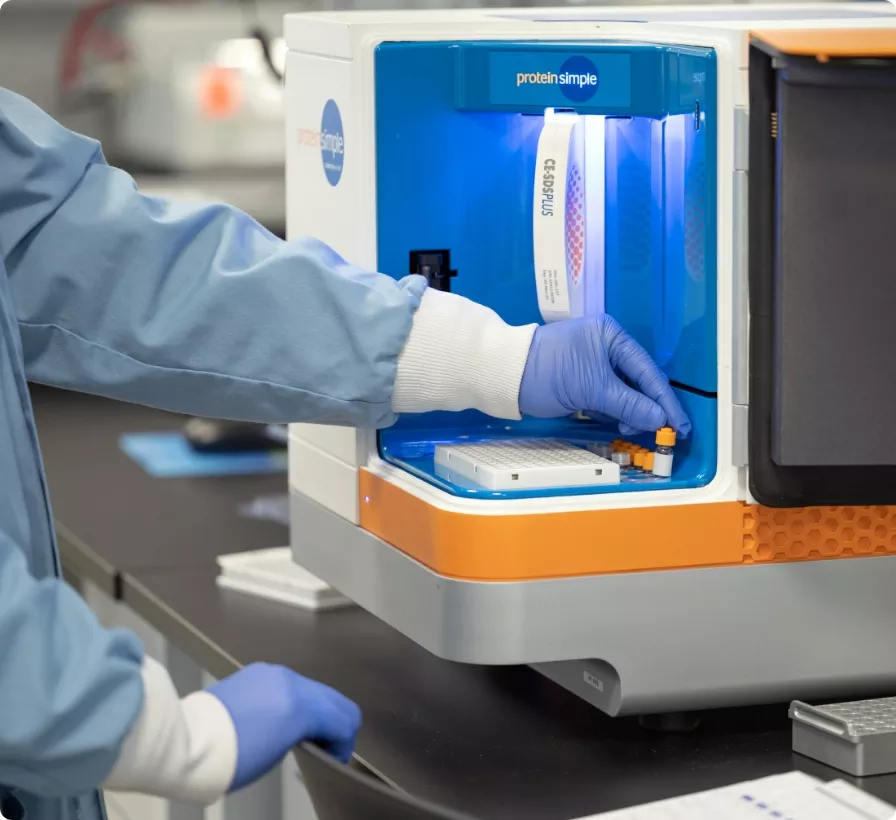
A scientist in a lab coat and gloves loads samples into a ProteinSimple instrument for analysis.

Frequently Asked Questions

What triggers the need for an AAV analytical comparability study for an MHRA submission?

An analytical comparability study is required following any significant change in the manufacturing process of an Advanced Therapy Medicinal Product (ATMP). Common triggers include scaling up production (e.g., moving from adherent to AAV scalable suspension systems), changing manufacturing sites, altering a key raw material, or modifying a purification step. For an Investigational Medicinal Product Dossier (IMPD) submission to the MHRA, this data is fundamental to ensuring patient safety and product consistency.

How does a comparability protocol de-risk post-change manufacturing for next-generation therapies?

A well-designed protocol de-risks the program by prospectively defining the analytical strategy, acceptance criteria, and statistical approach before the post-change material is even manufactured. This prevents post-hoc data justification and aligns the development team and regulatory body on the definition of comparability, minimizing clinical risk and potential delays in the 18-24 month IND timeline.

What are the key analytical domains for demonstrating AAV vector comparability?

Comparability for AAV vectors is assessed across multiple domains. Key areas include physicochemical properties (particle size, aggregation), quantity and purity (full/empty capsid ratio, residual DNA/protein), identity (capsid and genome confirmation), and biological activity (in vitro potency assays, infectivity). A comprehensive data package covering these attributes is required.

Manufacturing process evolution is a given for any successful AAV therapeutic program. As production scales and processes are refined for efficiency, sponsors must provide definitive analytical evidence to regulators that the product remains comparable to the material used in foundational IND-enabling toxicology studies.

A prospective, scientifically-grounded comparability protocol is the primary tool for managing this process. It establishes the framework for evaluating the impact of manufacturing changes on the key quality attributes (CQAs) of the AAV vector. This framework is a regulatory necessity for submissions to agencies like the MHRA and FDA.

A researcher in a lab coat and blue gloves gently holds three white lab mice, symbolizing animal models in scientific research.

Defining the Analytical Framework

The objective is to demonstrate that the pre-change and post-change AAV products are highly similar from an analytical perspective. The protocol must outline a comprehensive testing strategy that interrogates all relevant CQAs.

Key analytical considerations include:

  • Identity: Vector genome and capsid protein confirmation.

  • Purity & Impurities: Assessment of empty capsids, host cell protein/DNA residuals, and process-related impurities.

  • Potency: A qualified, phase-appropriate biological assay to measure the specific ability of the vector to produce its intended effect.

  • Quantity: Accurate titer determination.

The strategic value of identifying novel AAV serotypes with improved gene transfer capabilities (PMID: 15975006) is clear, but these advancements also introduce analytical complexity. A comparability protocol for an engineered capsid may require more sophisticated identity and potency assays than one for a standard serotype like AAV9.

Linking Process Optimization to Regulatory Acceptance

Process improvements, such as adopting rapid, high-yield transfection and purification methods (PMID: 20497038), are vital for creating a commercially viable program. These efficiencies can significantly impact timelines and cost-effectiveness.However, any such modification serves as a trigger point requiring a formal comparability assessment. The data generated must be robust enough to support an IMPD or IND amendment.

Franklin Biolabs functions as an embedded scientific extension to navigate these requirements. Our approach is built on a deep history of vector manufacturing and analytics. As one biotech partner noted, this expertise is a significant asset: “Wonderful services. Excellent team to work with. Vast knowledge in all aspects of vector production and analytics.”

This pedigree is the foundation of the 100% successful IND rate achieved by our core scientific team since 2019, a track record established prior to the formal launch of Franklin Biolabs in 2024. We develop and execute comparability protocols within our >100,000 sq ft of integrated manufacturing and analytics facilities, aligning the CMC strategy with the preclinical data package. This ensures that as your process evolves, your regulatory standing remains secure.

For more information on our integrated approach, visit our core services page.
Vector | CMC | Analytics Services


Scientific Process Diagram

This content is for informational purposes. For guidance specific to your therapeutic program, please contact our team for a consultation.