AAV8 & AAV9 Titer Determination by ddPCR

PROVEN INTELLIGENCE ACCELERATING NEXT-GENERATION THERAPIES

AAV8 & AAV9 Titer Determination by ddPCR

CELL & GENE | RNA | BIOLOGICS

Proven Intelligence in AAV Vector Analytics.

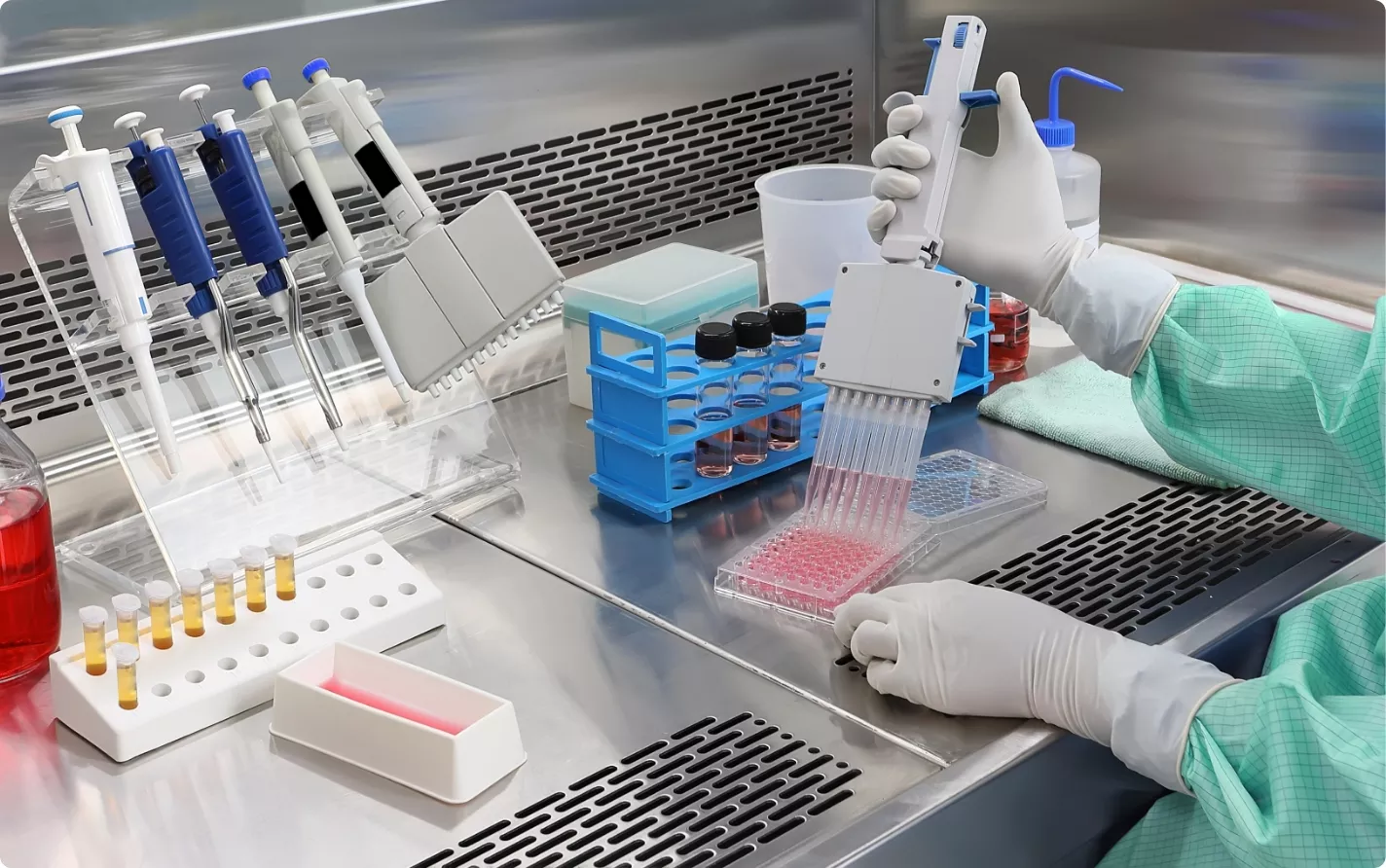
A scientist in a sterile laboratory setting uses a multichannel pipette to transfer pink liquid into a multi-well plate for a high-throughput experiment.

Executive Summary

Accurate quantification of vector copy number is a core requirement for CMC analytics and preclinical development. For clinically relevant serotypes like AAV8 and AAV9, Droplet Digital PCR (ddPCR) provides absolute, high-precision titer determination, removing the ambiguity associated with relative standard curves used in qPCR. This precision directly informs dose accuracy in IND-enabling toxicology studies and supports robust, harmonized data packages for global regulatory submissions to bodies including the FDA and MHRA.

Frequently Asked Questions

Why is ddPCR preferred over qPCR for determining AAV vector titers for regulatory submissions?

ddPCR provides absolute quantification of vector DNA without reliance on a standard curve, which can be a source of variability. This high precision and reproducibility are favored for IND and IMPD submissions, as they ensure accurate dose determination for preclinical and clinical programs, a key factor in assessing safety and efficacy.

How does accurate AAV8 or AAV9 titer impact non-target tissue biodistribution studies?

Precise titer measurement is required for calculating the exact vector dose administered in biodistribution studies. An accurate starting concentration ensures that the resulting data on vector localization in the liver versus non-target tissues is reliable, allowing for a clear assessment of the capsid’s safety profile, as demonstrated in foundational AAV8 biodistribution analyses (PMID: 24070336).

Can ddPCR assays be developed and qualified under GxP conditions?

Yes. ddPCR assays for AAV titer are routinely developed and qualified in a phase-appropriate manner to comply with GxP requirements. This ensures the data generated is suitable for inclusion in regulatory filings and supports the overall quality control strategy for the therapeutic candidate.

The Requirement for Absolute Quantification in Liver-Directed AAV Therapies

For AAV serotypes like AAV8 and AAV9, which exhibit strong liver tropism, precise vector DNA titer is a key analytical parameter. The therapeutic window and potential for dose-dependent toxicity demand an analytical method that delivers accuracy and reproducibility. The selection of an optimal capsid for liver-directed gene therapy, whether a natural serotype like AAV8 or an engineered variant, is predicated on generating definitive data in nonhuman primate models (PMID: 26412589). That data is only meaningful if the administered dose is known with a high degree of confidence.

Droplet Digital PCR has become the reference standard for this application. By partitioning the sample into thousands of individual droplet reactions, ddPCR enables the direct counting of target DNA molecules, yielding an absolute concentration.

This method circumvents the need for a reference standard, a common source of run-to-run variability in traditional quantitative PCR (qPCR) assays. For therapeutic programs targeting a 100% successful IND rate, this level of analytical precision is a component of a de-risking strategy. The Franklin Biolabs team’s track record, established by our principal scientists prior to the company’s 2024 launch, is built on this principle of analytical rigor.

A blue-toned image of white lab rats in their cages within a laboratory or vivarium setting, likely for scientific research or testing.

Methodological Advantages for AAV Programs

The utility of ddPCR extends beyond simple quantification. Its advantages directly support key milestones in advanced therapy development.

  • Enhanced Precision: The coefficient of variation (%CV) is typically lower in ddPCR compared to qPCR, allowing for finer discrimination between manufacturing lots.

  • Inhibitor Resistance: The partitioning mechanism makes ddPCR less susceptible to PCR inhibitors that may be present in complex biological samples or in-process manufacturing material.

  • Regulatory Alignment: Global regulatory bodies, including the FDA, increasingly expect data from methods that provide absolute quantification. Using ddPCR supports a harmonized data package for multi-jurisdictional submissions under ICH guidelines.

This analytical foundation is a key part of the integrated strategy that enables programs to move from concept to IND-enabling studies within an 18-24 month timeline. For more information on our comprehensive analytical capabilities, please see our parent hub page.

Vector | CMC | Analytics Services


Scientific Process Diagram

This content is for informational purposes. For guidance specific to your therapeutic program, please contact our team for a consultation.