Accelerating IND-Readiness: CMC Consulting for Cell Therapy Startups in the Cambridge Biotech Hub

PROVEN INTELLIGENCE ACCELERATING NEXT-GENERATION THERAPIES

Accelerating IND-Readiness: CMC Consulting for Cell Therapy Startups in the Cambridge Biotech Hub

Accelerating IND-Readiness: CMC Consulting for Viral Vector Programs

CELL & GENE | RNA | BIOLOGICS
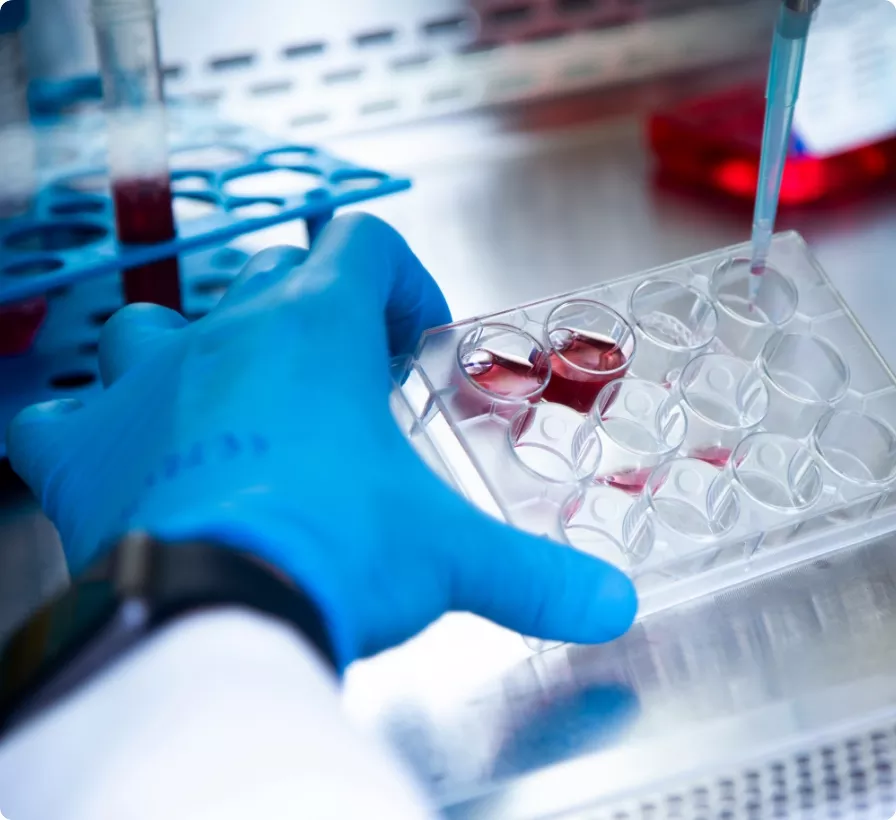
A scientist pipetting a red liquid into a multi-well plate in a laboratory setting.

Executive Summary: For emerging biotech companies, the path from a promising viral vector candidate to a successful IND submission is defined by the robustness of its Chemistry, Manufacturing, and Controls (CMC) strategy. A misaligned CMC program can introduce significant delays and unforeseen costs. Our approach integrates process design, phase-appropriate analytics, and regulatory documentation to create a coherent data package, moving programs toward IND submission within an 18-24 month timeline.

Frequently Asked Questions

    What is the primary goal of CMC consulting for viral vectors?

    The objective is to establish a scalable, reproducible, and well-documented manufacturing process that satisfies regulatory requirements for an IND submission. This involves defining quality attributes for AAV, lentiviral, or adenoviral vectors and creating the analytical methods to measure them.

    How early should a program engage with CMC consultants?

    Engagement should begin during late discovery or lead candidate selection. Early alignment of the vector production process with preclinical and clinical objectives prevents costly process redesign and ensures the material used in pivotal evaluations is representative of the future clinical product.

    What are common CMC pitfalls for AAV and Lentivirus programs?

    Frequent challenges include difficulties in scaling production from adherent to suspension cultures, achieving consistent product quality (e.g., empty-to-full capsid ratios for AAV), and establishing sufficiently robust analytical assays to characterize the final vector product.

Aligning Vector Manufacturing with Preclinical Objectives

A frequent point of failure for viral vector programs is the disconnect between small-scale research vector production and the material requirements for formal IND-enabling toxicology studies. A process that yields sufficient material for initial in vivo proof-of-concept experiments may not be scalable or produce a vector with the consistent quality profile needed for GxP-compliant evaluation.

A forward-looking CMC strategy begins with the end in mind. This involves selecting scalable production platforms, such as AAV scalable suspension systems, and securing a well-characterized and documented supply of raw materials, including plasmids. The goal is to build a process that meets immediate preclinical needs while providing a direct line of sight to later clinical and commercial manufacturing.

A female scientist in a lab coat analyzes complex biological data, including cellular imagery and DNA models, on a computer screen.

A senior scientist with grey hair is mentoring a diverse group of younger scientists or students in a laboratory setting.

Phase-Appropriate Analytical Strategy

A manufacturing process is only as good as the analytical methods used to characterize the product. For viral vectors, this requires a suite of assays that provide a comprehensive understanding of the vector’s identity, purity, concentration, and biological activity. Creating and qualifying these assays in a phase-appropriate manner is a foundational component of minimizing clinical risk.

Understanding vector-host interactions is also a key consideration. As shown in evaluations of transgene-specific T cell responses (PMID: 30547050), the immunological profile of a vector is a significant attribute. A robust analytical package must include methods capable of assessing vector quality attributes that could influence potential immune responses, informing the overall risk profile long before first-in-human evaluations.

Key analytical considerations include:

  • Vector genome titer and concentration

  • Capsid protein identity and ratio

  • Process- and product-related impurity profiles

  • Quantification of empty, partial, and full capsids

  • In vitro cell-based potency assays

Our scientific teams provide comprehensive expertise in all aspects of vector production and analytics, partnering with sponsors to develop robust, phase-appropriate CMC strategies.

De-risking the Path to IND Submission

The culmination of a CMC program is the data package submitted to regulatory agencies. The resulting regulatory package provides the evidence that the manufacturing process is controlled and can consistently produce a high-quality vector. While Franklin Biolabs launched in 2024, our scientific leadership’s track record has contributed to a 100% successful IND rate for client programs since 2019.

Our >100,000 sq ft of manufacturing, analytics, and in vivo study areas provide the integrated infrastructure to execute on these complex programs. By embedding regulatory awareness into every stage of process design and analytical validation, we provide strategic CMC guidance for regulatory success and help sponsors build a comprehensive data package for review.

A senior scientist leads a discussion with a group of diverse junior scientists in a bright, modern laboratory setting.

Technical Visualization: Integrated CMC Pathway to IND

Scientific Process Diagram

This content is for informational purposes. For guidance specific to your therapeutic program, please contact our team for a consultation.