Comparative Analysis of AAV Serotypes for In Vivo Gene Delivery to Non-Human Primates

PROVEN INTELLIGENCE ACCELERATING NEXT-GENERATION THERAPIES

Comparative Analysis of AAV Serotypes for In Vivo Gene Delivery to Non-Human Primates

AAV Serotype Selection for Non-Human Primate Models

CELL & GENE | RNA | BIOLOGICS

A scientist in a modern lab analyzes colorful DNA sequencing data on a tablet.

Executive Summary

Selecting an appropriate AAV serotype for in vivo gene delivery requires a data-driven approach that accounts for species-specific variations in vector tropism and immune response. Direct extrapolation from certain preclinical data to human clinical outcomes can be unreliable; non-human primate (NHP) models provide a more predictive translational bridge. Understanding these differences, particularly in tissue-specific transduction patterns and immunogenicity, is fundamental to de-risking a program and designing a viable path toward a successful IND submission.

Frequently Asked Questions

    Why is NHP data so important for AAV serotype selection?

    NHP models are invaluable due to their physiological and immunological similarity to humans. They provide more accurate predictions of vector biodistribution, target tissue engagement, and potential immunogenicity, which are often not recapitulated in lower-order species.

    Which AAV serotypes show the most promise for liver-directed therapies in NHPs?

    The answer depends on the therapeutic goal. For instance, studies show AAV8 exhibits a periportal transduction pattern in the NHP liver, a reversal of the pericentral pattern observed in some preclinical species (PMID: 21778099). This distinction has significant implications for treating metabolic diseases where specific hepatocyte populations must be targeted.

    How does capsid design influence immunogenicity and durability in NHP studies?

    Capsid engineering is a key determinant of the host immune response and the longevity of transgene expression. As demonstrated in vaccine development platforms, an optimized AAV-based vector can elicit potent, durable immunogenicity and provide complete protection in NHP challenge models, signaling a strong potential for long-term efficacy in humans (PMID: 34428428).

The Translational Challenge in Vector Design

A persistent challenge in developing AAV-based therapies is the translational dissonance between preclinical models. Data generated in some models frequently fails to predict vector behavior in primates, leading to costly delays and program setbacks. This is particularly evident in liver-directed gene therapy, where the specific zonation of hepatocyte transduction can dictate therapeutic success or failure.

Analysis of AAV8, for example, reveals a stark, inverse zonation pattern between species. While this serotype effectively transduces pericentral hepatocytes in some preclinical models, it preferentially targets periportal hepatocytes in NHPs. This finding underscores the necessity of validating serotype performance in higher-order species to ensure the vector engages the correct cellular machinery required for the intended therapeutic effect. Relying on data from lower-order models alone can lead to a fundamental miscalculation of a candidate’s clinical potential.

A close-up of a multi-channel pipette dispensing liquid into a microplate in a laboratory setting, with a blue color overlay.

A close-up, detailed shot of a Sartorius Stedim Biotech BIOSTAT STR® single-use bioreactor in a laboratory setting.

Designing for Durable Expression and Controlled Immunogenicity

Beyond tissue tropism, a vector’s interaction with the host immune system is a primary consideration. The capsid must be designed to minimize neutralization by pre-existing antibodies while effectively delivering its genetic payload to generate a durable therapeutic response. NHP studies provide the most relevant context for evaluating these dynamics.

This consultative process, backed by our >100,000 sq ft of manufacturing, analytics, and in vivo study areas, helps sponsors navigate these complexities to achieve a typical 18-24 month IND timeline. A partner recently noted this continuity of expertise: “The key people from UPenn Vector Core joined Franklin Biolabs and our partnership transitioned without interruption… Franklin Biolabs is a key collaborator in our AAV-vector based gene therapy candidate development and we hope to continue the partnership for years to come.”

Our Commitment to Animal Welfare

All in vivo studies at Franklin Biolabs are conducted with an unwavering commitment to animal welfare, adhering to the highest ethical standards. We rigorously implement the 3Rs (Reduce, Refine, Replace) to ensure the most humane and scientifically sound outcomes.

A scientist in a lab coat and gloves looks through a microscope in a laboratory setting, with a blue color overlay.

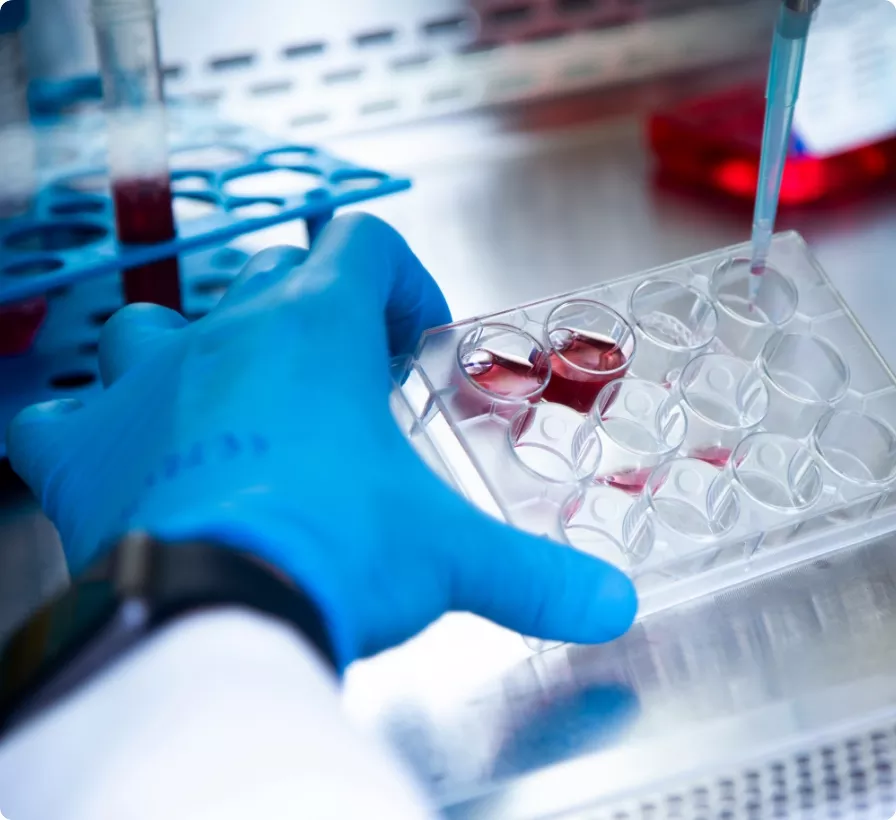
A scientist pipetting a red liquid into a multi-well plate in a laboratory setting.

Featured Resource: Responsibility and Animal Welfare

This video details Franklin Biolabs’ commitment to animal care, highlighting our adherence to international guidelines and the three Rs (Reduce, Refine, Replace) of animal research.
(Internal Asset: FBL-VID-09-Approved_enhanced_responsibility_clip_long.mp4)

Technical Visualization: Comparative AAV Tropism in Liver Tissue

Scientific Process Diagram

This content is for informational purposes. For guidance specific to your therapeutic program, please contact our team for a consultation.