Compendial Assays for Gene Therapy Products According to European Pharmacopoeia (Ph. Eur.) Standards

PROVEN INTELLIGENCE ACCELERATING NEXT-GENERATION THERAPIES

Compendial Assays for Gene Therapy Products According to European Pharmacopoeia (Ph. Eur.) Standards

Compendial Assays for Viral Vectors (Ph. Eur.)

CELL & GENE | RNA | BIOLOGICS

A scientist in a sterile laboratory setting uses a multichannel pipette to transfer pink liquid into a multi-well plate for a high-throughput experiment.

Proven Intelligence Accelerating Next-Generation Therapies.

Executive Summary

For viral vector programs targeting European markets, adherence to European Pharmacopoeia (Ph. Eur.) standards for compendial assays is a baseline requirement for Investigational Medicinal Product Dossier (IMPD) submissions. These tests, including appearance, pH, osmolality, and extractable volume, provide foundational data on product identity, purity, and stability. Franklin Biolabs executes these assays within a GxP framework, ensuring that data packages for AAV, lentivirus, and adenovirus vectors are aligned with MHRA and other European agency expectations, supporting an 18-24 month timeline to IND or equivalent.

A blue-toned image of white lab rats in their cages within a laboratory or vivarium setting, likely for scientific research or testing.

Frequently Asked Questions (FAQ)

    Which Ph. Eur. chapters are relevant for viral vector products?

    While specific monographs for AAV or lentivirus are still evolving, general chapters on biological products, parenteral preparations (Ph. Eur. 2.9 series), and sterility testing are directly applicable. The strategy involves applying existing relevant standards to demonstrate product control.

    Are these assays required for research-grade material?

    Compendial assays are typically performed on material intended for GxP toxicology studies and clinical use. For early research-grade vectors, these tests provide valuable characterization data but are not formally required to be run under GxP conditions.

    How do compendial assays differ from potency or titer assays?

    Compendial assays measure general physicochemical properties of the final product formulation. They do not measure the biological activity (potency) or the concentration of the vector genome (titer), which are determined by more complex, product-specific analytical methods.

    Can compendial assay methods be customized?

    The methods themselves are standardized by the pharmacopoeia. However, the acceptance criteria (specifications) for each test are product-specific and must be established and justified based on data from your manufacturing process and stability studies.

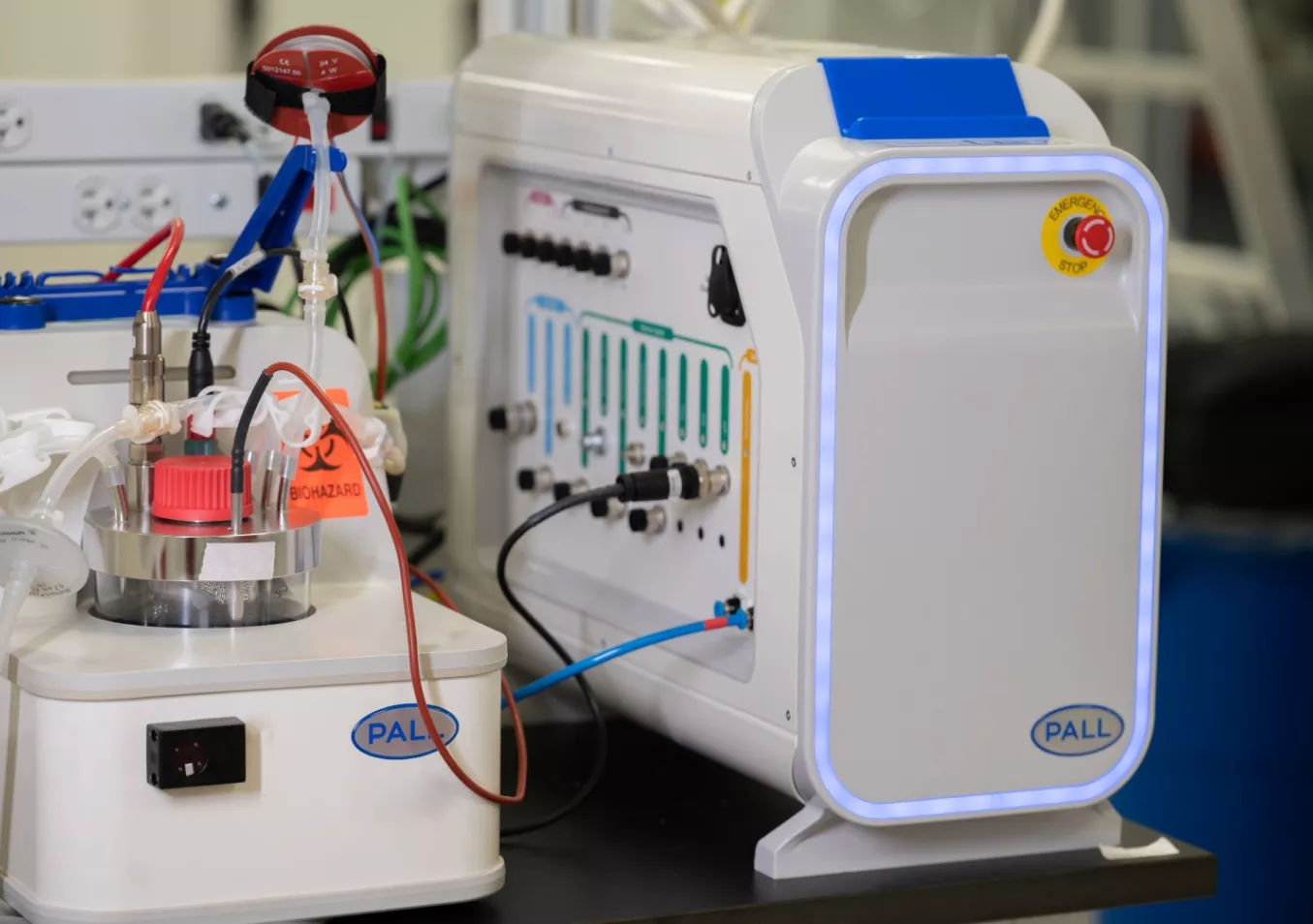
A close-up shot of a modern bioreactor system and control unit from Pall Corporation in a clean laboratory environment.

Aligning Viral Vector Analytics with European Regulatory Standards

Submitting an IMPD to a European regulatory body like the MHRA requires a comprehensive analytical data package. Compendial assays provide the fundamental characterization data that underpins the entire Chemistry, Manufacturing, and Controls (CMC) section for viral vector products. These tests confirm that the final product is consistent and meets basic quality attributes for parenteral administration.

Our approach ensures that these foundational tests are integrated into a phase-appropriate analytical strategy. For sponsors, this means building a data package that is compliant from the start, minimizing the risk of regulatory delays during the review process. Analytical Rigor for European Regulatory Success.

Core Compendial Assays for Plasmids and Viral Vectors

Within our >100,000 sq ft facility, we perform a standard panel of compendial assays according to Ph. Eur. methodologies. These are executed alongside more complex vector-specific analytics to build a complete product profile.

  • Appearance: Visual inspection for color, clarity, and the presence of visible particulates.

  • pH: Measurement of the formulation’s acidity or alkalinity, a key stability-indicating parameter.

  • Osmolality: Determines the osmotic pressure of the solution, ensuring it is suitable for injection.

  • Extractable Volume: Confirms that the volume of product in the final container meets label claims, as per Ph. Eur. 2.9.17.

  • Sub-visible Particles: Analysis of particles not visible to the naked eye, a requirement for parenteral products.


*Learn more about how process optimization accelerates timelines in the full-length video: *


A stylized 3D rendering of a DNA double helix, composed of light-colored spheres on a translucent blue backbone, set against a soft-focus, light blue background.

A close-up of a scientist in blue gloves gently holding a small, white laboratory mouse, likely in a research setting.

Foundational Data for Complex Biology

The data from compendial assays provides a stable baseline against which more complex biological attributes can be assessed. Understanding the host’s pre-existing immune status, for instance, is a known variable in vector efficacy (PMID: 23790242). By ensuring the vector formulation itself is consistent and stable via compendial testing, any observed variability in biological response can be more confidently attributed to immunological factors rather than product inconsistency.

This level of product understanding is what enables successful clinical translation. Demonstrating marked regression of a disease phenotype requires a well-characterized and consistently manufactured vector, where basic attributes are under strict control (PMID: 20976059). Compendial assays are the first step in establishing that control.

This service is a component of our broader Vector | CMC | Analytics Services.

Technical Visualization: Compendial Assay Workflow for Viral Vectors

Scientific Process Diagram

This content is for informational purposes. For guidance specific to your therapeutic program, please contact our team for a consultation.