Comprehensive Plasmid DNA Identity, Purity, and Integrity Testing for German Biotech Companies

PROVEN INTELLIGENCE ACCELERATING NEXT-GENERATION THERAPIES

Comprehensive Plasmid DNA Identity, Purity, and Integrity Testing for German Biotech Companies

CELL & GENE | RNA | BIOLOGICS

Proven Intelligence Accelerating Next-Generation Therapies.

A scientist in a lab coat and gloves looks through a microscope in a laboratory setting, with a blue color overlay.

A scientist pipetting a red liquid into a multi-well plate in a laboratory setting.

Executive Summary

For German biotech companies developing viral vector-based Advanced Therapy Medicinal Products (ATMPs), the quality of the starting plasmid DNA is a primary determinant of downstream manufacturing success and regulatory acceptance. A robust analytical framework for plasmid qualification, focusing on identity, purity, and integrity, directly de-risks the 18-24 month path to Investigational Medicinal Product Dossier (IMPD) filing.

Frequently Asked Questions

    What are the primary analytical methods for confirming plasmid identity?

    Plasmid identity is confirmed through a combination of restriction enzyme digestion analysis and full-sequence verification via Next-Generation Sequencing (NGS). This dual approach verifies both the expected restriction map and the precise nucleotide sequence of the entire plasmid, including the transgene cassette and other functional elements.

    How is plasmid purity assessed for viral vector production?

    Purity is evaluated by measuring and controlling process-related impurities. Key assays include quantification of residual host cell proteins, host cell DNA, and endotoxin levels. Spectrophotometry (A260/A280 ratio) provides an initial assessment, while more specific methods ensure contaminants are below acceptable limits for GxP-compliant vector manufacturing.

    Why is the ratio of supercoiled to open-circular plasmid important?

    The topology of the plasmid DNA affects transfection efficiency during vector production. A high percentage of the supercoiled isoform is required for optimal and consistent vector yields. Capillary gel electrophoresis (CGE) or agarose gel electrophoresis are used to quantify the relative amounts of supercoiled, open-circular, and linear plasmid forms.

Accelerating Timelines Through Process Optimization

A female scientist in a lab coat analyzes complex biological data, including cellular imagery and DNA models, on a computer screen.

A senior scientist with grey hair is mentoring a diverse group of younger scientists or students in a laboratory setting.

The Plasmid as the Genomic Blueprint for Viral Vectors

The plasmid DNA used in the production of AAV, lentiviral, or adenoviral vectors serves as the foundational genomic template. Any errors, impurities, or structural inconsistencies in this starting material will be propagated through the manufacturing process, impacting vector quality, biological activity, and the safety profile. Establishing a phase-appropriate analytical control strategy for plasmid DNA is a prerequisite for a successful IMPD or IND submission.

Our analytical and manufacturing workflows are supported by a >100,000 sq ft facility. While the Franklin Biolabs brand was launched in 2024, our scientific lineage has contributed to a 100% successful IND rate for client programs since 2019.

Core Analytical Pillars for Plasmid DNA Qualification

A tailored, data-driven preclinical strategy begins with rigorous characterization of the plasmid. A standard testing template does not exist; the analytical package must be adapted to the specific vector system and target indication.

  • Identity: Confirms the plasmid contains the correct genetic sequence. This is accomplished through restriction mapping and full plasmid sequencing to ensure the transgene, promoters, and other genetic elements are correct and in the proper orientation.

  • Purity: Ensures the plasmid preparation is free from contaminants that could interfere with vector production or introduce safety risks. This includes assays for residual host genomic DNA, proteins, and endotoxins.

  • Integrity & Structure: Verifies the physical form of the plasmid. The goal is to confirm a high percentage of the biologically active, supercoiled isoform, as this structure is most efficient for transfection in producer cell lines.

A senior scientist leads a discussion with a group of diverse junior scientists in a bright, modern laboratory setting.

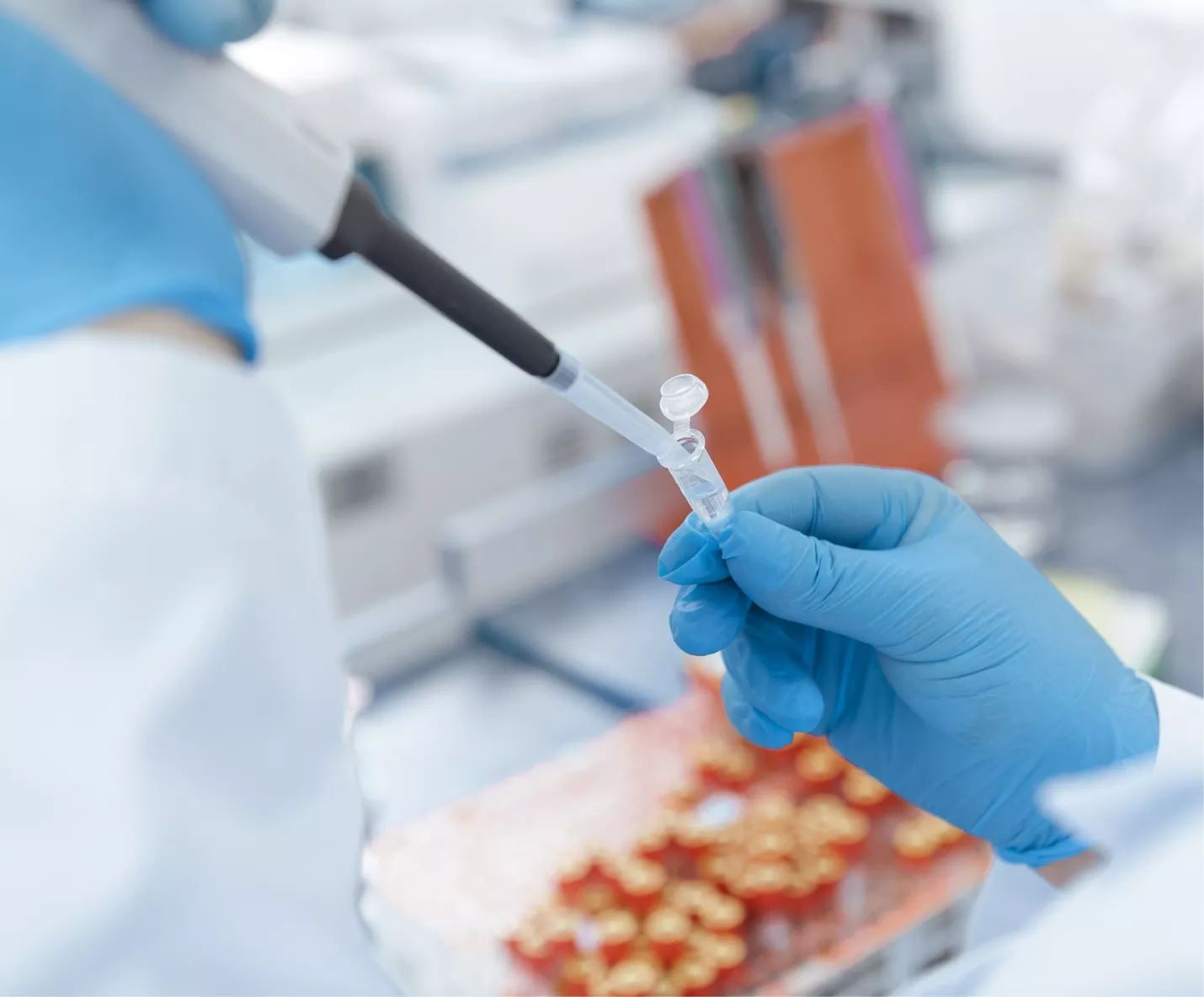
A close-up shot of a scientist in a lab coat and blue gloves using a micropipette to transfer a liquid sample into a small test tube.

A Tailored Analytical Strategy for German Biotech Programs

For German and EU-based biotech sponsors, analytical data packages must be assembled to support the stringent requirements of IMPD submissions for ATMPs. The quality of the plasmid starting material is scrutinized as a key component of the manufacturing control strategy.

The scientific rationale is clear: the fidelity of the initial DNA construct directly correlates with the predictable biological activity of the final vector product. As demonstrated in studies evaluating the immunogenicity of DNA-based constructs, the quality of the input nucleic acid is a determinant of the resulting biological response (PMID: 12533717). Similarly, work with AAV vectors has shown that the integrity of the delivered transgene is needed for achieving specific and intended therapeutic effects on target tissues (PMID: 27937051). A deficient plasmid compromises the entire therapeutic hypothesis.

Technical Visualization: Plasmid DNA Qualification Workflow

Scientific Process Diagram

This content is for informational purposes. For guidance specific to your therapeutic program, please contact our team for a consultation.