High-Fidelity DNA Amplification for Lentiviral Vector Production

PROVEN INTELLIGENCE IN VECTOR PRODUCTION

High-Fidelity DNA Amplification for Lentiviral Vector Production

CELL & GENE | RNA | BIOLOGICS

A senior scientist with grey hair is mentoring a diverse group of younger scientists or students in a laboratory setting.

Executive Summary: The genetic integrity of a lentiviral vector is determined long before viral packaging. Errors introduced during the initial plasmid DNA amplification stage can propagate through the entire production workflow, compromising vector efficacy and introducing significant regulatory risk. Implementing high-fidelity DNA amplification serves as a foundational control measure in lentiviral vector production. This upstream investment in sequence accuracy is a key component of a risk-mitigation strategy designed to support accelerated IND timelines.

Frequently Asked Questions

Why is the choice of DNA polymerase important for lentiviral vector plasmid preparation?

Standard DNA polymerases can introduce errors during amplification, leading to mutations in the transfer plasmid. These errors can alter the resulting therapeutic protein or gRNA, impacting function and safety. High-fidelity polymerases possess proofreading capabilities that minimize these mutations, ensuring the genetic payload intended for the lentiviral vector is accurate from the very start, which is a foundational step for any GxP-compliant program.

How does upstream plasmid quality affect IND-enabling toxicology studies?

The material used in IND-enabling studies must be representative of the final clinical product. If the vector used in preclinical models was derived from a plasmid with sequence errors, the resulting data on efficacy, biodistribution, and toxicology may not be valid for the corrected, clinical-grade vector. Ensuring plasmid fidelity minimizes the risk of costly repeats and supports a robust data package for FDA submissions.

Can this high-fidelity approach be applied to other viral vectors?

Yes. The principle of maintaining sequence integrity is universal. While this process is outlined for lentiviral vectors, the same stringent amplification controls are applied to our AAV and adenovirus vector production platforms. This ensures a consistent standard of quality and genetic accuracy across all next-generation therapeutics developed within our >100,000 sq ft facilities.

The Foundational Role of Sequence Integrity in LV Production

For lentiviral (LV) vectors, the transfer plasmid is the definitive blueprint for the therapeutic payload. Any deviation from the intended sequence : whether a single nucleotide polymorphism or a frameshift mutation : can have cascading consequences on the final product’s biological activity and safety profile. Standard DNA amplification techniques, while rapid, lack the proofreading mechanisms to prevent the introduction of such errors.

Adopting a high-fidelity amplification strategy is a deliberate, risk-based decision. It establishes a high-confidence baseline for all downstream process development and manufacturing activities. This approach ensures that the genetic material packaged into each lentiviral particle is an exact copy of the validated design, directly supporting the mechanism of action and minimizing the potential for unintended biological effects.

A senior scientist leads a discussion with a group of diverse junior scientists in a bright, modern laboratory setting.

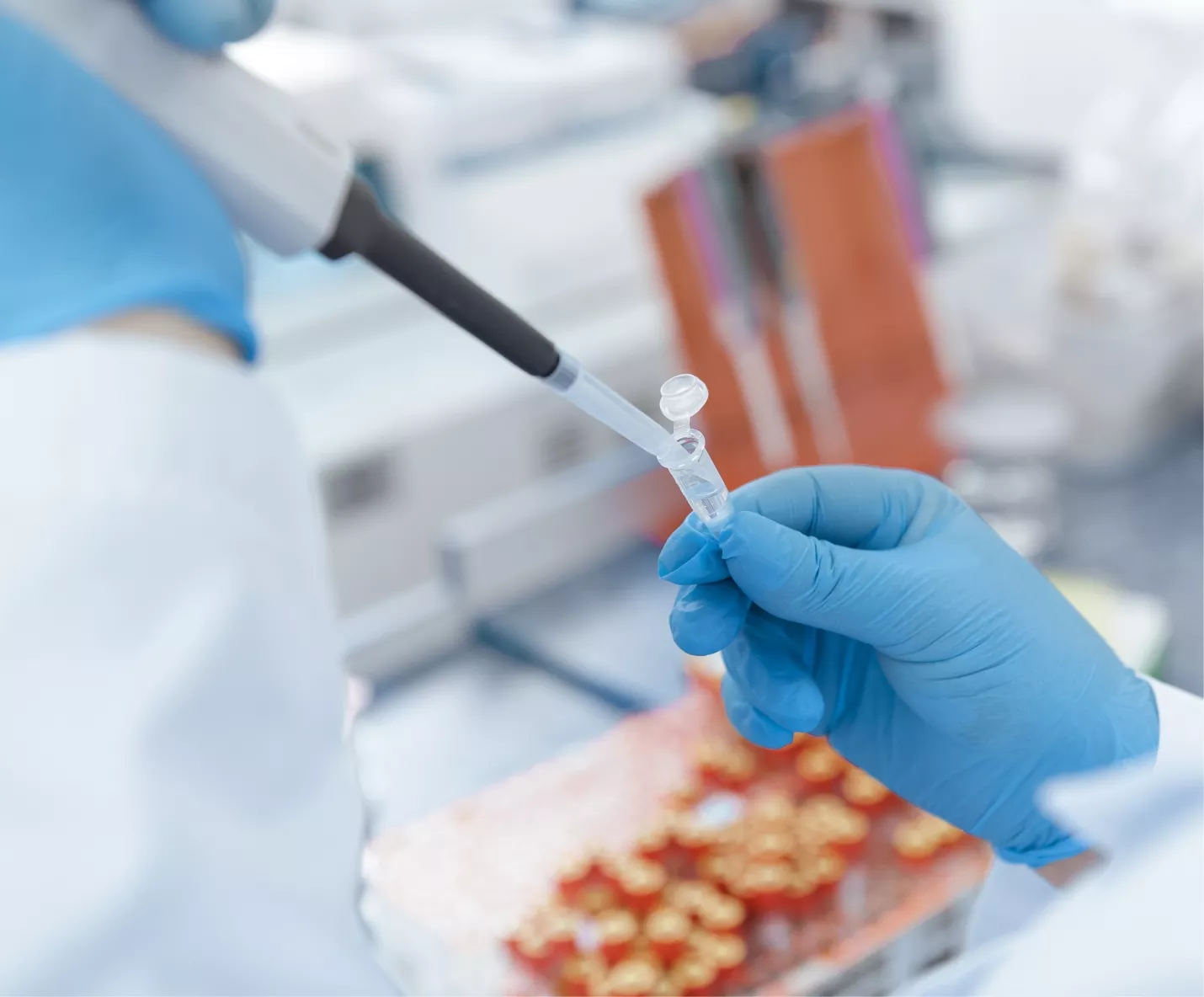
A close-up shot of a scientist in a lab coat and blue gloves using a micropipette to transfer a liquid sample into a small test tube.

A Principle Validated Across Complex Viral Systems

The requirement for genetic accuracy is not unique to lentivirus. Research into isolating novel AAV genomes from primate tissues demonstrated that high-fidelity polymerases were superior for accurate amplification and discovery (PMID: 34448594). The strategic implication for therapeutic vector production is clear: when the goal is to replicate a precise genetic sequence for clinical application, the amplification method must be optimized for accuracy over speed. Extrapolating this finding provides a strong scientific rationale for mandating high-fidelity systems in the GxP-compliant production of all viral vectors.

This commitment to upstream quality control is a core component of how our scientific leadership, whose track record includes a 100% successful IND rate since 2019, approaches program development. Franklin Biolabs was formally launched in 2024, building upon this deep history of technical execution and regulatory success.

  • Minimizing Lot-to-Lot Variability: Ensures consistency from research-grade batches to materials used in IND-enabling toxicology studies.

  • De-risking Downstream Analytics: Prevents sequence-related artifacts that could confound potency assays or molecular characterization.

  • Strengthening Regulatory Submissions: Provides a clear data trail demonstrating control over the vector’s genetic identity for FDA IND pathways.

Our teams apply this level of technical detail to every program. As one biotech partner noted, we provide “Wonderful services. Excellent team to work with. Vast knowledge in all aspects of vector production and analytics.” This expertise is foundational to navigating the complexities of next-generation therapeutics and achieving an 18-24 month IND timeline.

This rigorous approach to vector production is part of a larger, integrated strategy detailed in our Vector | CMC | Analytics Services overview.



SVG Diagram: Plasmid Amplification Methodologies

Scientific Process Diagram

This content is for informational purposes. For guidance specific to your therapeutic program, please contact our team for a consultation.