LNP Formulation and siRNA Payload Design for UK Therapeutic Programs

PROVEN INTELLIGENCE ACCELERATING NEXT-GENERATION THERAPIES

LNP Formulation and siRNA Payload Design for UK Therapeutic Programs

CELL & GENE | RNA | BIOLOGICS

A scientist in protective gear pipetting a sample into a vial within a sterile laboratory hood.

Proven Intelligence in Non-Viral Vector Analytics.

Executive Summary

The clinical viability of an siRNA therapeutic is determined by two interdependent factors: the intrinsic biological activity of the RNA payload and the biodistribution profile of its lipid nanoparticle (LNP) delivery system. A scientifically-grounded approach to co-designing these components is required to achieve desired tissue targeting and avoid unintended toxicity, forming the analytical foundation for successful Investigational Medicinal Product Dossier (IMPD) submissions to the MHRA.

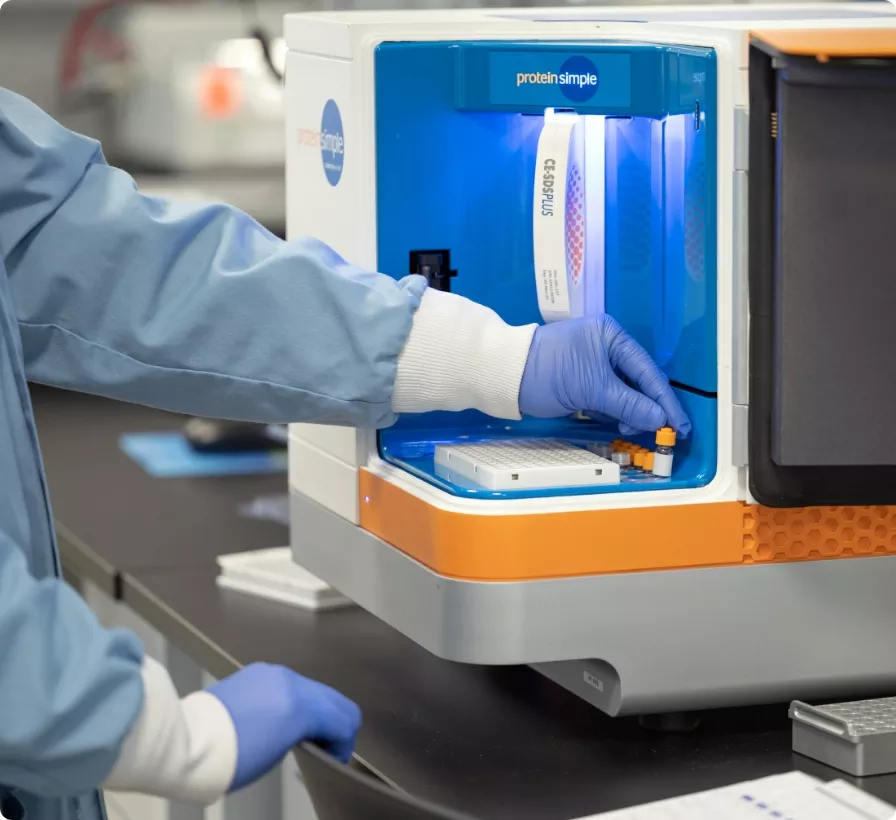
A scientist in a lab coat and gloves loads samples into a ProteinSimple instrument for analysis.

Frequently Asked Questions

What are the primary risks of improper siRNA payload design in early preclinical development?

Beyond a simple lack of efficacy, poorly designed siRNA sequences can induce significant cellular toxicity independent of the delivery vector. Preclinical data shows that RNAi payloads can trigger unintended biological effects, such as off-target transcript binding or innate immune stimulation, that compromise the safety profile. Rigorous sequence optimization and early toxicological assessment are requirements for minimizing clinical risk.

How does LNP formulation influence the target profile for RNA therapeutics seeking MHRA approval?

The selection of helper lipids and other components within an LNP formulation directly governs protein adsorption in vivo, which in turn dictates tissue-specific biodistribution. For UK and EU regulatory bodies, demonstrating precise control over whether a therapeutic targets the liver versus the spleen is a key part of the data package. This requires a deep understanding of lipid chemistry and its translational impact.

What analytical capabilities are necessary to support an IMPD submission for an siRNA-LNP candidate?

A comprehensive analytical package for an IMPD submission must fully characterize the siRNA-LNP complex. This includes assays for particle size, charge, encapsulation efficiency, payload integrity, and in vitro potency. These analytics provide the objective evidence needed to justify the proposed clinical trial design and are developed within our GxP-compliant, >100,000 sq ft facilities.

A researcher in a lab coat and blue gloves gently holds three white lab mice, symbolizing animal models in scientific research.

Integrating Payload Safety with Delivery System Precision

For UK-based innovators developing next-generation therapies using siRNA, the path to a successful MHRA submission depends on a preclinical strategy that addresses the asset as a complete system. The siRNA payload and the LNP carrier cannot be optimized in isolation. A change in one directly affects the performance and safety of the other.

The design of the RNA payload itself is the first control point. While the goal is specific gene knockdown, the sequence can have other biological consequences. It is a known mechanism that certain RNAi sequences can cause off-target effects or activate pattern recognition receptors, leading to unintended cellular toxicity. This underscores the need for meticulous sequence engineering and screening to select candidates with a clean safety profile before committing to expensive in vivo validation.

LNP Formulation as a Determinant of Biodistribution

Once a safe and effective siRNA payload is designed, the LNP formulation dictates its therapeutic potential. The LNP’s composition functions as an active targeting technology, directly influencing which tissues and cell types it reaches. The choice of helper lipids, for instance, has a profound impact on which proteins adsorb to the nanoparticle surface in the bloodstream.

Key research illustrates this principle clearly:

  • Liver-Targeting LNPs: Formulations containing specific helper lipids like DOPE exhibit preferential adsorption of Apolipoprotein E (ApoE), leading to rapid clearance and high accumulation in the liver.

  • Spleen-Targeting LNPs: Conversely, substituting DSPC as the helper lipid can reduce ApoE binding, altering the biodistribution profile to favor accumulation in the spleen and its resident immune cell populations (PMID: 33404020).

This ability to direct biodistribution through formulation is a powerful strategic tool. For a therapeutic targeting a metabolic disorder, a liver-directed LNP is necessary. For an immunomodulatory application, a spleen-targeting formulation may be optimal. Demonstrating this level of control is fundamental to building a robust data package for UK and international regulatory bodies. This work is part of the integrated analytical and manufacturing support detailed in our Vector | CMC | Analytics Services.

Our approach provides the analytical framework to connect these molecular design choices to predictable biological outcomes, accelerating programs toward successful IND and IMPD filings within an 18-24 month timeline.


Scientific Process Diagram

This content is for informational purposes. For guidance specific to your therapeutic program, please contact our team for a consultation.