Preparing a BLA-Ready CMC Documentation Package for an AAV-based Gene Therapy

PROVEN INTELLIGENCE ACCELERATING NEXT-GENERATION THERAPIES

Preparing a BLA-Ready CMC Documentation Package for an AAV-based Gene Therapy

BLA-Ready CMC Documentation for AAV Gene Therapies

CELL & GENE | RNA | BIOLOGICS

Proven Intelligence Accelerating Next-Generation Therapies.

A blue-toned image of white lab rats in their cages within a laboratory or vivarium setting, likely for scientific research or testing.

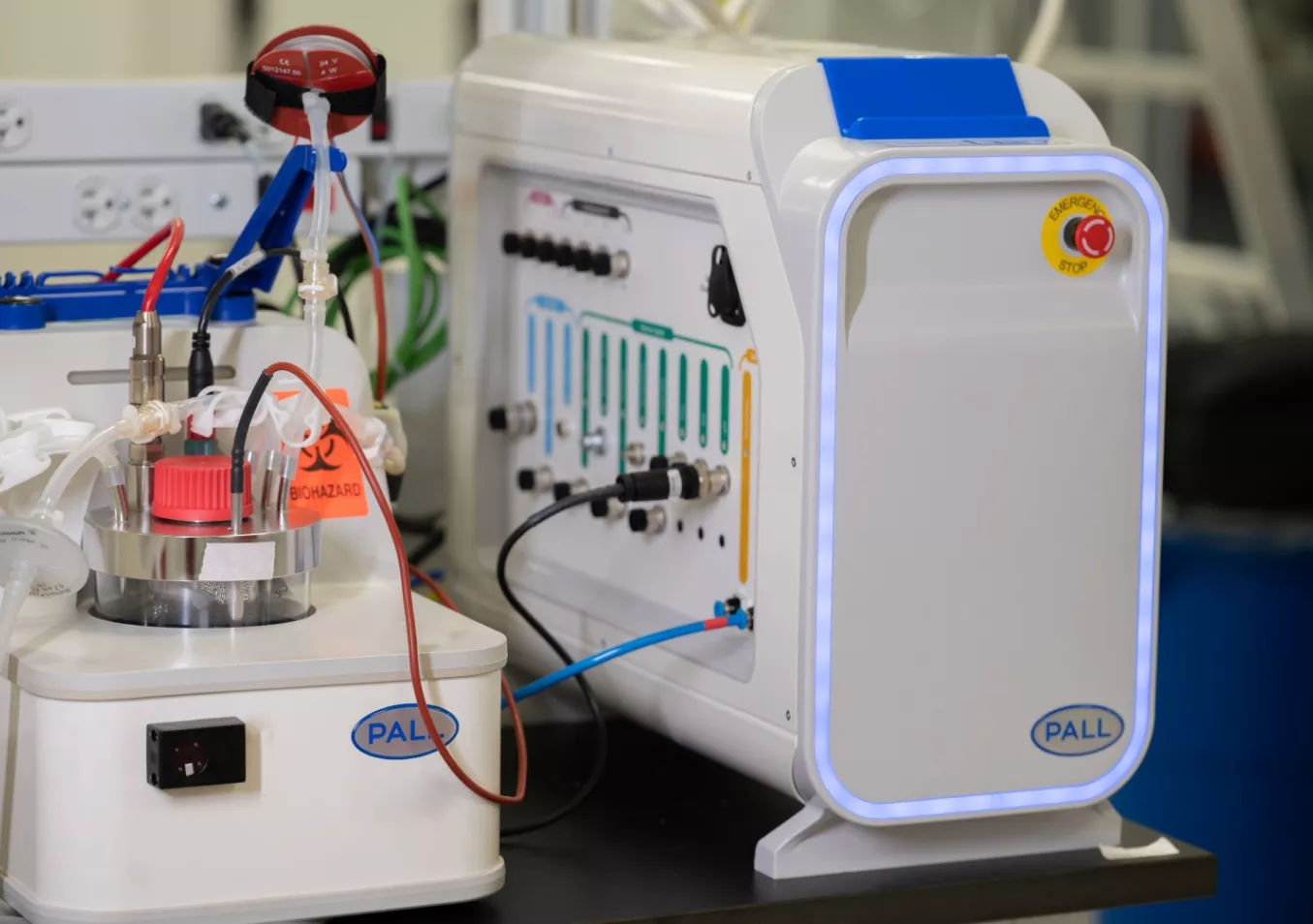
A close-up shot of a modern bioreactor system and control unit from Pall Corporation in a clean laboratory environment.

Executive Summary

A Biologics License Application (BLA) submission for an adeno-associated virus (AAV) therapy requires a chemistry, manufacturing, and controls (CMC) data package of significant depth and rigor. This package must provide a complete narrative that demonstrates control over the entire manufacturing process, from the initial plasmid starting materials to the final characterization and stability of the purified vector. The objective is to build a data architecture that substantiates product quality, consistency, and safety, directly enabling regulatory review and approval.

Frequently Asked Questions: AAV CMC for BLA

    What distinguishes a BLA-ready CMC package from an IND-ready one?

    The primary distinction is the level of process validation and data completeness. An IND package demonstrates initial safety and a controlled process sufficient for early-phase clinical trials. A BLA package requires full process validation, extensive characterization data from multiple manufacturing runs, comprehensive stability data, and a well-defined control strategy that proves consistent production of the viral vector at the intended commercial scale.

    How is vector potency addressed in the CMC documentation?

    Potency is a quality attribute (CQA) that must be quantitatively measured using a validated, biologically relevant assay. For AAV therapies, this typically involves a cell-based assay that measures the functional activity of the transgene product. The CMC package must include detailed documentation on the potency assay’s development, qualification, and validation, demonstrating its suitability to measure product activity and ensure lot-to-lot consistency.

    What are common documentation gaps for plasmid DNA manufacturing?

    A frequent gap is insufficient documentation of plasmid traceability and quality control. For BLA readiness, the entire history of the master and working cell banks used for plasmid production must be documented under GxP conditions. This includes confirmation of plasmid identity, purity (absence of host-cell contaminants and unwanted plasmid forms), and genetic stability over time.

From Process Control to Regulatory Submission

Assembling a BLA-ready CMC package is an exercise in meticulous data integration. It requires a forward-looking strategy that begins during preclinical development. Every decision regarding process parameters, raw material sourcing, and analytical methods must be made with the final regulatory submission in mind. Strategic Documentation Systems Accelerating Audit Readiness are built on this principle.

The documentation must connect upstream process (USP) parameters, such as cell culture conditions in scalable suspension systems, with downstream process (DSP) outcomes, including vector purity and yield. This creates a clear, evidence-based narrative for regulators.

  • Process Validation: Demonstrating that the manufacturing process consistently produces a viral vector meeting its pre-determined specifications.

  • Control Strategy: A planned set of controls, derived from product and process understanding, that assures process performance and product quality.

  • Material Traceability: Complete documentation for all raw materials, including the plasmid DNA used for transfection and the cell banks.

Expertise across the full spectrum of vector production and analytical characterization is therefore essential to construct a comprehensive and defensible CMC narrative for regulatory review.

A stylized 3D rendering of a DNA double helix, composed of light-colored spheres on a translucent blue backbone, set against a soft-focus, light blue background.

A close-up of a scientist in blue gloves gently holding a small, white laboratory mouse, likely in a research setting.

The Role of Analytical Data in a BLA-Ready Package

Robust analytical data forms the backbone of any successful CMC submission. A suite of validated assays is required to characterize the AAV product fully. This goes beyond simple titer and purity measurements to include in-depth characterization of the viral capsid and the packaged genome.

Analytical Domain Key Assays for BLA Submission Purpose
Identity Next-Generation Sequencing (NGS), Peptide Mapping Confirms correct capsid protein sequence and transgene integrity.
Purity SDS-PAGE, HPLC, Host-Cell Protein/DNA Assays Quantifies process-related impurities and product-related impurities (e.g., empty capsids).
Quantity & Titer ddPCR/qPCR, ELISA Measures vector genome titer and total particle concentration.
Potency Validated Cell-Based Assays Measures the specific biological activity of the therapeutic product.

Integrating Preclinical Data to Justify Product Design

Data from well-designed preclinical programs provides the scientific rationale for product attributes. For instance, studies evaluating different AAV serotypes inform the final selection of the clinical capsid. As demonstrated in research on AAV1-based gene therapies (PMID: 32937039), data from relevant translational models can be instrumental in confirming progranulin expression and tolerability. This provides a strong justification for the vector design that is then documented within the CMC package. This linkage between preclinical evidence and manufacturing controls is a component of a successful BLA.

*A look inside Franklin Biolabs’ >100,000 sq ft of specialized laboratory and preclinical facilities. *

Technical Visualization: AAV CMC Documentation Pillars for BLA

Scientific Process Diagram

This content is for informational purposes. For guidance specific to your therapeutic program, please contact our team for a consultation.