Quality Control Assays for pDNA Used in AAV Manufacturing for West Coast CDMOs

PROVEN INTELLIGENCE ACCELERATING NEXT-GENERATION THERAPIES

Quality Control Assays for pDNA Used in AAV Manufacturing for West Coast CDMOs

Plasmid DNA Quality Control for AAV Manufacturing

CELL & GENE | RNA | BIOLOGICS

Executive Summary

The quality of plasmid DNA (pDNA) used in transient transfection is a primary determinant of final AAV vector yield, purity, and safety. A robust analytical characterization program for this raw material is a foundational requirement for de-risking downstream process development and manufacturing. This involves a multi-assay approach to confirm plasmid identity, purity, integrity, and safety before its use in vector production.

A senior scientist leads a discussion with a group of diverse junior scientists in a bright, modern laboratory setting.

Frequently Asked Questions

    What are the primary QC assays for pDNA used in AAV production?

    A comprehensive panel includes restriction enzyme digestion and Sanger sequencing to confirm identity, spectrophotometric analysis (A260/280 and A260/230 ratios) and agarose gel electrophoresis for purity, and Limulus Amebocyte Lysate (LAL) testing for endotoxin levels.

    How does pDNA topology affect AAV manufacturing?

    The ratio of supercoiled to open-circular or linear plasmid isoforms directly impacts transfection efficiency. A higher percentage of the supercoiled isoform is strongly correlated with increased vector titers, making it the preferred topology for scalable AAV production.

    What are typical acceptance criteria for endotoxin in research-grade pDNA?

    While specifications can be program-dependent, a common threshold for pDNA used in research-grade vector production is less than 100 Endotoxin Units (EU) per milligram of DNA. Rigorous control at this stage prevents downstream purification challenges.

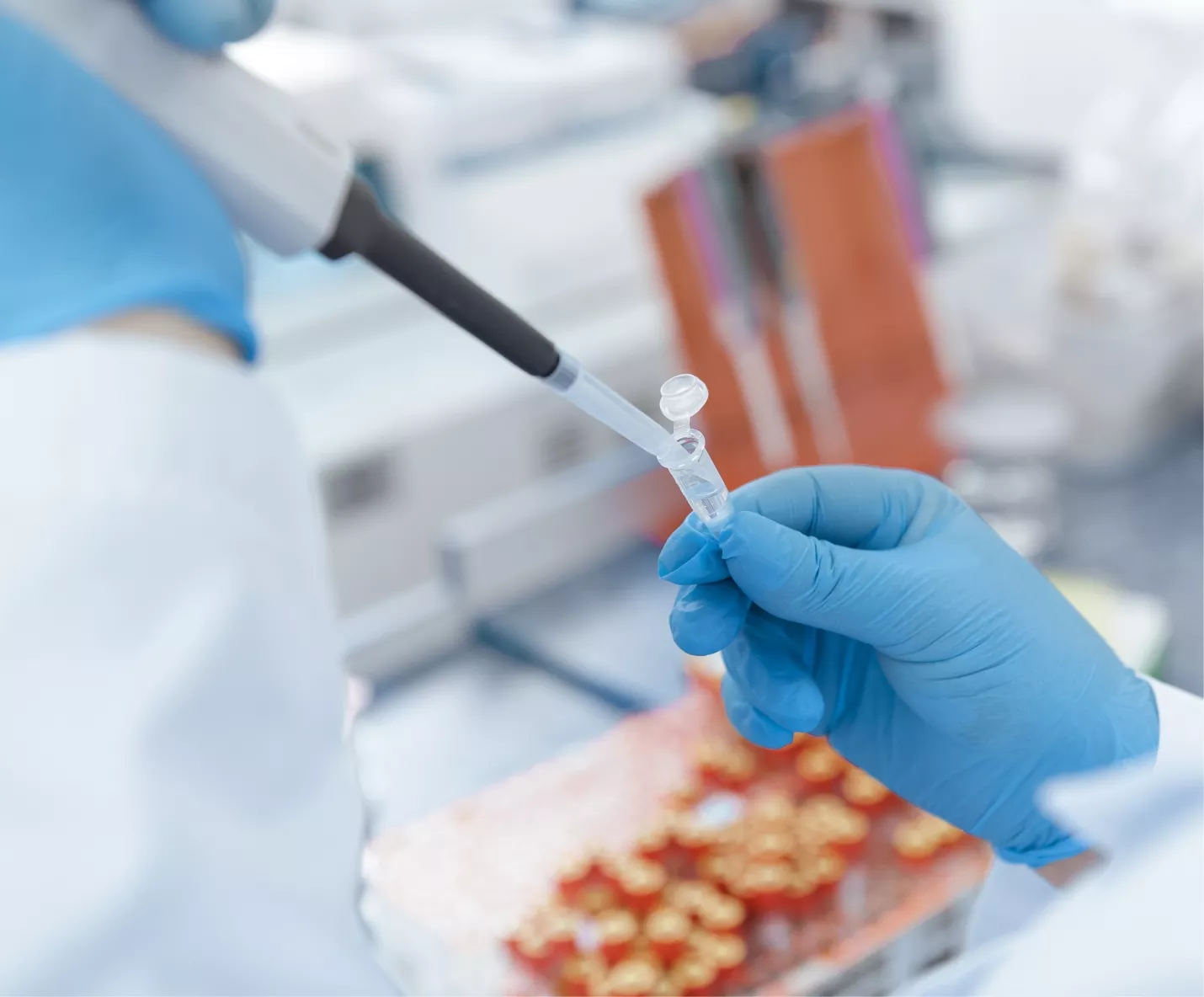
A close-up shot of a scientist in a lab coat and blue gloves using a micropipette to transfer a liquid sample into a small test tube.

Foundational Blueprint: Characterizing pDNA for Vector Production

Plasmid DNA serves as the genetic blueprint for generating recombinant AAV vectors. Any deviation in its sequence, structure, or purity can propagate through the manufacturing process, potentially compromising vector integrity, yield, and biological activity. Treating pDNA as a well-characterized material is the first step in building a robust and reproducible manufacturing platform.

Our analytical approach for pDNA is built on three pillars of characterization:

  • Identity: We confirm that the plasmid sequence is correct and contains the intended genetic elements: the inverted terminal repeats (ITRs), the promoter, and the transgene. This is verified through a combination of restriction enzyme mapping and targeted Sanger sequencing of key regions.

  • Purity: The plasmid preparation must be free from contaminants that can inhibit transfection or introduce impurities into the final product. We assess for residual host cell DNA and proteins using UV spectrophotometry (A260/A280 ratios) and agarose gel analysis.

  • Integrity & Safety: We evaluate the structural integrity of the plasmid, confirming a high percentage of the desired supercoiled isoform. We also perform endotoxin testing to ensure the material is safe for use in cell culture and does not introduce pyrogenic substances that would require removal downstream.

From Plasmid Integrity to In Vivo Performance

A well-characterized plasmid is the prerequisite for generating a high-quality AAV vector. The structural integrity of the ITRs, confirmed during pDNA analysis, is directly linked to the proper packaging of the viral genome. This genomic fidelity is necessary to achieve the predictable, tissue-specific expression required for therapeutic efficacy, such as the global cardiac gene transfer observed with vectors like AAV9 (PMID: 18795839).

Minimizing process-related impurities from the earliest stages helps control the immunogenic profile of the final vector. A pure plasmid preparation reduces the burden on downstream purification and lowers the risk of introducing materials that could contribute to a humoral immune response against the vector product (PMID: 24151496). This rigorous upstream control is a key part of a phase-appropriate CMC strategy designed to support an 18-24 month IND timeline.

Our approach provides the analytical confidence required for successful AAV development. This robust analytical framework has supported multiple partner programs, enabling the development of AAV vector-based gene therapy candidates that have advanced into preclinical studies. This continuity of expertise is executed within our >100,000 sq ft of dedicated manufacturing and analytics facilities, providing the scale and technical depth to support programs from discovery to the clinic.


Our approach provides the analytical confidence needed for successful AAV development. As one of our partners noted, “We started collaborating with UPenn Vector core in 2023 and the AAV vector which they manufactured laid a foundation for development of a gene therapy candidate which will enter soon preclinical studies… Franklin Biolabs is integral to our AAV-vector based gene therapy candidate development and we hope to continue the partnership for years to come.” This continuity of expertise is executed within our >100,000 sq ft of dedicated manufacturing and analytics facilities, providing the scale and technical depth to support programs from discovery to the clinic.
A close-up of a gloved hand handling PCR tubes with blue liquid in a laboratory rack, with a blue color overlay.

Technical Visualization: pDNA Quality Control Workflow

Scientific Process Diagram

This content is for informational purposes. For guidance specific to your therapeutic program, please contact our team for a consultation.