Swissmedic CMC Submission Strategy for Advanced Therapy Medicinal Products in Switzerland

PROVEN INTELLIGENCE ACCELERATING NEXT-GENERATION THERAPIES

Swissmedic CMC Submission Strategy for Advanced Therapy Medicinal Products in Switzerland

Swissmedic CMC Submission Strategy for Advanced Therapy Medicinal Products

CELL & GENE | RNA | BIOLOGICS
Proven Intelligence Accelerating Next-Generation Therapies.

Executive Summary & Frequently Asked Questions

A robust Chemistry, Manufacturing, and Controls (CMC) package is the foundation of a successful Investigational Medicinal Product Dossier (IMPD) for Swissmedic. This section addresses common technical questions for sponsors of viral vector-based therapies targeting Swiss regulatory approval.

    What is Swissmedic’s primary focus for ATMP CMC packages?

    Swissmedic places significant emphasis on product characterization, process consistency, and the justification of specifications. For viral vectors like AAV, this means detailed analytical data on identity, purity, potency, and vector genome integrity is expected from the outset.

    How does a Swiss IMPD differ from an FDA IND for viral vectors?

    While there is overlap, the Swiss IMPD often requires more detailed process validation information and stability data earlier in development compared to the phased approach sometimes accepted by the FDA. The structure and content requirements for the Quality module (Module 3) are highly prescriptive.

    What are common CMC pitfalls for AAV programs targeting Switzerland?

    Common issues include underdeveloped potency assays, insufficient demonstration of impurity removal (e.g., host cell proteins, residual plasmid DNA), and a lack of a clear manufacturing scalability plan. A disconnect between the research-grade vector used in early discovery and the process for the clinical-grade material can also create significant regulatory hurdles.

    Can I use a platform approach for my CMC data?

    Yes, a platform approach can be effective, particularly for AAV vectors using the same capsid serotype and production system. The key is to supplement platform data with product-specific data that characterizes your unique transgene and its expression product.

Aligning Vector Manufacturing with Swiss Regulatory Expectations

Navigating the regulatory pathway for an Advanced Therapy Medicinal Product (ATMP) in Switzerland requires a CMC strategy that is defined long before dossier submission. The quality and consistency of the viral vector product are directly linked to the design and control of the manufacturing process. A prospective approach, where regulatory requirements inform process development, is a feature of programs that achieve their 18-24 month IND timelines.

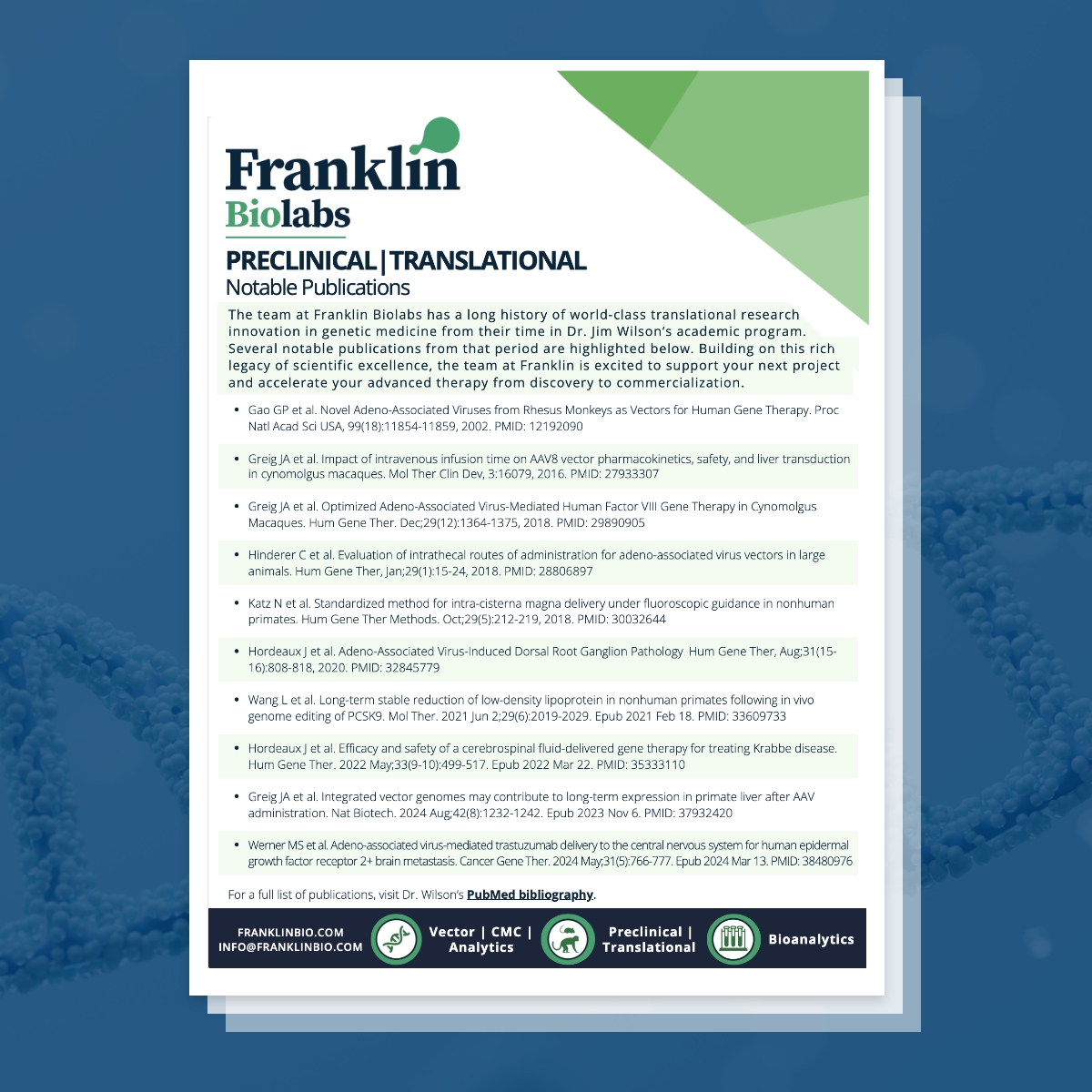
A compelling CMC data package is the direct output of a well-executed, prospective development plan. This philosophy is supported by historical programs designed to advance therapeutic candidates into clinical testing, which consistently demonstrate the value of a resource-backed, programmatic approach to translational research (PMID: 23692378). For sponsors, this means every decision, from plasmid design to the selection of analytical methods, must be documented and justified.

A stylized rendering of a DNA double helix on the left side of a light blue gradient background.

Phase-Appropriate Analytics and Process Controls

For viral vectors, including adeno-associated virus (AAV), lentivirus, and adenovirus platforms, the analytical control strategy is a central component of the IMPD. Swissmedic expects a suite of orthogonal methods to characterize the product.

  • Identity & Integrity: Confirming the correct transgene sequence, capsid identity, and full-length vector genome packaging.

  • Purity: Quantifying and controlling process-related impurities such as host cell DNA/proteins and residual plasmids, alongside product-related impurities like empty or partially filled capsids.

  • Potency: Developing a biologically relevant potency assay that reflects the vector’s mechanism of action is a frequent point of regulatory scrutiny.

  • Quantity & Titer: Employing multiple methods (e.g., ddPCR, ELISA) to accurately determine vector concentration and infectious titer.

Strategic CMC Guidance For Regulatory Success is achieved by aligning these analytical endpoints with the overall therapeutic goals early in development.

We started collaborating with UPenn Vector core in 2023 and the AAV vector which they manufactured laid a foundation for development of a gene therapy candidate which will enter soon preclinical studies. The key people from UPenn Vector Core joined Franklin Biolabs and our partnership transitioned without interruption from UPenn Vecor Core to Franklin Biolabs Research Vector Division. Franklin Biolabs is integral to our AAV-vector based gene therapy candidate development and we hope to continue the partnership for years to come.
— Biotech Partner

Integrated Program Management from a >100,000 sq ft Facility

Our integrated approach ensures that insights from our preclinical and bioanalytical teams directly inform the manufacturing and analytical development occurring within our expansive facilities. This continuous feedback loop allows for proactive adjustments, minimizing risks that could delay a Swissmedic submission.

A close-up, blue-toned image of scientific glassware, featuring vials placed in a dish filled with clear, spherical beads, suggesting a laboratory or research setting.

Technical Visualization: Swissmedic ATMP Submission Pathway

Scientific Process Diagram

This content is for informational purposes. For guidance specific to your therapeutic program, please contact our team for a consultation.