Vector Genome Integrity Analysis for AAV Products using Next-Generation Sequencing (NGS)

PROVEN INTELLIGENCE ACCELERATING NEXT-GENERATION THERAPIES

Vector Genome Integrity Analysis for AAV Products using Next-Generation Sequencing (NGS)

Vector Integrity Analysis for AAV Products using Next-Generation Sequencing (NGS)

CELL & GENE | RNA | BIOLOGICS

Proven Intelligence Accelerating Next-Generation Therapies.

A close-up of a pipette dispensing liquid into a rack of test tubes, set against a cool-toned, sterile background.

A scientist in protective gear pipetting a sample into a vial within a sterile laboratory hood.

Executive Summary

Next-Generation Sequencing (NGS) provides a GxP-compliant analytical framework for the comprehensive characterization of adeno-associated virus (AAV) products. The methodology verifies sequence integrity, identifies truncations or modifications, and quantifies residual plasmid DNA. This approach generates the high-resolution data required for robust product validation and successful Investigational Medicinal Product Dossier (IMPD) submissions for Advanced Therapy Medicinal Products (ATMPs).

Frequently Asked Questions

    What is the primary purpose of NGS for AAV characterization?

    NGS is used to confirm the full-length integrity of the packaged genetic payload, ensuring it matches the intended design. It identifies unintended sequences, truncations, and potential mutations introduced during plasmid production or vector packaging.

    How does NGS analysis support regulatory submissions in Europe?

    Regulatory bodies require definitive proof of product identity and purity. NGS provides a comprehensive dataset that characterizes the AAV’s genetic payload, a key quality attribute for IMPD and MHRA submissions. This data demonstrates manufacturing consistency and product control.

    Which AAV serotypes can be analyzed?

    Our platforms are adapted for a wide range of clinically relevant serotypes, including AAV1, AAV2, AAV5, AAV6, AAV8, AAV9, and AAV-Rh10, as well as novel or engineered capsids.

    What level of compliance is offered for these assays?

    Assays are developed and qualified in a phase-appropriate manner under GxP guidelines, providing data packages suitable for preclinical through to clinical program support.

Defining AAV Product Identity with High-Resolution Sequencing

The genetic payload of an AAV vector is its active substance. Verifying the precise sequence and integrity of this packaged material is a required step in product characterization. Deviations from the intended sequence, such as truncations, mutations, or the packaging of residual host cell or plasmid DNA, can directly affect biological activity and the overall safety profile.

Next-Generation Sequencing provides a definitive method for analyzing the entire population of packaged sequences within a drug product batch. Deep sequencing generates a comprehensive profile of the material contained within the viral capsid, supplementing data from standard titer assays.

This comprehensive profiling is executed by a scientific team with deep expertise across all aspects of vector production and analytics, ensuring a collaborative and scientifically rigorous approach for each client program.

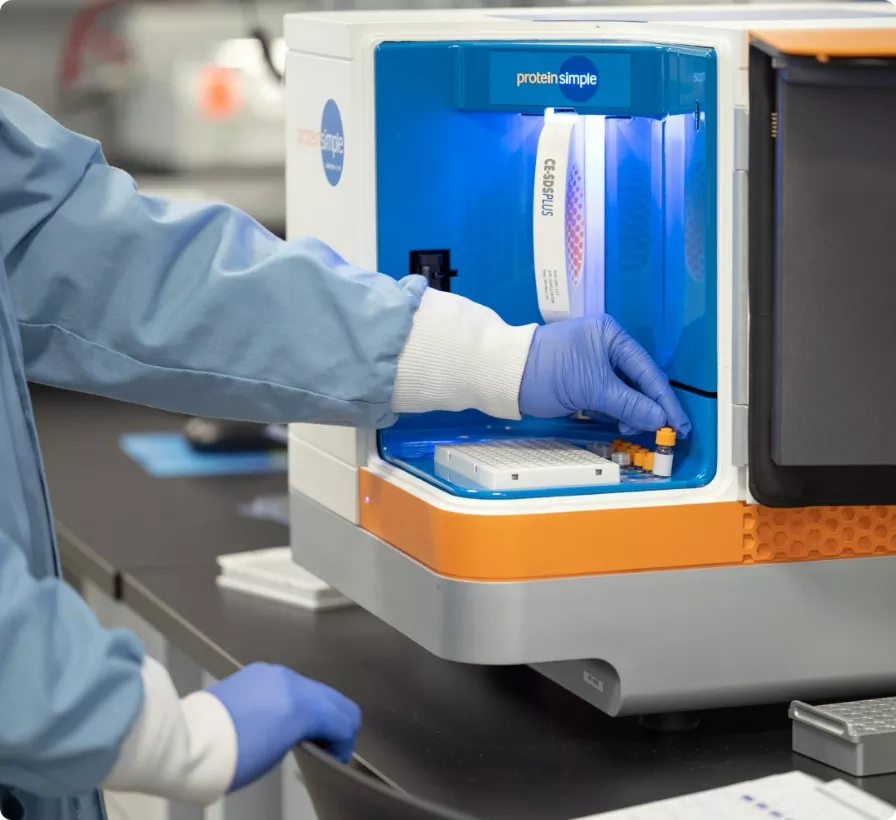
A scientist in a lab coat and gloves loads samples into a ProteinSimple instrument for analysis.

A researcher in a lab coat and blue gloves gently holds three white lab mice, symbolizing animal models in scientific research.

An Integrated Analytical Framework

Our approach integrates advanced sequencing with robust bioinformatic pipelines to deliver clear, actionable data. This process provides accelerated characterization for rapid product validation, supporting programs advancing toward the clinic on an 18-24 month IND timeline.

The Franklin Biolabs facility, spanning over 100,000 square feet, is equipped with specialized laboratories to manage these complex analytical workflows.

Mitigating Risk Through Precise Characterization

The biological consequences of a vector product are dictated by all its genetic components. The expressed transgene can influence in vivo outcomes independently of the vector backbone (PMID: 16682254). This finding underscores the need to confirm that the packaged material is free from modifications that could alter transgene expression or function.

Vector design is also a key determinant of the resulting immune response. The development of chimeric adenoviral vectors, for instance, demonstrates that strategic modifications to the vector’s genetic blueprint can be used to optimize its immunological profile (PMID: 16894185). NGS analysis provides the assurance that these deliberate engineering steps have been faithfully executed during manufacturing.

Our analytical services provide this assurance by:

  • Confirming the identity and integrity of the inverted terminal repeats (ITRs).

  • Verifying the complete sequence of the promoter, transgene, and polyA signal.

  • Detecting and quantifying packaged residual plasmid backbone or host cell DNA.

  • Identifying single nucleotide variants (SNVs) and insertions/deletions (indels).

This level of detail is required for building a robust data package for regulatory review. While Franklin Biolabs launched in 2024, our scientific leadership’s track record has contributed to a 100% successful IND rate for client programs since 2019.

A digital rendering of a DNA double helix on a dark blue background with floating particles.

Technical Visualization: AAV Genetic Payload Analysis Workflow

Scientific Process Diagram

This content is for informational purposes. For guidance specific to your therapeutic program, please contact our team for a consultation.