Addressing Paul-Ehrlich-Institut (PEI) Requirements for Adenovirus Vector Shedding in Preclinical Models

PROVEN INTELLIGENCE ACCELERATING NEXT-GENERATION THERAPIES.

Addressing Paul-Ehrlich-Institut (PEI) Requirements for Adenovirus Vector Shedding in Preclinical Models

Adenovirus Vector Shedding Analysis for Paul-Ehrlich-Institut (PEI) Submissions

CELL & GENE | RNA | BIOLOGICS

Successful gene therapy submissions to Germany’s Paul-Ehrlich-Institut (PEI) demand rigorous, quantitative data on vector shedding and biodistribution. This page details the technical framework for designing and executing preclinical adenovirus vector shedding studies that meet these specific regulatory expectations. We focus on the application of sensitive qPCR-based assays to accurately quantify vector DNA in various biological matrices, ensuring a comprehensive safety profile for your investigational product.

    What biological matrices are typically required for a PEI shedding study?

    A: PEI guidance necessitates analysis of matrices relevant to potential environmental transmission. Standard panels include urine, feces, and saliva. Depending on the vector and route of administration, blood, swabs (e.g., nasal, conjunctival), and semen may also be required.

    What is the required sensitivity for the qPCR assay?

    A: To meet regulatory expectations, our qPCR assays are validated to achieve a high degree of sensitivity. This ensures the detection of even minimal vector persistence and provides a clear picture of clearance kinetics for the environmental risk assessment.

    How long should shedding be monitored in preclinical models?

    A: The monitoring duration is dictated by the vector’s persistence profile. For adenovirus vectors, sampling is typically conducted frequently in the initial days post-administration and extends until at least two consecutive time points show levels below the assay’s limit of quantification for all animals in the cohort.

    Can the same study support both biodistribution and shedding analysis?

    A: Yes. A well-designed study protocol can accommodate collection of both excreta/secreta for shedding and a comprehensive set of tissues at termination for non-target tissue biodistribution analysis, providing a complete dataset for the environmental risk assessment (ERA).

A stylized 3D rendering of a DNA double helix, composed of light-colored spheres on a translucent blue backbone, set against a soft-focus, light blue background.

Designing a PEI-Compliant Adenovirus Shedding Study

The PEI places significant emphasis on the environmental risk assessment portion of a gene therapy dossier. A preclinical vector shedding study is a foundational component of this assessment. The objective is to quantify the amount, duration, and route of vector shedding to understand the potential for transmission to non-treated individuals. Our approach focuses on developing a study design that prospectively addresses German regulatory questions.

Key design considerations include:

  • Model Selection: The choice of animal model is guided by its ability to recapitulate human biological responses to the specific adenovirus vector.

  • Dosing Route: The study must utilize the clinically intended route of administration to generate relevant shedding data.

  • Sample Collection Schedule: A robust time-course is established, with intensive early sampling followed by spaced-out later time points to accurately define the clearance kinetics.

Quantitative Bioanalysis and Data Interpretation

The core of the analysis is a validated quantitative polymerase chain reaction (qPCR) assay. This method provides the sensitivity and specificity required to detect low levels of vector DNA in complex biological matrices. Understanding vector fate is a key part of the safety assessment. For instance, sensitive molecular assays have been instrumental in confirming the absence of adenoviral vector DNA in subject tissues long after initial gene transfer, directly addressing concerns about long-term persistence and potential oncogenic risk (PMID: 24010702).

The interpretation of shedding data requires a comprehensive analysis of the kinetics for each matrix, including peak shedding time points and clearance rates. This quantitative profile is contextualized with biodistribution data to build a comprehensive safety narrative for the regulatory submission.

“We started collaborating with UPenn Vector core in 2023 and the AAV vector which they manufactured laid a foundation for development of a gene therapy candidate which will enter soon preclinical studies. The key people from UPenn Vector Core joined Franklin Biolabs and our partnership transitioned without interruption from UPenn Vecor Core to Franklin Biolabs Research Vector Division. Franklin Biolabs is our trusted partner in our AAV-vector based gene therapy candidate development and we hope to continue the partnership for years to come.”
— Biotech Partner

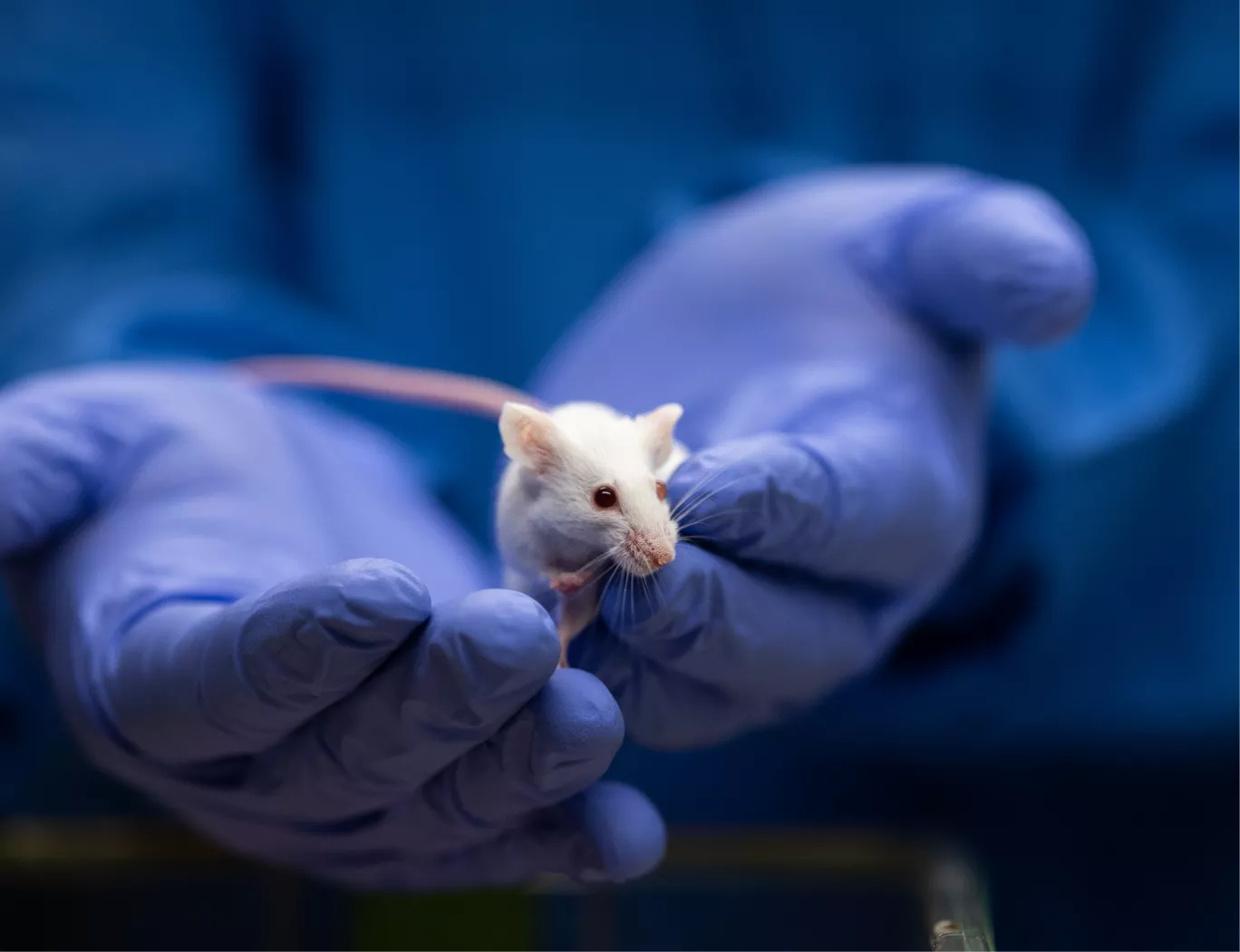
A close-up of a scientist in blue gloves gently holding a small, white laboratory mouse, likely in a research setting.

Commitment to Animal Welfare in Preclinical Research

Our protocols are designed to maximize scientific value while adhering to the principles of the 3Rs (Replacement, Reduction, and Refinement).

Our >100,000 sq ft facility network and strategic partners, including Bioculture Group, ensure that all research is performed in compliance with the highest ethical and regulatory standards. All animal studies are conducted at facilities fully accredited by AAALAC International and registered with the USDA.

The Franklin Biolabs Advantage for Regulatory Success

Navigating the specific requirements of national agencies like the PEI is a complex process that benefits from deep experience. Our scientific team has a track record of successfully supporting regulatory submissions globally. Since 2019, programs we have supported have achieved a 100% IND/CTA allowance rate (note: the Franklin Biolabs brand launched in 2024). We provide the robust, GxP-compliant data packages needed to accelerate your program from preclinical development to clinical application, often within an 18-24 month IND timeline.

Scientific Process Diagram

This content is for informational purposes. For guidance specific to your therapeutic program, please contact our team for a consultation.