Advanced Statistical Methods for Establishing Cut Points in Confirmatory Anti-Drug Antibody Assays

PROVEN INTELLIGENCE ACCELERATING NEXT-GENERATION THERAPIES

Advanced Statistical Methods for Establishing Cut Points in Confirmatory Anti-Drug Antibody Assays

Advanced Statistical Methods for Confirmatory ADA Assay Cut Points

CELL & GENE | RNA | BIOLOGICS

Establishing a statistically valid cut point for a confirmatory anti-drug antibody (ADA) assay is a primary requirement for accurately interpreting immunogenicity data. This process moves beyond simple parametric calculations, demanding robust statistical models to accommodate non-normal data distributions and biological variability inherent in novel therapies. A correctly defined cut point ensures a low false-positive rate, providing clear, defensible data for regulatory submissions and de-risking the path to IND.


    What is the primary statistical difference between a screening and a confirmatory assay cut point?

    A: A screening cut point is designed for high sensitivity to minimize false negatives (typically a 5% false positive rate). A confirmatory cut point is designed for high specificity to minimize false positives, confirming the presence of ADAs with a much lower target false positive rate, typically 1%.

    How do you handle non-normal data distributions when calculating cut points?

    A: When data fail normality tests (e.g., Shapiro-Wilk), we employ non-parametric methods. Instead of a mean-plus-standard-deviation approach, we typically use a percentile-based method, such as establishing the cut point at the 99th percentile of the drug-naive population’s signal distribution.

    What is the regulatory expectation for the false positive rate in a confirmatory ADA assay?

    A: Global regulatory bodies expect the confirmatory assay cut point to be established to yield a false positive rate of approximately 1%. This ensures that only samples with a high probability of containing specific ADAs are identified as positive, reducing ambiguity in the final dataset.

    How does preexisting immunity, such as that seen with AAV vectors, influence cut point strategy?

    A: Preexisting immunity requires careful characterization of the drug-naive population. The statistical cut point must be robust enough to distinguish between low-level, pre-existing antibodies and a treatment-emergent ADA response. This often involves a larger sample set and rigorous outlier analysis to define a true baseline.


Defining the Threshold for Immunogenicity Confirmation

The accuracy of any immunogenicity assessment hinges on the statistical validity of its confirmatory assay cut point. This value serves as the definitive threshold for distinguishing true ADA-positive samples from the inherent background noise of the analytical platform. An improperly calculated cut point can lead to the misinterpretation of safety data, potentially masking a genuine immunogenicity signal or incorrectly flagging safe therapies as problematic.

Our approach to cut point determination is built on a rigorous statistical framework designed for the complexities of biologics, including cell and gene therapies. Immunogenicity Intelligence for Advanced Therapies requires moving beyond one-size-fits-all calculations. The process involves:

  • Normality Assessment: Initial analysis of the drug-naive sample dataset using methods like the Shapiro-Wilk test to determine if the data follows a normal distribution.

  • Justified Outlier Analysis: Application of statistical tests, such as Rosner’s test, to identify and appropriately handle significant outliers that could otherwise skew the cut point calculation.

  • Method Selection: Based on the distribution, we select the appropriate statistical model. For normally distributed data, a parametric approach (mean + 2.33 standard deviations) is used to target a 1% false positive rate. For non-normal data, a more robust non-parametric or percentile-based method is implemented to achieve the same target.

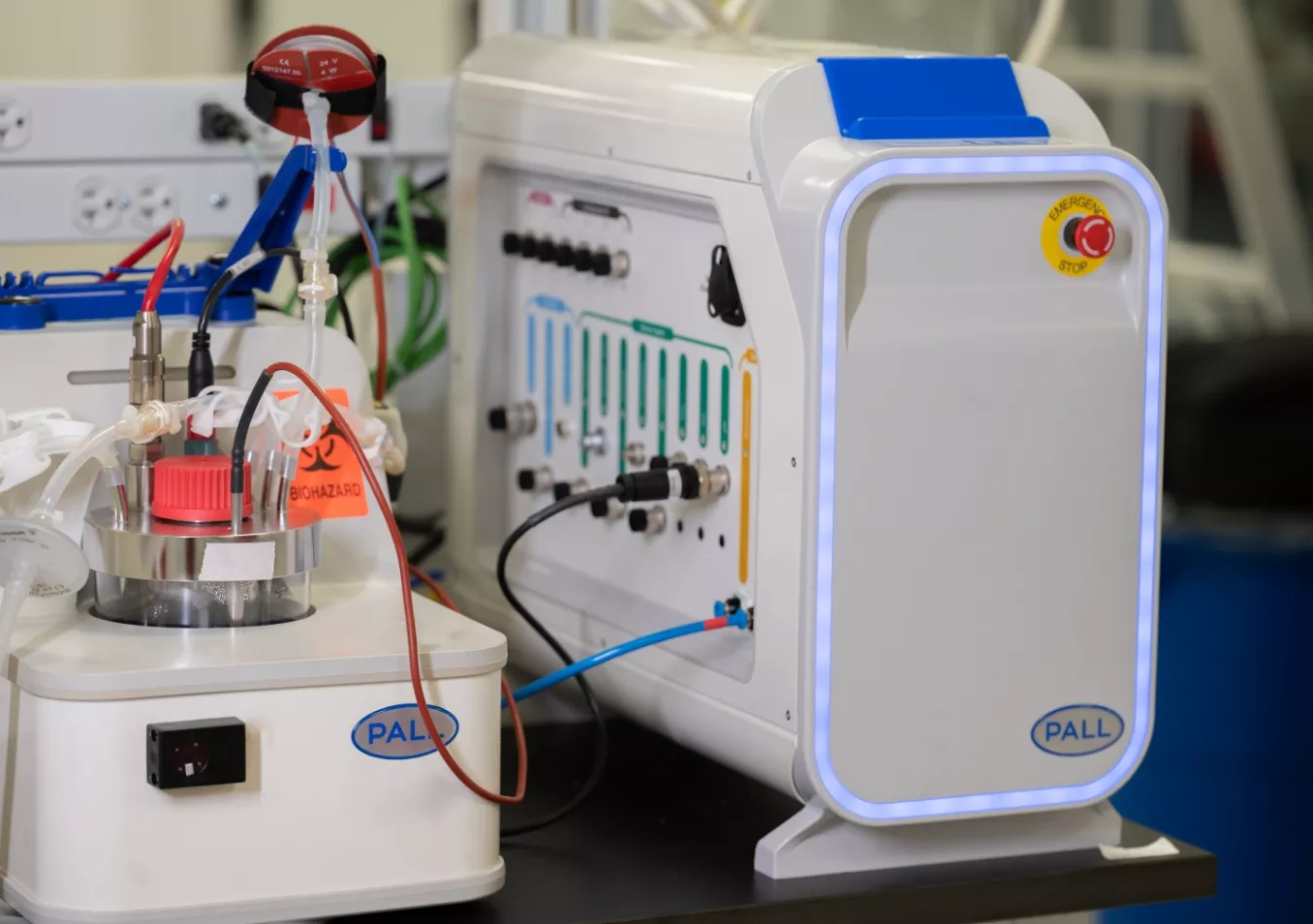
A close-up shot of a modern bioreactor system and control unit from Pall Corporation in a clean laboratory environment.

A stylized 3D rendering of a DNA double helix, composed of light-colored spheres on a translucent blue backbone, set against a soft-focus, light blue background.

Optimizing Bioanalytical Processes for Clinical Timelines

This level of statistical diligence in the bioanalytical phase directly supports accelerated development timelines. By generating unambiguous, high-integrity data, we reduce the risk of regulatory questions that can delay program progression.

The Translational Impact of Precise Cut Points

The need for robust bioanalytical methods is underscored by the frequent disconnect between in vitro and in vivo results. As demonstrated in studies of adenovirus vectors, simple in vitro neutralization assays may fail to predict the actual inhibition of the vector by antibodies in a complex biological system ([PMID: 19279092]). A poorly defined confirmatory cut point could further obscure this reality, leading to incorrect conclusions about a vector’s viability.

Similarly, even in programs where a vector like AAV9 is used to successfully express a protective antibody, the vector itself possesses an immunogenic profile that must be accurately monitored ([PMID: 25209558]). A precise, statistically validated cut point is the only way to reliably differentiate a benign immune interaction from a treatment-emergent response that could impact safety or efficacy.

At our >100,000 sq ft GxP-compliant facility, we integrate these advanced statistical methodologies into every bioanalytical program. This commitment to analytical excellence is a key factor in our ability to support an 18-24 month IND timeline. Since the Franklin Biolabs brand launch in 2024, we continue a track record established by our core scientific team, which has maintained a 100% IND success rate on all supported programs dating back to 2019.

Scientific Process Diagram

This content is for informational purposes. For guidance specific to your therapeutic program, please contact our team for a consultation.