Biodistribution of AAV8 Vectors in Non-Human Primate Models for Liver-Directed Gene Therapy

PROVEN INTELLIGENCE ACCELERATING NEXT-GENERATION THERAPIES

Biodistribution of AAV8 Vectors in Non-Human Primate Models for Liver-Directed Gene Therapy

CELL & GENE | RNA | BIOLOGICS
    Why is AAV8 the preferred serotype for liver-directed gene therapy studies in NHPs?

    AAV8 exhibits potent hepatotropism, meaning it has a natural affinity for liver cells. Foundational research identified its superior gene transfer efficiency to the liver with low pre-existing seroprevalence in human populations. This makes it a primary candidate for therapies targeting hepatic disorders, and non-human primate (NHP) models provide the most translationally relevant system to confirm this tropism and evaluate its safety profile before clinical trials.

    What are the primary analytical methods used to quantify AAV8 vector biodistribution in NHP tissues?

    A multi-faceted analytical approach is required for a comprehensive IND-enabling data package. The core methods include: 1) Quantitative PCR (qPCR) or droplet digital PCR (ddPCR) to determine vector copy numbers per cell in all collected tissues. 2) Reverse transcription qPCR (RT-qPCR) to measure transgene mRNA expression levels, confirming transcriptional activity. 3) Histology and in situ hybridization (ISH) to visualize vector localization at the cellular level within target and non-target tissues.

    How does pre-existing immunity to AAV impact biodistribution study design in NHPs?

    Pre-existing neutralizing antibodies (NAbs) against AAV capsids can significantly alter vector biodistribution, leading to rapid clearance and reduced efficacy. All NHPs are screened for NAbs to AAV8 prior to study initiation. Animals selected for studies are typically seronegative or have very low titers to ensure that the observed biodistribution profile accurately reflects the vector’s intrinsic properties, not its interaction with a pre-existing immune response.

Successful Investigational New Drug (IND) applications for liver-directed AAV gene therapies depend on a thorough characterization of vector biodistribution in a translationally relevant large animal model. This page outlines the scientific rationale and core methodologies for conducting AAV8 biodistribution studies in non-human primates (NHPs). Franklin Biolabs executes these GxP-compliant studies to generate the precise, reliable data required to support regulatory submissions within an 18-24 month IND timeline.

Defining AAV8 Tropism in a Translationally Relevant System

The selection of an AAV capsid is a pivotal decision in any gene therapy development program. Early systematic evaluations demonstrated that the AAV8 serotype achieves high and stable transgene expression in the liver, establishing it as a leading candidate for hepatic-targeted therapies (PMID: 19861950, PMID: 12192090). While initial discovery work provides a strong scientific foundation, confirming this biodistribution profile in a higher-order species is a standard regulatory requirement for de-risking clinical translation.

NHP models offer the closest surrogate to human physiology, providing data on vector delivery, persistence, and potential distribution to non-target tissues. A comprehensive NHP study quantifies not just where the vector goes, but also its transcriptional activity and persistence over time, forming a key part of the preclinical safety and efficacy narrative.

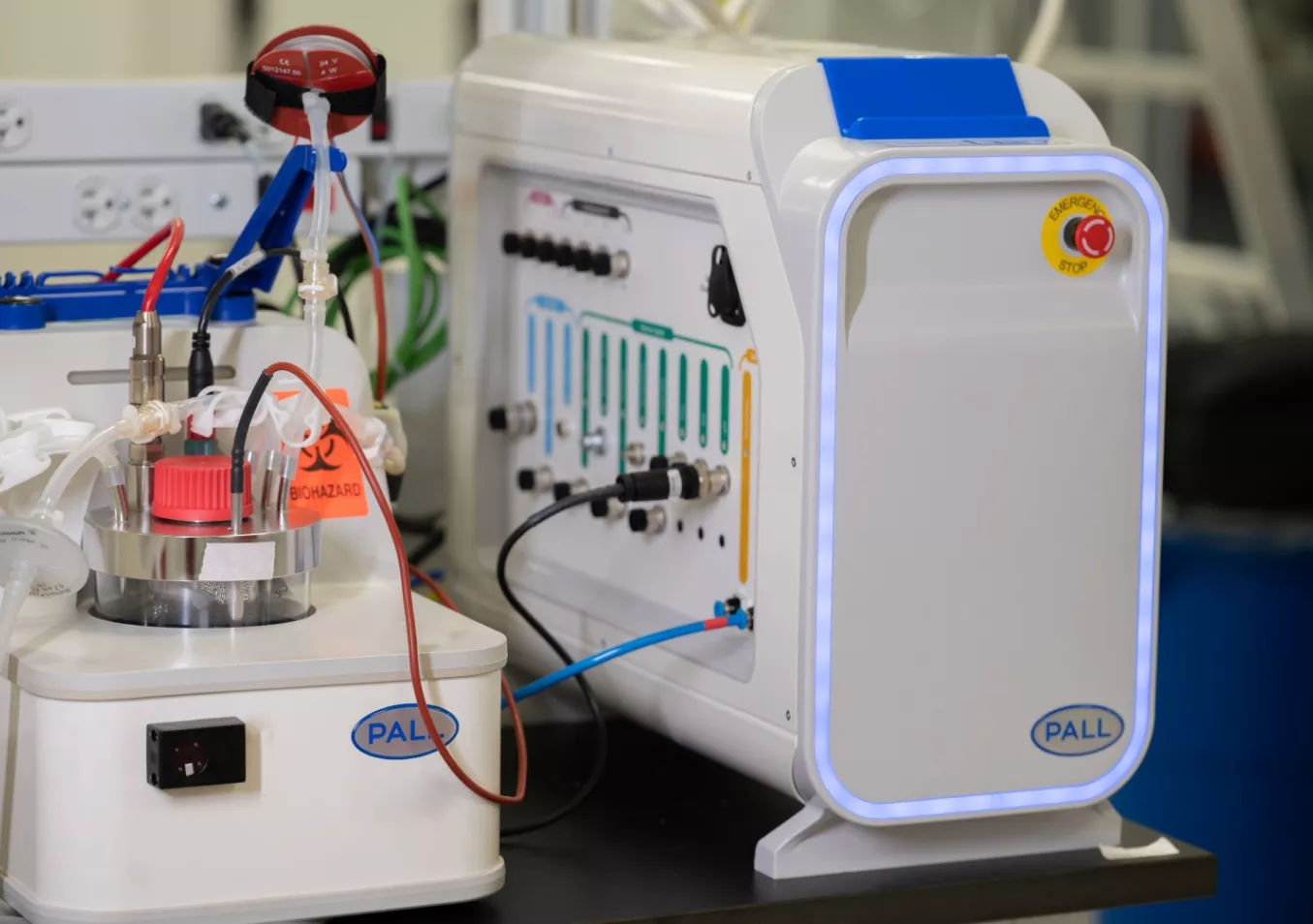
A close-up shot of a modern bioreactor system and control unit from Pall Corporation in a clean laboratory environment.

A stylized 3D rendering of a DNA double helix, composed of light-colored spheres on a translucent blue backbone, set against a soft-focus, light blue background.

Core Bioanalytical Methods for Vector Quantification

A robust biodistribution study integrates multiple analytical techniques to build a complete picture of vector behavior in vivo. A validated suite of assays is deployed to achieve this.

  • Vector Biodistribution: Quantitative PCR (qPCR) and droplet digital PCR (ddPCR) are the standard methods for determining vector copy numbers in a comprehensive panel of tissues and fluids.

  • Transgene Expression Analysis: RT-qPCR measures mRNA levels to confirm that the vector payload is being actively transcribed in the target liver tissue and to assess any expression in off-target organs.

  • Cellular Localization: Histology combined with techniques like in situ hybridization (ISH) provides spatial context, confirming which cell types within a tissue contain the vector DNA.

  • Protein Expression: Immunoassays such as ELISA or MSD can be used to quantify the expressed transgene protein product in circulation or tissue homogenates.

“>full Franklin BioLab Facility Tour.

Designing IND-Enabling Biodistribution Studies

The design of an NHP biodistribution study must be carefully planned to meet regulatory expectations. This includes defining the route of administration, selecting appropriate dose levels that bracket the intended clinical dose, and establishing a time course for sample collection that can assess both early distribution and long-term persistence.

“We started collaborating with UPenn Vector core in 2023 and the AAV vector which they manufactured laid a foundation for development of a gene therapy candidate which will enter soon preclinical studies. The key people from UPenn Vector Core joined Franklin Biolabs and our partnership transitioned without interruption from UPenn Vecor Core to Franklin Biolabs Research Vector Division. Franklin Biolabs is our trusted partner in our AAV-vector based gene therapy candidate development and we hope to continue the partnership for years to come.”
— Biotech Partner

All studies are conducted under strict USDA oversight, adhering to the highest standards of animal welfare and the principles of the 3Rs (Replacement, Reduction, and Refinement). For NHP studies, we collaborate with partners who maintain AAALAC accreditation to ensure exemplary care. The resulting data package provides a clear, comprehensive assessment of vector safety and biological activity, directly supporting your program’s progression to the clinic.

Scientific Process Diagram

This content is for informational purposes. For guidance specific to your therapeutic program, please contact our team for a consultation.