Cross-Contamination Control Strategies in High-Throughput qPCR Analysis of Viral Shedding Samples

PROVEN INTELLIGENCE ACCELERATING NEXT-GENERATION THERAPIES

Cross-Contamination Control Strategies in High-Throughput qPCR Analysis of Viral Shedding Samples

Cross-Contamination Control in High-Throughput qPCR for Viral Shedding

CELL & GENE | RNA | BIOLOGICS
Quantitative PCR (qPCR) is the definitive method for assessing viral shedding and biodistribution in IND-enabling studies. Its extreme sensitivity, however, makes it highly susceptible to cross-contamination, which can generate false-positive signals and compromise data integrity. A robust contamination control strategy, integrated across all pre-analytical, analytical, and post-analytical stages, is required to ensure the accuracy of biodistribution data for regulatory submission. This involves physical and procedural barriers, enzymatic controls, and rigorous data scrutiny to distinguish true biological signal from analytical artifact.

    What is the primary source of cross-contamination in qPCR viral shedding assays?

    A: The most significant source is aerosolized amplicon carryover from previous high-titer qPCR reactions. These DNA fragments can contaminate reagents, equipment, and laboratory surfaces, leading to false positives in subsequent runs.

    How does Franklin Biolabs mitigate carryover contamination?

    A: We employ a multi-layered approach: strict unidirectional workflow, physical separation of pre-PCR and post-PCR laboratories, dedicated equipment for each stage, incorporation of Uracil-DNA Glycosylase (UNG) in master mixes, and scheduled decontamination with DNA-destroying agents.

    What controls are used to monitor for contamination?

    A: Every qPCR plate includes multiple No Template Controls (NTCs) to detect contamination in the reaction mix. We also perform routine environmental swabbing and analysis of key surfaces and equipment to proactively monitor the laboratory environment.

    How does vector serotype affect qPCR assay design for shedding studies?

    A: Primer and probe sets must be designed with high specificity to the unique sequences of the vector genome. This is especially important when multiple programs using AAV vectors with homologous sequences, such as AAV2/5 or AAV2/8, are managed within the same facility, as it prevents analytical cross-reactivity.

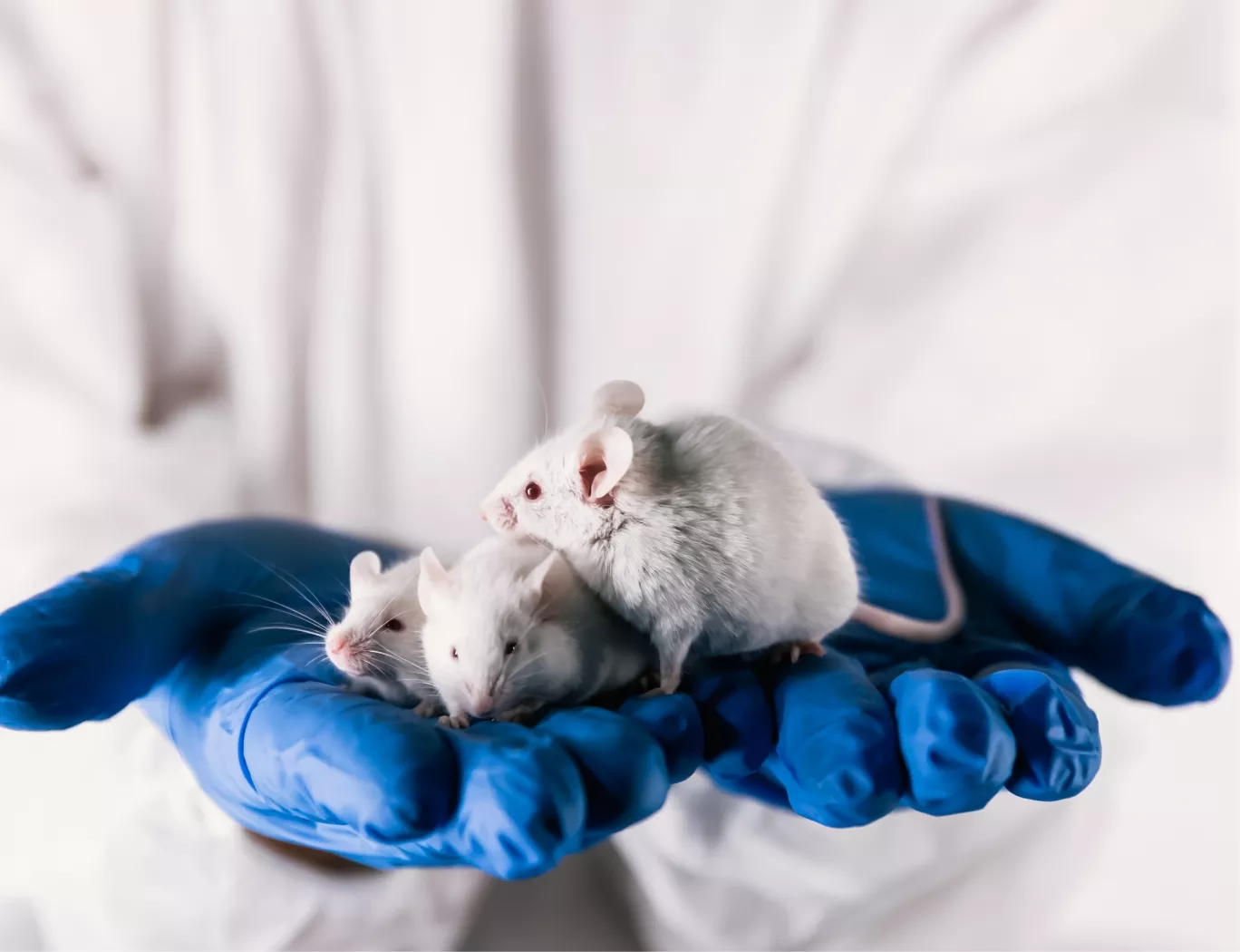
A researcher in a lab coat and blue gloves gently holds three white lab mice, symbolizing animal models in scientific research.

The Bioanalytical Challenge: Signal vs. Noise in Vector Biodistribution

The objective of a viral shedding study is to generate precise, quantitative data on vector biodistribution and clearance for a regulatory safety assessment. The analytical sensitivity of qPCR is necessary to detect low levels of vector DNA in various biological matrices. This same sensitivity, however, can detect picogram or femtogram levels of contaminating DNA, creating analytical noise that jeopardizes study interpretation. Inaccurate data can lead to program delays, extending the typical 18-24 month IND timeline. Precision Bioanalysis: Mitigating Risk from Sample to Signal.

Our control strategy is built on a GxP framework designed to protect data integrity at every step.

  • Physical Segregation: Pre-PCR (sample preparation, reaction setup) and Post-PCR (amplification, analysis) activities are performed in separate, access-controlled laboratories.

  • Engineering Controls: Air handling systems are designed to maintain pressure differentials, preventing airflow from post-PCR to pre-PCR areas.

  • Procedural Barriers: A strict unidirectional workflow ensures that materials, personnel, and equipment never move from “dirty” (post-PCR) to “clean” (pre-PCR) zones.

Multi-Stage Contamination Control Architecture

A successful control program integrates procedural, chemical, and enzymatic safeguards throughout the qPCR workflow. This systematic approach ensures that potential contamination is neutralized before it can impact results.

Control Stage Standard Approach Franklin Biolabs GxP Approach
Pre-Analytical Shared bench space for sample prep Dedicated, certified biological safety cabinets in a physically separate pre-PCR lab.
Analytical Standard Taq polymerase Master mix containing dUTP and Uracil-DNA Glycosylase (UNG) to enzymatically destroy carryover amplicons.
Data Review Basic NTC check Scrutiny of all NTCs, analysis of amplification curve morphology, and correlation with environmental monitoring data.

Watch the full-length video on DIVERSIFYING THE VALUE CHAIN

A digital rendering of a DNA double helix on a dark blue background with floating particles.

A stylized, 3D rendering of a DNA double helix in light blue and white, set against a soft-focus, light gray background.

Implications of Vector Design on Assay Specificity

The molecular structure of the vector itself influences the bioanalytical strategy. Research has shown that different AAV vector genome configurations can exhibit significant heterogeneity and variable persistence profiles post-administration (PMID: 20113166). A highly specific and contamination-free qPCR assay is required to accurately quantify these structures without misinterpretation.

The choice of AAV serotype has a direct impact on transduction efficiency and biodistribution. Studies comparing serotypes like rAAV2/5, rAAV2/7, and rAAV2/8 have demonstrated clear differences in their ability to transduce specific tissues (PMID: 17343566). An assay compromised by low-level contamination could falsely suggest non-target tissue biodistribution, confounding the safety profile of a vector with superior transduction characteristics. Our >100,000 sq ft facility provides the necessary scale for dedicated, segregated workflows to manage multiple, distinct vector programs concurrently without risk of cross-assay contamination.

Data Integrity for IND-Enabling Programs

The final dataset delivered for an IND submission must be defensible and reproducible. By implementing a comprehensive, multi-stage contamination control plan, we generate high-fidelity viral shedding and biodistribution data that withstands regulatory scrutiny. This commitment to quality is reflected in the 100% IND success rate since 2019 for programs supported by our bioanalytical teams. The Franklin Biolabs brand, launched in 2024, continues this legacy of scientific and operational excellence. Our strategic partnerships in automation and liquid handling provide platforms that reduce manual variability and the potential for human error.

Scientific Process Diagram

This content is for informational purposes. For guidance specific to your therapeutic program, please contact our team for a consultation.