Cross-Species Biodistribution Analysis for Biologics to Support First-in-Human Trials in Europe

PROVEN INTELLIGENCE ACCELERATING NEXT-GENERATION THERAPIES

Cross-Species Biodistribution Analysis for Biologics to Support First-in-Human Trials in Europe

Cross-Species Biodistribution Analysis for Biologic IND Submissions

CELL & GENE | RNA | BIOLOGICS

Frequently Asked Questions (FAQ)

    How do you account for species-specific glycan expression when selecting models for AAV biodistribution?

    A: We utilize a comparative biology framework, informed by literature and proprietary data, to select species with glycan profiles most relevant to the target human tissue. This may involve initial screens to confirm receptor expression before committing to a definitive GxP study, mitigating translational risk.

    What are the EMA’s expectations for non-target tissue biodistribution data in a First-in-Human (FIH) application?

    A: The EMA requires a comprehensive assessment of vector distribution to, and persistence in, non-target tissues. The data must be sufficient to inform the risk profile, including potential for off-target activity, immunogenicity, and germline transmission. We design studies to generate a robust data package that directly addresses these regulatory endpoints.

    Which quantitative methods are most appropriate for cross-species vector genome quantification?

    A: The selection depends on the vector and therapeutic goals. For AAVs, ddPCR is the preferred method for its absolute quantification and high precision, which is vital for comparing vector loads across tissues and species. For other biologics, qPCR or LC-MS may be employed, always with validated assays to ensure cross-species comparability.

    How does Franklin Biolabs integrate biodistribution data with toxicology findings?

    A: Biodistribution is not a standalone endpoint. We integrate quantitative vector load data with corresponding Histology from the same tissues. This allows us to directly correlate the presence of the biologic with any observed toxicological findings, providing a clear, weight-of-evidence argument for the safety profile in your regulatory submission.


Successful First-in-Human trials depend on accurately predicting a biologic’s behavior from preclinical data. Standard biodistribution studies in a single species often fail to account for significant physiological differences, creating substantial translational risk. Our cross-species biodistribution analysis directly addresses this challenge by generating comparative data in appropriately selected models. This approach provides a higher-fidelity prediction of human tissue tropism and persistence, de-risking the path to clinical investigation.

De-Risking Human Translation with Predictive Biodistribution

A robust nonclinical safety program must provide clear, defensible data on where a therapeutic goes in the body and how long it remains there. For complex biologics like AAV vectors, this is complicated by inter-species differences in cell surface receptors and other biological factors that govern tissue uptake. Relying on a single preclinical model can produce misleading data, leading to unforeseen safety issues or lack of efficacy in human trials.

The central challenge lies in translating observations from animal models to a human context. For example, vector engineering efforts to modulate AAV9 tropism have revealed that species-specific differences in glycan presentation can significantly alter biodistribution profiles between preclinical models and higher-order species (PMID: 39001819). An effective program must anticipate and account for these translational discrepancies.

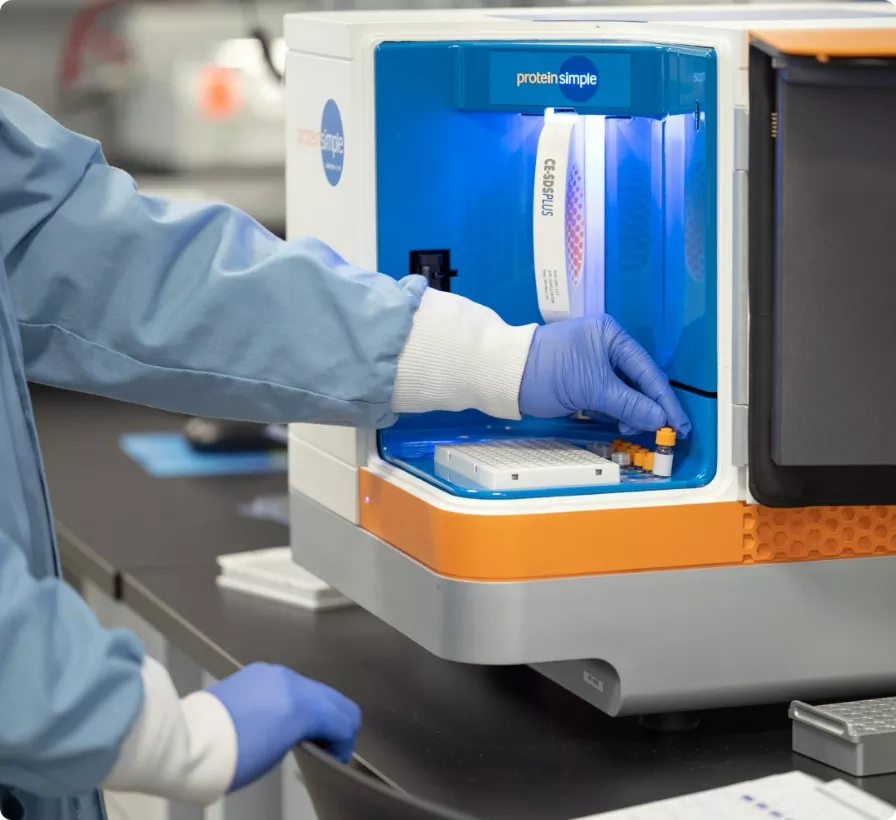
A scientist in a lab coat and gloves loads samples into a ProteinSimple instrument for analysis.

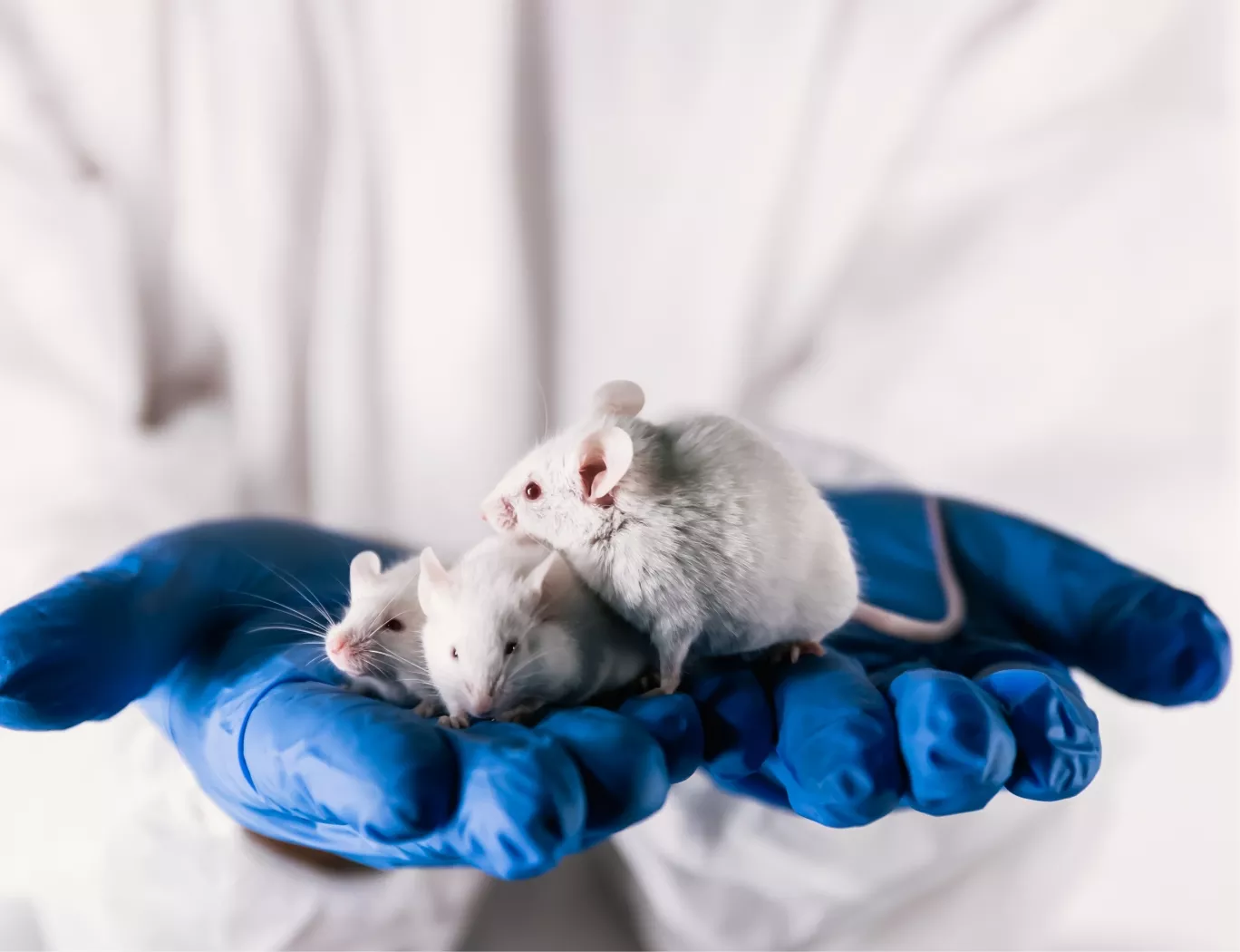
A researcher in a lab coat and blue gloves gently holds three white lab mice, symbolizing animal models in scientific research.

A Multi-Species Approach to Regulatory Confidence

Our methodology is built on comparative analysis. By evaluating biodistribution in at least two relevant species, we can identify conserved distribution patterns that are more likely to be predictive of human outcomes. This work is conducted in our >100,000 sq ft GxP-compliant facility, enabling parallel processing of samples to ensure data integrity.

The strategy involves a structured, tiered analysis where data from one species informs the interpretation of the next. This comparative process provides high-fidelity intelligence tracking therapeutic delivery across relevant species, strengthening the predictive power of the preclinical data package.

Parameter Standard Single-Species Approach Franklin Biolabs Predictive Approach
Model Selection Based on historical use or convenience. Based on comparative biology and target receptor homology.
Endpoint Analysis qPCR/Histology in a standard tissue set. Integrated ddPCR, Histology, and IHC/ISH across an expanded tissue set.
Data Interpretation Extrapolation from a single dataset. Cross-species comparison to identify conserved distribution patterns.
Risk Assessment Limited by model-specific artifacts. Higher confidence in predicting human non-target tissue biodistribution.

This rigorous, data-driven process is designed to build a compelling safety narrative for regulators. It has been a key component for our clients in achieving their development milestones within a typical 18-24 month IND timeline. Since the Franklin Biolabs brand launch in 2024, programs leveraging our bioanalytical and safety assessment platforms have maintained a 100% IND success rate, a record established by our foundational team since 2019.

Commitment to Animal Welfare

All in vivo studies are conducted in full compliance with the highest ethical standards. Our programs, accredited by AAALAC and overseen by the USDA, are designed to meet the 3Rs principles (Replacement, Reduction, and Refinement) for responsible research.

Scientific Process Diagram

This content is for informational purposes. For guidance specific to your therapeutic program, please contact our team for a consultation.