EMA Guidelines for Lentiviral Vector Biodistribution and Shedding Studies in CAR-T Therapies

PROVEN INTELLIGENCE ACCELERATING NEXT-GENERATION THERAPIES

EMA Guidelines for Lentiviral Vector Biodistribution and Shedding Studies in CAR-T Therapies

Navigating EMA Guidelines for Lentiviral Vector Biodistribution and Shedding in CAR-T Programs

CELL & GENE | RNA | BIOLOGICS
Executive Summary: For CAR-T therapies utilizing lentiviral vectors (LVVs), European regulatory agency (EMA) guidelines mandate rigorous biodistribution and viral shedding studies to ensure patient safety. These assessments require highly sensitive, validated quantitative assays, typically qPCR or ddPCR, to detect vector sequences in both non-target tissues and bodily fluids. A well-defined bioanalytical strategy is fundamental for characterizing the persistence, clearance, and potential for transmission of genetically modified cells and residual vector particles, directly supporting the regulatory submission for an advanced therapy.

    What are the primary analytical methods for viral shedding studies?

    A: Quantitative PCR (qPCR) and droplet digital PCR (ddPCR) are the standard methods. They provide the necessary sensitivity and specificity to detect and quantify low levels of vector-specific nucleic acid sequences in diverse biological matrices.

    Which sample matrices are required by the EMA for LVV CAR-T shedding?

    A: The EMA requires analysis of matrices where viral shedding is plausible. This typically includes blood (whole blood, plasma, PBMCs), urine, saliva, and stool. Depending on the vector and clinical context, other fluids like semen may also be required.

    How long must shedding be monitored post-infusion?

    A: Monitoring duration is determined by preclinical data and the specific vector characteristics. Typically, samples are collected at multiple time points for several weeks or months until a predefined endpoint is met, such as multiple consecutive samples testing negative.

    What defines the Lower Limit of Quantification (LLOQ) for these assays?

    A: The LLOQ is the lowest concentration of vector sequences that can be reliably quantified with acceptable precision and accuracy. This key parameter is established and validated for each specific matrix during the assay development phase, ensuring the data’s regulatory integrity.

Regulatory Framework for LVV CAR-T Safety

The clinical development of CAR-T therapies using integrating lentiviral vectors requires a comprehensive safety assessment that addresses the unique biological properties of the platform. EMA guidance places a significant emphasis on two interconnected bioanalytical components: non-target tissue biodistribution and viral shedding. These studies are designed to evaluate the potential for off-tumor cell modification, germline transmission, and environmental release of replication-competent or incompetent viral particles.

The data generated from these GxP-compliant studies form a core part of the safety narrative within the Investigational Medicinal Product Dossier (IMPD) and subsequent Marketing Authorisation Application (MAA). They provide regulators with quantitative evidence of vector behavior following administration, informing risk assessments and long-term patient monitoring strategies.

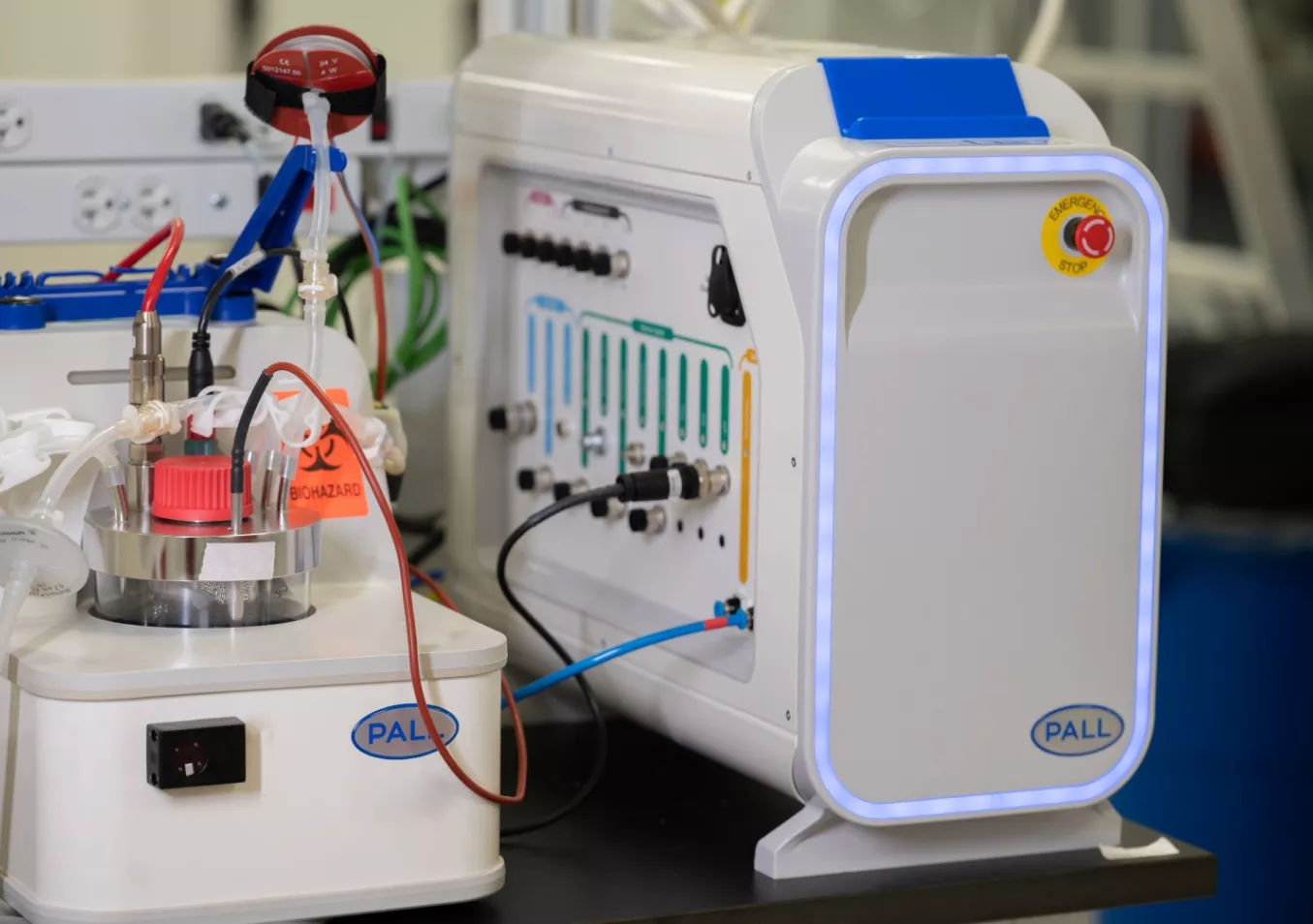
A close-up shot of a modern bioreactor system and control unit from Pall Corporation in a clean laboratory environment.

A stylized 3D rendering of a DNA double helix, composed of light-colored spheres on a translucent blue backbone, set against a soft-focus, light blue background.

Designing Compliant Biodistribution & Shedding Studies

A successful regulatory submission depends on a bioanalytical program designed with the end in mind. A compliant study design for LVV CAR-T therapies requires a nuanced understanding of vector biology. The integrating nature of lentiviruses necessitates a risk assessment that considers not only the location but also the persistence of the vector sequence in non-target tissues. Bioanalytical methods must be sensitive enough to detect low-level persistence and differentiate between the presence of the CAR-T cell and residual, non-integrated vector. This data is key for assessing long-term safety, including the theoretical risk of insertional mutagenesis.

).

The selection of matrices for shedding analysis must be scientifically justified. A standard panel includes:

  • Blood (and its fractions)

  • Urine

  • Saliva

  • Stool (feces)

  • Semen (if relevant)

“Wonderful services. Excellent team to work with. Vast knowledge in all aspects of vector production and analytics.”
— Biotech Partner

Franklin Biolabs’ Bioanalytical Platform

Executing these complex studies requires specialized infrastructure and deep regulatory expertise. At our >100,000 sq ft facility, our bioanalytical teams develop and validate custom assays to support CAR-T programs from early discovery through IND-enabling studies. We align our study designs with current EMA and FDA expectations, helping sponsors navigate the path to a successful submission within an 18-24 month IND timeline.

All in vivo studies are conducted with strict adherence to Animal Welfare principles, including the 3Rs (Replacement, Reduction, and Refinement). Our studies are performed in USDA-registered facilities, ensuring the generation of high-quality, reproducible data suitable for global regulatory filings.

Scientific Process Diagram

This content is for informational purposes. For guidance specific to your therapeutic program, please contact our team for a consultation.