
FDA-Regulated GLP Biodistribution Studies for AAV9 Gene Therapies Targeting CNS Disorders
PROVEN INTELLIGENCE ACCELERATING NEXT-GENERATION THERAPIES
FDA-Regulated GLP Biodistribution Studies for AAV9 Gene Therapies Targeting CNS Disorders
GxP Biodistribution Studies for AAV9 Gene Therapies in the CNS
CELL & GENE | RNA | BIOLOGICS
What are the primary analytical challenges in quantifying AAV9 biodistribution in CNS tissues?
The principal challenges are the low vector copy numbers expected in CNS compartments post-systemic delivery and the complex tissue matrices. Brain and spinal cord tissues, rich in lipids and myelin, can inhibit PCR-based amplification. Franklin Biolabs develops and validates highly sensitive qPCR and ddPCR assays with robust nucleic acid extraction protocols specifically optimized for these challenging matrices to ensure accurate quantification.
How do you address potential cross-species differences in AAV9 tropism between preclinical models and humans?
We design biodistribution programs with an understanding that direct extrapolation from a single species can be misleading. As demonstrated in recent research (PMID: 39001819), subtle differences in cell surface glycan presentation between species can significantly alter AAV9 vector binding and subsequent tissue distribution. Our approach integrates data from appropriate species and leverages advanced vector analytics to build a more predictive translational data package.
Which analytical methods are required for a GxP-compliant AAV9 biodistribution study submission?
A comprehensive data package for regulatory submission typically requires multiple orthogonal methods. This includes validated qPCR or ddPCR for vector DNA quantification in all collected tissues, RT-qPCR to measure transgene mRNA expression, and histology techniques like immunohistochemistry (IHC) or in situ hybridization (ISH) to confirm cell-type-specific transgene protein or RNA expression within the target CNS regions.
What is the typical sample collection matrix for a CNS-targeted AAV9 study?
For a thorough assessment, the tissue collection list is extensive. It includes multiple brain regions (e.g., cortex, hippocampus, cerebellum), spinal cord segments (cervical, thoracic, lumbar), dorsal root ganglia (DRG), and cerebrospinal fluid (CSF). A comprehensive panel of non-target tissues, including the liver, spleen, heart, and gonads, is also collected to evaluate systemic vector distribution and potential liabilities.
Successful Investigational New Drug (IND) applications for AAV9-based gene therapies targeting central nervous system (CNS) disorders depend on robust, GxP-compliant biodistribution data. These studies must precisely quantify vector persistence, transgene expression, and non-target tissue biodistribution. Franklin Biolabs provides validated qPCR, ddPCR, and histology services within our >100,000 sq ft facility to support programs on an 18-24 month IND timeline. We deliver the high-resolution data required to characterize the safety and activity profile of your therapeutic candidate.
Defining the Analytical Strategy for CNS-Targeted AAV9
Characterizing the biodistribution of an AAV9 vector intended for the CNS requires a multi-faceted analytical approach. The primary objective is to generate quantitative data demonstrating that the vector reaches its intended target tissues, expresses the therapeutic transgene, and exhibits a well-defined profile in peripheral organs. This is achieved through a suite of validated bioanalytical assays designed to overcome the specific challenges of CNS tissue analysis.
The selection of assays is guided by the vector design and the therapeutic hypothesis. Key considerations include:
-
Vector DNA Quantification: Determining the number of vector DNA copies per cell in target and non-target tissues.
-
Transgene Expression Analysis: Measuring mRNA and protein levels to confirm functional delivery and expression of the therapeutic payload.
-
Integration with Toxicology: Correlating biodistribution data with findings from safety and toxicology assessments.
Navigating Cross-Species Translational Challenges
AAV9 tropism is heavily influenced by its interaction with cell surface glycans, and this interaction is not always conserved across species. Scientific literature highlights that engineering the AAV9 capsid to modulate galactose binding can alter biodistribution, but these effects may differ between preclinical models. This underscores the need for a biodistribution strategy that anticipates potential translational disconnects. A well-designed study will generate data that helps predict human biodistribution rather than simply documenting results in a single preclinical model.
| Analytical Method | Primary Purpose | Regulatory Context |
|---|---|---|
| ddPCR / qPCR | Absolute quantification of vector DNA | GxP-validated for pivotal safety studies |
| RT-qPCR | Measurement of transgene mRNA expression | Confirms transcriptional activity |
| Immunohistochemistry (IHC) | Localization of transgene protein expression | Provides cellular-level resolution |
| In Situ Hybridization (ISH) | Localization of vector DNA or mRNA | Visualizes distribution in tissue architecture |
<a href=”
“We started collaborating with UPenn Vector core in 2023 and the AAV vector which they manufactured laid a foundation for development of a gene therapy candidate which will enter soon preclinical studies. The key people from UPenn Vector Core joined Franklin Biolabs and our partnership transitioned without interruption from UPenn Vecor Core to Franklin Biolabs Research Vector Division. Franklin Biolabs is our trusted partner in our AAV-vector based gene therapy candidate development and we hope to continue the partnership for years to come.”
— Biotech Partner
GxP Compliance and Animal Welfare
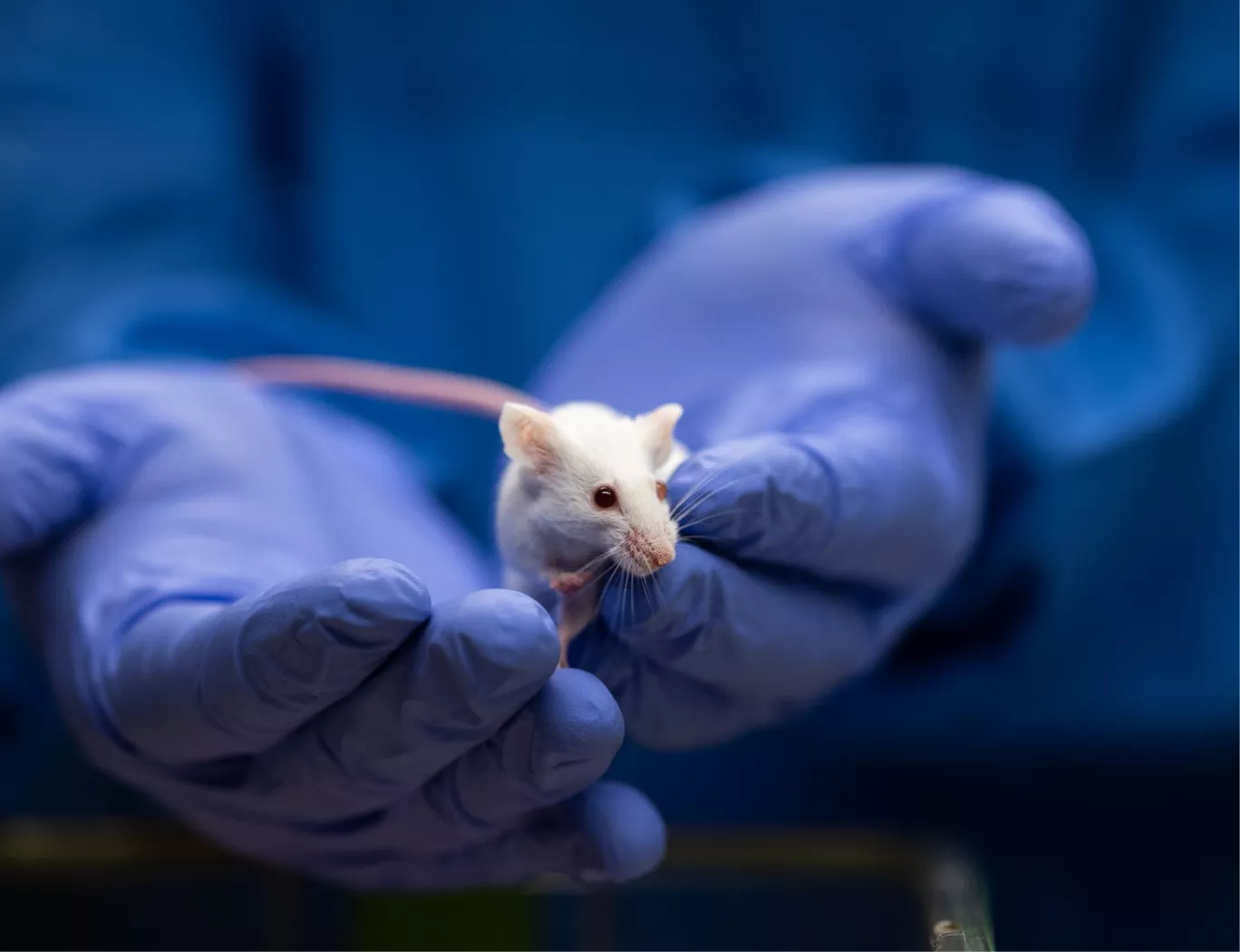
All biodistribution studies are conducted in strict adherence to GxP standards to ensure data integrity for regulatory submissions. The scientific team that forms our core has maintained a 100% IND success rate since 2019, bringing that deep experience to the Franklin Biolabs brand, which launched in 2024. Our animal welfare program is fully accredited by AAALAC and registered with the USDA, reflecting our commitment to the 3Rs: Replacement, Reduction, and Refinement.

This content is for informational purposes. For guidance specific to your therapeutic program, please contact our team for a consultation.