GLP-Compliant LC-MS/MS Quantification of AAV9 Capsid Proteins in NHP Serum for Preclinical Biodistribution Studies

PROVEN INTELLIGENCE ACCELERATING NEXT-GENERATION THERAPIES

GLP-Compliant LC-MS/MS Quantification of AAV9 Capsid Proteins in NHP Serum for Preclinical Biodistribution Studies

GxP-Compliant LC-MS/MS Quantification of AAV9 Capsid Proteins

CELL & GENE | RNA | BIOLOGICS

    What is the typical LLOQ for AAV9 capsid protein quantification in NHP serum?

    A: Our validated LC-MS/MS assay consistently achieves a Lower Limit of Quantification (LLOQ) in the low ng/mL range, providing the sensitivity required for detailed pharmacokinetic and biodistribution assessments following systemic administration.

    Which specific peptides are targeted for AAV9 quantification?

    A: We employ a multi-peptide approach, targeting several proteotypic peptides unique to the AAV9 capsid viral proteins (VP1, VP2, VP3). This strategy ensures high specificity and mitigates risks associated with polymorphism or post-translational modifications affecting a single peptide.

    How does Franklin Biolabs ensure GxP compliance for this assay?

    A: The assay is fully validated according to current regulatory guidance. All study phases, from sample receipt to final reporting, are conducted within our GxP-compliant framework, supported by a robust Quality Management System and detailed Standard Operating Procedures (SOPs).

    What is the standard sample volume and turnaround time?

    A: A minimum of 100 µL of serum is required. Standard turnaround times are established on a per-program basis to align with your specific development timelines. We offer flexible scheduling, including options for accelerated data delivery, which can be discussed during project scoping.

Accurate quantification of Adeno-Associated Virus (AAV) capsid proteins in circulation is fundamental to characterizing the biodistribution, clearance kinetics, and potential immunogenicity of a gene therapy candidate. This page details our GxP-compliant Liquid Chromatography with tandem Mass Spectrometry (LC-MS/MS) method for the specific quantification of AAV9 capsid proteins in non-human primate (NHP) serum, a key assay for generating decision-making data within an 18-24 month IND timeline.

The Requirement for Precise Capsid Biodistribution Data

Understanding the fate of the AAV vector after administration is a primary objective of any preclinical program. The concentration and persistence of capsid proteins in systemic circulation directly inform the pharmacokinetic profile and provide insight into non-target tissue biodistribution. This data is a core component of the safety assessment.

Scientific literature reinforces the direct link between capsid characteristics and biological outcomes. Studies show that AAV capsid proteins are a determining factor in vector transduction efficiency and cellular targeting [PMID: 12829835]. The capsid structure itself can also be a primary driver of immune responses, with specific domains capable of activating T cell pathways that impact both safety and long-term efficacy [PMID: 19414756]. Quantifying capsid exposure serves as a direct measure of this potential immunogenic burden.

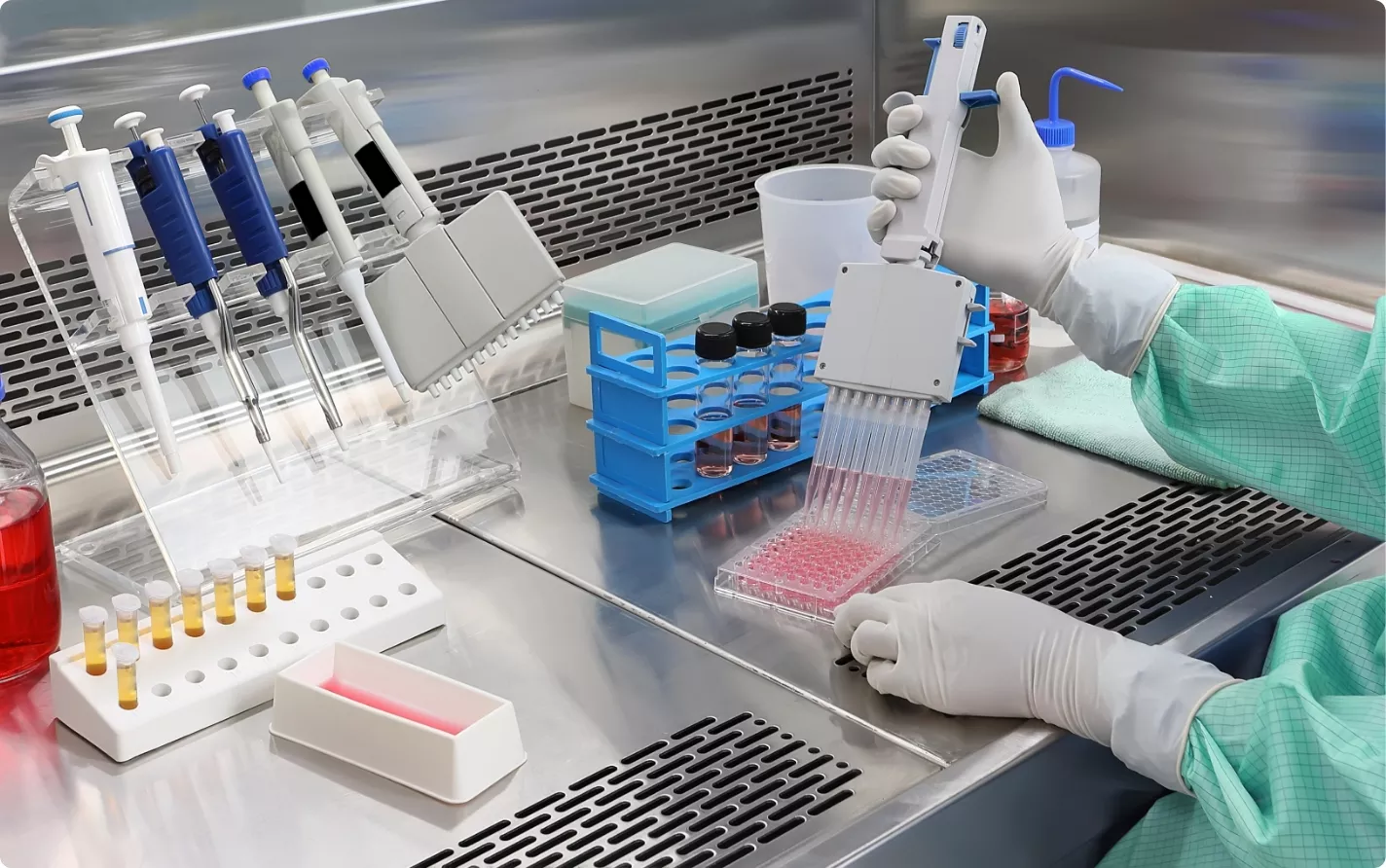
A scientist in a sterile laboratory setting uses a multichannel pipette to transfer pink liquid into a multi-well plate for a high-throughput experiment.

AAV9 Capsid Quantification via GxP-Compliant LC-MS/MS

To address this need, we have developed and validated a robust LC-MS/MS assay for the absolute quantification of AAV9 capsid proteins in NHP serum. This method offers superior specificity compared to ligand-binding assays by targeting unique proteotypic peptides generated from the AAV9 capsid proteins.

  • High Specificity: Analysis is based on the mass-to-charge ratio of specific peptide fragments, eliminating cross-reactivity from endogenous matrix proteins.

  • Wide Dynamic Range: The assay provides accurate quantification across several orders of magnitude, capturing both peak concentration (Cmax) and the terminal elimination phase.

  • Matrix Versatility: While optimized for NHP serum, the method is adaptable to other biological matrices and species.

Our bioanalytical data provides clear, actionable insights that de-risk downstream development.

“We started collaborating with UPenn Vector core in 2023 and the AAV vector which they manufactured laid a foundation for development of a gene therapy candidate which will enter soon preclinical studies. The key people from UPenn Vector Core joined Franklin Biolabs and our partnership transitioned without interruption from UPenn Vecor Core to Franklin Biolabs Research Vector Division. Franklin Biolabs is our trusted partner in our AAV-vector based gene therapy candidate development and we hope to continue the partnership for years to come.”
— Biotech Partner

GxP Compliance and Our Commitment to Animal Welfare

Generating reliable bioanalytical data for regulatory submission requires an unwavering commitment to both quality systems and ethical standards. Our AAALAC-accredited facilities operate in strict accordance with USDA guidelines, fully embracing the 3Rs (Reduce, Refine, Replace) principles for all in vivo studies. This commitment ensures the integrity of the data and the welfare of the animals involved in our research.

[VIDEO: FBL-VID-09-Approved_enhanced_responsibility_clip_long.mp4]

A blue-toned image of white lab rats in their cages within a laboratory or vivarium setting, likely for scientific research or testing.

Method Validation and Program Integration

All bioanalytical methods supporting regulated studies are validated to meet GxP standards. This ensures the integrity and reliability of the data submitted in regulatory filings. Since 2019, programs supported by our scientific teams have maintained a 100% IND success rate, a testament to our rigorous approach (the Franklin Biolabs brand launched in 2024). Our work is performed in a >100,000 sq ft facility designed for advanced therapeutic programs.

Validation Parameter Acceptance Criteria
Accuracy & Precision Inter- and intra-assay precision (%CV) ≤20% (≤25% at LLOQ)
LLOQ / ULOQ Defines the validated range of the assay
Selectivity & Specificity No significant interference from matrix components
Stability Confirmed for freeze-thaw, bench-top, and long-term storage

Scientific Process Diagram

This content is for informational purposes. For guidance specific to your therapeutic program, please contact our team for a consultation.