LC-MS/MS Bioanalysis for Pharmacokinetic (PK) Assessment of Antibody-Drug Conjugates (ADCs) in Preclinical Models

PROVEN INTELLIGENCE ACCELERATING NEXT-GENERATION THERAPIES

LC-MS/MS Bioanalysis for Pharmacokinetic (PK) Assessment of Antibody-Drug Conjugates (ADCs) in Preclinical Models

LC-MS/MS Bioanalysis for Pharmacokinetic Assessment of Antibody-Payload Constructs

CELL & GENE | RNA | BIOLOGICS

Why is LC-MS/MS often required in addition to ligand-binding assays (LBAs) for these constructs?

LBAs typically quantify total antibody but cannot readily differentiate between conjugated and unconjugated forms or measure the released therapeutic payload. LC-MS/MS provides the specificity and multiplexing capability to simultaneously quantify total antibody, conjugated antibody, and the unconjugated payload, delivering a complete pharmacokinetic profile.

What specific analytes are quantified for a comprehensive PK assessment of a targeted bioconjugate?

A full PK profile requires quantifying multiple species:

  • Total Antibody: Measured using surrogate peptides after digestion.

  • Conjugated Antibody: Quantified via affinity capture LC-MS/MS to measure the intact construct.

  • Unconjugated (Free) Payload: Measured directly after extraction to assess premature release and systemic exposure.

  • Key Metabolites: Identification and quantification of payload metabolites that may impact efficacy or safety.

How are matrix effects from plasma or tissue homogenates managed in LC-MS/MS assays?

We employ rigorous sample preparation techniques, including protein precipitation, solid-phase extraction (SPE), or immunoaffinity capture, to remove interfering substances. The use of stable isotope-labeled internal standards (SIL-IS) for each analyte is standard practice in our GxP environment to correct for any remaining matrix suppression or enhancement.

What is the typical lower limit of quantification (LLOQ) for free payload analysis?

Our triple quadrupole mass spectrometry platforms routinely achieve LLOQs in the low pg/mL range for cytotoxic payloads in complex matrices. This sensitivity is necessary for accurately characterizing the PK profile, especially at later time points or in non-target tissue biodistribution studies.

Successful Investigational New Drug (IND) submissions for antibody-payload constructs depend on a precise characterization of their pharmacokinetic (PK) and metabolic profiles. Standard ligand-binding assays are insufficient for these complex biologics. High-resolution liquid chromatography with tandem mass spectrometry (LC-MS/MS) is the definitive method for quantifying the distinct components: the antibody, the conjugated biologic, and the released therapeutic agent, providing a clear understanding of stability, delivery, and exposure.

A stylized 3D rendering of a DNA double helix, composed of light-colored spheres on a translucent blue backbone, set against a soft-focus, light blue background.

Dissecting Bioconjugate Complexity with Mass Spectrometry

The therapeutic efficacy and safety profile of a targeted bioconjugate are directly linked to its in vivo stability and the efficiency of payload delivery. An incomplete understanding of these dynamics introduces significant risk into a development program. A robust bioanalytical strategy must generate distinct pharmacokinetic data for each key component of the construct.

This analytical challenge mirrors complexities seen in other advanced modalities. For instance, investigations into the molecular structure of AAV vectors have revealed significant heterogeneity that impacts therapeutic outcomes, demanding sophisticated molecular analysis beyond simple titer measurements (PMID: 20113166). Similarly, the heterogeneous nature of antibody-payload constructs, particularly the drug-to-antibody ratio (DAR), requires precise, component-specific quantification that only LC-MS/MS can provide.

Quantifying Mechanism of Action and Exposure

Confirming that a therapeutic agent reaches its target and exerts its intended effect is a primary objective. In studies of novel LNP-based mRNA therapies, the direct measurement of specific serum biomarkers was used to confirm target engagement and demonstrate a therapeutic response in a mutation-independent manner (PMID: 39001827). This principle applies directly to targeted cytotoxic delivery platforms. Quantifying the concentration of the released payload in both tumor and non-target tissues is the most direct method for correlating exposure with efficacy and potential toxicities. This level of granular data provides the basis for building predictive PK/PD models.

Our bioanalytical teams leverage advanced LC-MS/MS methods to provide this clarity. The ability to measure picogram levels of a released payload in tissue homogenates provides definitive evidence of target delivery and forms a foundation of unambiguous mechanistic data for your program.

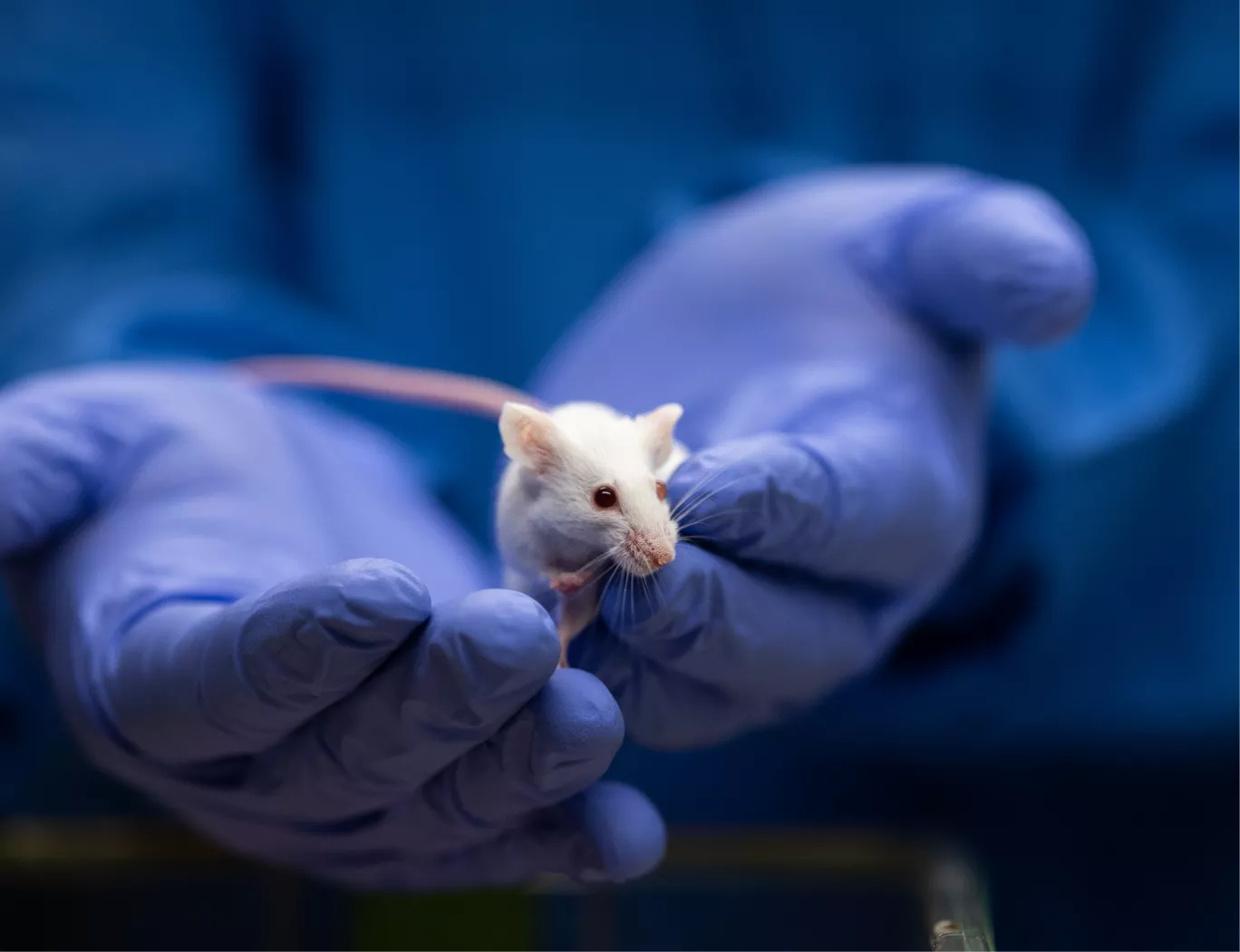
A close-up of a scientist in blue gloves gently holding a small, white laboratory mouse, likely in a research setting.

Integrated Bioanalysis for IND-Enabling Studies

Franklin Biolabs provides comprehensive LC-MS/MS services within our >100,000 sq ft GxP-compliant facility to support your entire preclinical program. Our approach integrates multiple assays to build a complete data package. The core scientific team at Franklin Biolabs has maintained a 100% IND approval success rate for sponsor programs since 2019. Following the Franklin Biolabs brand launch in 2024, we continue this legacy of success, with typical timelines from project initiation to submission ranging from 18-24 months.

Analyte Method Purpose
Total Antibody LC-MS/MS (Surrogate Peptide) Measures overall exposure & clearance of the antibody backbone.
Conjugated Antibody Immunoaffinity Capture LC-MS/MS Quantifies the intact, payload-bearing therapeutic construct.
Free Payload LC-MS/MS Measures systemic exposure to the unconjugated cytotoxic agent.

This multi-analyte approach de-risks development by providing a complete picture of your molecule’s behavior in vivo, satisfying rigorous regulatory expectations for novel bioconjugates.

Scientific Process Diagram

This content is for informational purposes. For guidance specific to your therapeutic program, please contact our team for a consultation.