The Role of HLA Haplotype Analysis in Predicting T-Cell Epitopes and Immunogenicity Risk for Protein Therapeutics

PROVEN INTELLIGENCE ACCELERATING NEXT-GENERATION THERAPIES

The Role of HLA Haplotype Analysis in Predicting T-Cell Epitopes and Immunogenicity Risk for Protein Therapeutics

HLA Haplotype Analysis for Predictive T-Cell Epitope Mapping

CELL & GENE | RNA | BIOLOGICS

Executive Summary (TL;DR): Unwanted immunogenicity against protein therapeutics is a significant cause of clinical failure. Proactive identification of potential T-cell epitopes through in silico HLA haplotype analysis provides a predictive framework to de-risk development programs. By mapping high-affinity MHC-binding peptides derived from a therapeutic’s sequence, sponsors can select candidates with lower intrinsic immunogenicity risk, design effective de-immunization strategies, and develop targeted assays for clinical immune monitoring. This approach front-loads risk assessment, saving significant time and capital.

A blue-toned image of white lab rats in their cages within a laboratory or vivarium setting, likely for scientific research or testing.

Frequently Asked Questions (FAQ)

What is the primary advantage of in silico HLA binding prediction?

The main advantage is its predictive power and scalability. It allows for rapid screening of an entire protein sequence against a comprehensive library of human HLA allotypes before committing to expensive in vitro synthesis or in vivo studies. This identifies potential immunogenic hotspots early in candidate selection.

How does HLA diversity impact immunogenicity assessment for a global therapeutic?

Global populations exhibit vast HLA polymorphism. A peptide that is non-immunogenic in one population may be a potent T-cell epitope in another. Comprehensive HLA analysis covers common and rare alleles across diverse ethnic groups, providing a more accurate global immunogenicity risk profile for the intended patient population.

What is the typical output of a T-cell epitope mapping study?

The output is a ranked list of peptides from the therapeutic protein, scored by their predicted binding affinity to specific HLA molecules. This “epitope map” highlights immunogenic hotspots and provides a quantitative risk score, which is then used to guide in vitro validation assays like T-cell proliferation or ELISpot.

Can these predictive models replace in vitro or in vivo immunogenicity studies?

No. In silico models are a predictive screening and risk-stratification tool. They are designed to guide and focus subsequent experimental work, not replace it. The predictions must be confirmed with functional in vitro assays and then validated through GxP-compliant preclinical and clinical immunogenicity assessments.

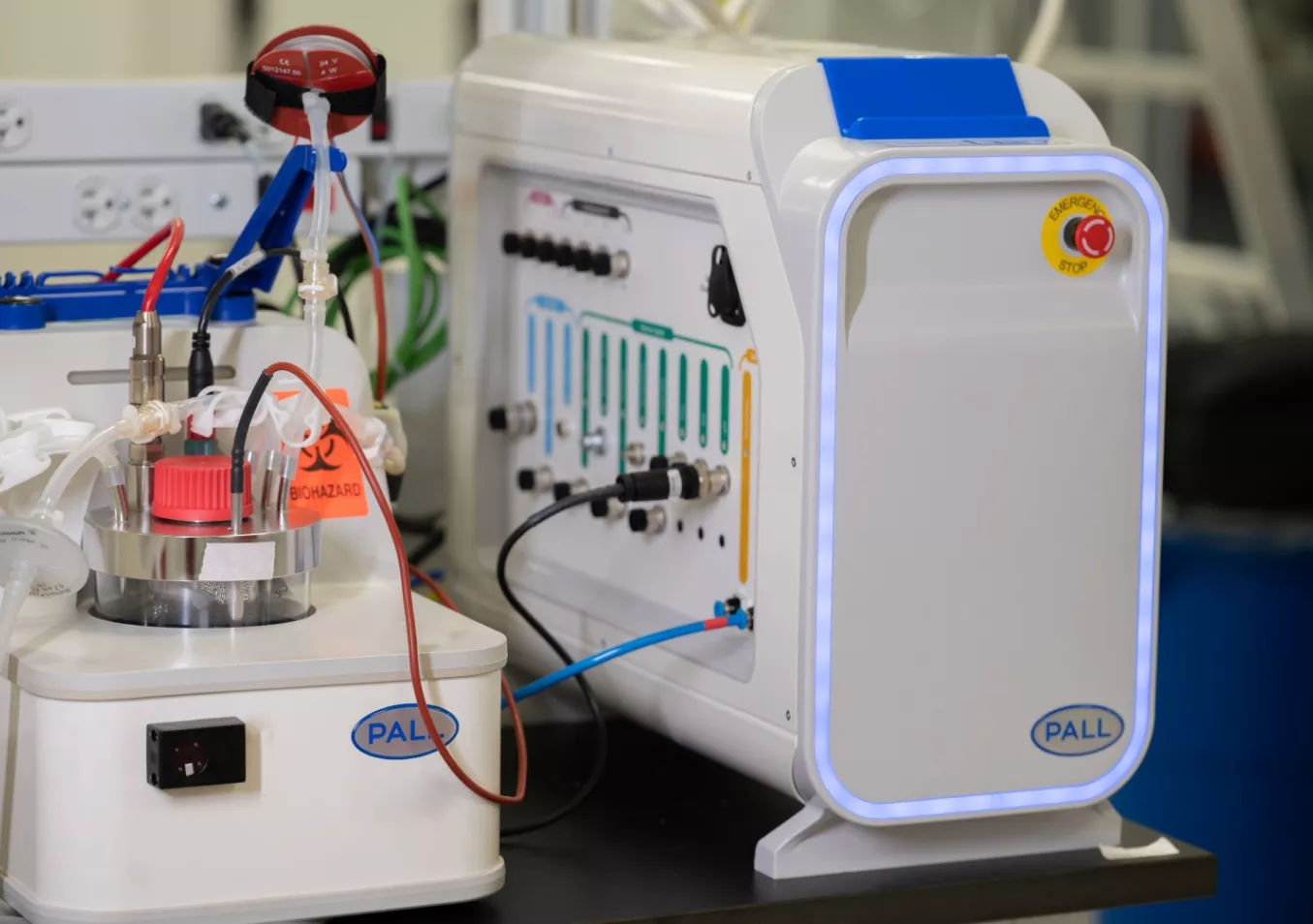
A close-up shot of a modern bioreactor system and control unit from Pall Corporation in a clean laboratory environment.

The Challenge of Unwanted Immunogenicity in Protein Therapeutics

An immune response directed against a biologic can neutralize its therapeutic effect, alter its pharmacokinetic profile, or cause adverse events. The primary driver of this response is the activation of CD4+ T-helper cells, which requires the presentation of peptide fragments : or T-cell epitopes : by antigen-presenting cells via Human Leukocyte Antigen (HLA) molecules.

Predicting which peptides within a large protein therapeutic will bind to which HLA variants is a complex bioinformatic challenge. A failure to accurately assess this risk can lead to significant delays and costly program failures during late-stage development. A successful IND submission relies on this proactive characterization.

Predictive Modeling: From Protein Sequence to Immunogenicity Risk

Modern immunogenicity risk assessment begins with in silico analysis. Algorithms analyze a therapeutic’s primary amino acid sequence to identify short peptide fragments with a high probability of binding to a panel of common HLA-DR, -DP, and -DQ alleles. This computational screening generates a preliminary map of potential immunogenic regions.

This principle of identifying specific immunogenic epitopes to understand cellular immunity has been demonstrated in adjacent fields. Studies focused on viral proteins, such as the SARS-associated coronavirus spike protein or AAV capsids, have shown that specific peptide sequences are responsible for driving robust T-cell responses (PMID: 15823604, 19777488). These investigations provide the tools and foundational understanding for monitoring cellular immune responses, a strategy directly applicable to managing the immunogenicity of protein therapeutics.

A stylized 3D rendering of a DNA double helix, composed of light-colored spheres on a translucent blue backbone, set against a soft-focus, light blue background.

A close-up of a scientist in blue gloves gently holding a small, white laboratory mouse, likely in a research setting.

Integrating In Silico and In Vitro Assays for a Comprehensive Risk Profile

Computational predictions are the first step in a multi-tiered assessment strategy. Franklin Biolabs utilizes these in silico maps to design targeted in vitro experiments.

  • Peptide Synthesis: High-risk peptides identified computationally are synthesized for laboratory testing.

  • HLA Binding Assays: Competitive binding assays confirm the affinity of candidate peptides to specific, purified HLA molecules.

  • T-Cell Assays: Peptides confirmed to bind HLA are then tested in functional assays using donor peripheral blood mononuclear cells (PBMCs) to measure T-cell activation, proliferation, and cytokine release.

This integrated workflow provides a robust, data-driven risk profile. Our approach to Immunogenicity Intelligence for Advanced Therapies is conducted within our >100,000 sq ft GxP-compliant facility, ensuring data integrity for regulatory submissions. This programmatic de-risking is a key factor in achieving an 18-24 month IND timeline.

Programmatic Benefits of Proactive Epitope Mapping

Integrating predictive epitope analysis early in development provides distinct advantages for a therapeutic program.

Benefit Strategic Impact
Candidate Selection Empowers teams to select lead candidates with the lowest intrinsic immunogenicity profile.
Protein Engineering Provides a rational basis for engineering modifications to ablate or “silence” T-cell epitopes.
Informed Monitoring Enables the development of custom T-cell assays for monitoring immune responses in clinical trials.
Regulatory Confidence Demonstrates a proactive and thorough approach to characterizing and mitigating product-related risks.

This level of foresight is built upon a deep understanding of both the biology and the regulatory expectations. Since the Franklin Biolabs brand launch in 2024, our scientific leadership team has maintained a 100% IND success rate for programs managed since 2019.

Scientific Process Diagram

This content is for informational purposes. For guidance specific to your therapeutic program, please contact our team for a consultation.